
Myrtle Beach Probate Court Records and Estates
Myrtle Beach sits at the heart of South Carolina's Grand Strand coast and is the principal city of Horry County, one of the state's fastest-growing counties. Incorporated in 1938 and elevated to city status in 1957, Myrtle Beach has grown from a quiet resort town to a community of more than 35,000 permanent residents, with millions of visitors annually. Probate court records for Myrtle Beach residents are filed at the Horry County Probate Court. The court operates under Title 62 of the South Carolina Probate Code and handles estate administration, guardianships, conservatorships, marriage licenses, and mental health commitment proceedings.
Myrtle Beach Quick Facts
Horry County Probate Court and Myrtle Beach
The Horry County Probate Court serves all residents and property owners in Horry County, including those in Myrtle Beach. The probate judge for Horry County is elected countywide to a four-year term. Given Horry County's rapid growth over recent decades, the probate court handles a substantial caseload of estate administration matters, family protective proceedings, and marriage license applications.
The City of Myrtle Beach operates municipal services for permanent residents and coordinates with county agencies on matters affecting the broader community. The following image is sourced from the City of Myrtle Beach's official website, which provides information on city services, permits, and local government for Myrtle Beach residents and property owners.

Myrtle Beach residents can use the city's website to access municipal records and contacts that may be relevant alongside probate proceedings, such as address verification or property ownership information needed for estate filings.
Ancillary Probate and Property Ownership in Myrtle Beach
One of the distinctive probate issues in Myrtle Beach involves out-of-state property owners. Because Myrtle Beach is a popular vacation destination, many non-residents own condominiums, timeshares, and beachfront properties in Horry County. When a non-resident property owner dies, their estate may be subject to ancillary probate proceedings in Horry County, even if the primary estate administration takes place in another state.
Ancillary probate is a secondary probate proceeding opened in the state where the deceased owned real property. Under South Carolina law, real property located in Horry County must pass through the South Carolina probate system to transfer legal title, regardless of where the owner lived. Myrtle Beach families dealing with out-of-state heirs or non-resident decedents should consult an attorney familiar with the ancillary probate process in Horry County.
The South Carolina Judicial Branch covers all Horry County probate proceedings through its public case search system. The following image is sourced from the South Carolina Judicial Branch website, where anyone can access the Public Index to search probate cases filed in Horry County, including estate matters involving Myrtle Beach properties.
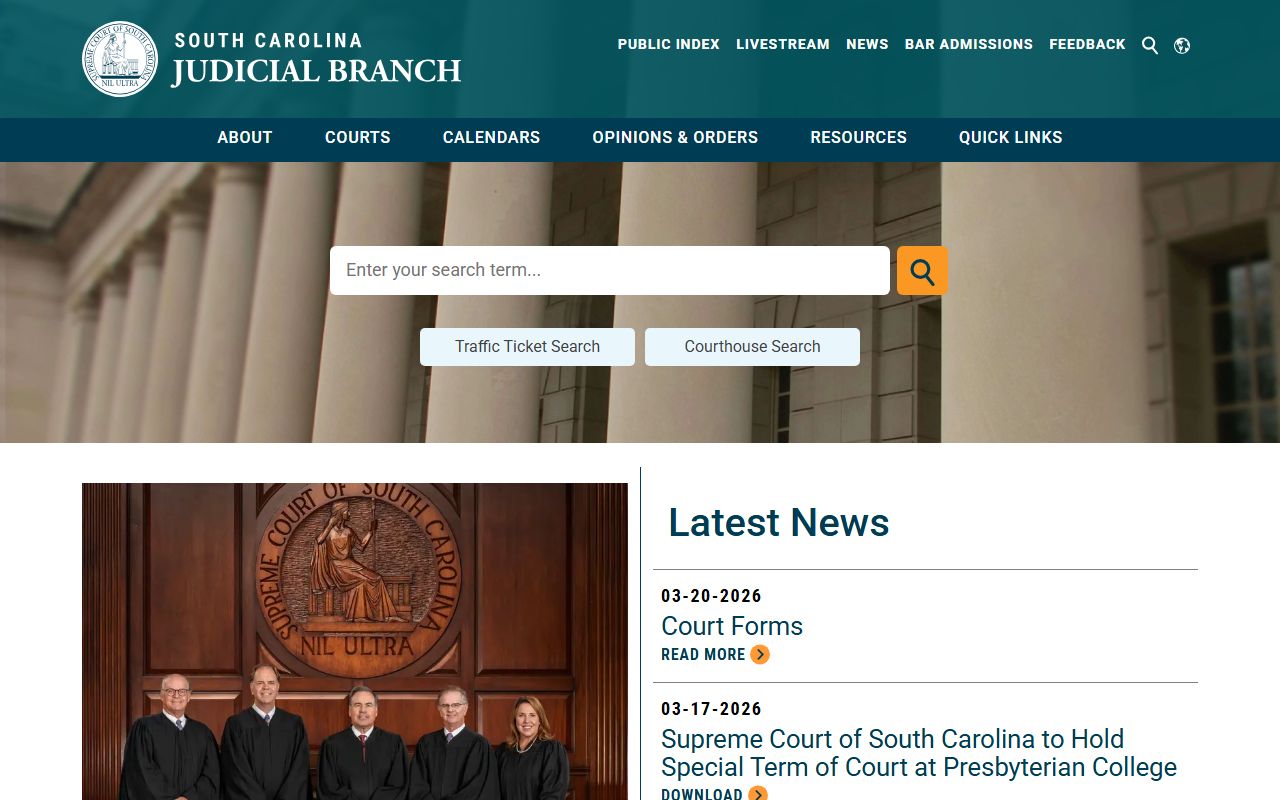
The Public Index at sccourts.org allows searches of Horry County probate cases by party name or case number, making it a useful tool for heirs, attorneys, and property researchers investigating Myrtle Beach-area estate filings.
Estate Administration for Myrtle Beach Residents
When a permanent Myrtle Beach resident passes away, their estate is administered through the Horry County Probate Court. The process begins with a petition to open the estate, submitted by the executor named in the will or by an interested heir if there is no will. The Horry County Probate Court reviews the will for validity, appoints the appropriate personal representative, and oversees the estate through inventory, creditor notification, debt payment, and final distribution to heirs.
South Carolina provides simplified procedures for small estates that fall below a statutory asset threshold. For larger estates, formal administration with ongoing court oversight is required. All estate filings, including the will, inventory of assets, and final accounting, become part of the public probate court record at the Horry County courthouse. Researchers, creditors, and heirs can access these records through the courthouse or through the online public index.
South Carolina's probate statutes govern every step of the estate process in Myrtle Beach. The following image is sourced from Title 62 of the South Carolina Code of Laws, the comprehensive statute governing all probate courts, estate administration procedures, and protective proceedings in Myrtle Beach and throughout the state.
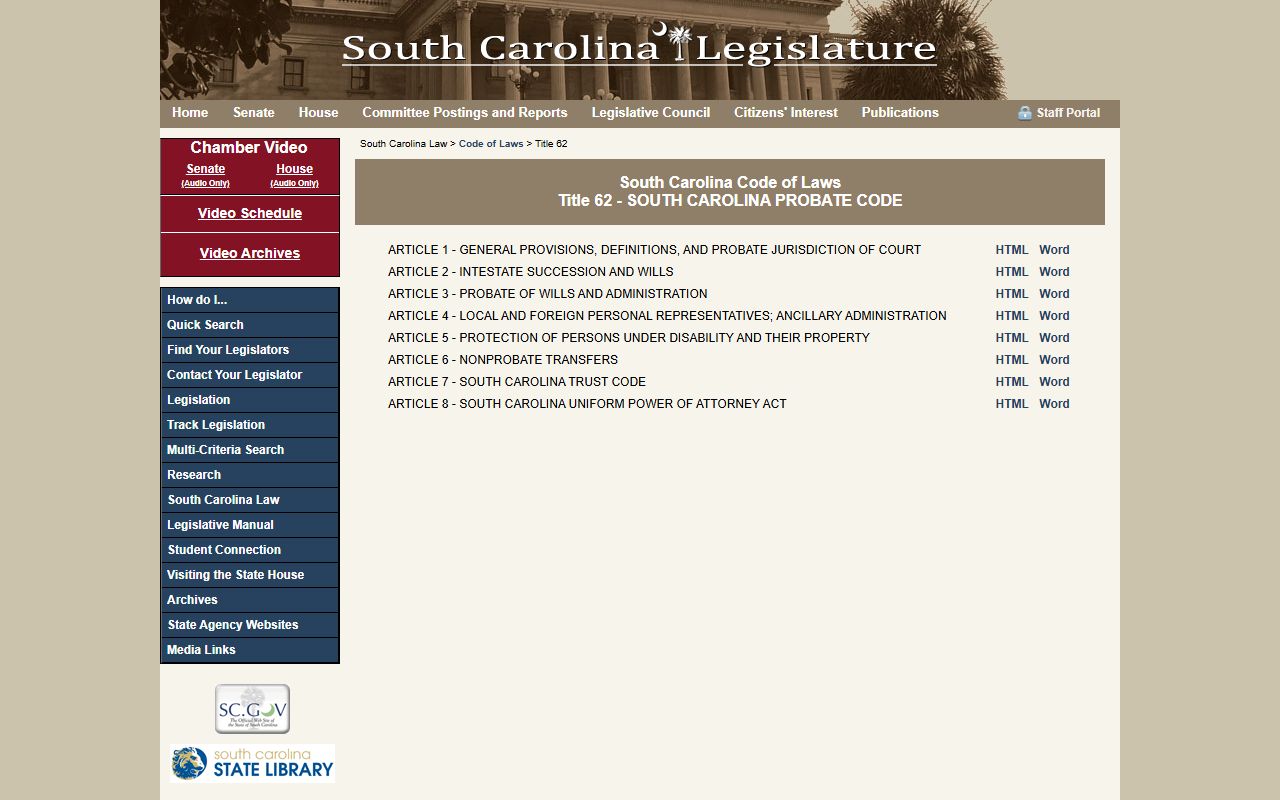
Title 62 defines the procedures for will admission, the rights of heirs and creditors, the timeline for estate administration, and the standards for protective proceedings that apply to Myrtle Beach residents and Horry County estates.
Guardianship and Conservatorship in Myrtle Beach
The Horry County Probate Court handles petitions for guardianship and conservatorship for incapacitated adults in Myrtle Beach. When a family member or other interested party believes a Myrtle Beach resident can no longer safely manage their personal affairs or finances, they may file a petition with the probate court. The court schedules a hearing, reviews medical evidence, and appoints a guardian or conservator as appropriate.
Guardianship and conservatorship cases involve ongoing court oversight. The appointed guardian or conservator must file periodic reports with the Horry County Probate Court, accounting for their decisions and the condition of the person under their care. This oversight is a key protection for vulnerable adults in Myrtle Beach and throughout Horry County.
Marriage Licenses in Myrtle Beach
Couples who plan to marry in Horry County must obtain a marriage license from the Horry County Probate Court before the ceremony. Both applicants must appear in person together and present valid government-issued photo identification. If either applicant was previously married, documentation showing the end of that marriage is required. The marriage license fee is $46, and South Carolina law requires a 24-hour waiting period before the ceremony may take place. A marriage license issued in Horry County is valid for ceremonies anywhere in South Carolina.
Minor Settlements and Wrongful Death in Myrtle Beach
The Horry County Probate Court also has jurisdiction over certain financial matters affecting Myrtle Beach families. When a minor receives a settlement or judgment of $10,000 or more, South Carolina law requires probate court approval of the settlement and oversight of how the funds are held until the minor reaches adulthood. Wrongful death settlements distributed among multiple beneficiaries may also require probate court involvement to confirm fair and lawful distribution among Myrtle Beach heirs.
Horry County Probate Court Records
All probate filings for Myrtle Beach residents are processed and maintained by the Horry County Probate Court. The Horry County page provides complete court contact details, jurisdiction information, fee schedules, and direct links to online search tools for Horry County probate cases. Whether you are researching an estate, a guardianship, or a marriage license from the Myrtle Beach area, the county page is the most comprehensive resource available.
Nearby South Carolina Cities
Residents in cities near Myrtle Beach file probate matters through the probate court for their respective county. Select a nearby city to find probate court information for that area.