
Allendale County Probate Court Records
Allendale County is a rural county in South Carolina's Lowcountry region. Its probate court handles estate administration, guardianship, conservatorship, marriage licenses, and involuntary commitment proceedings for county residents. Allendale County probate court records form a permanent legal archive of how estates have been opened and closed, how vulnerable adults have been protected, and how families have documented the legal events that shape property and inheritance in this corner of the state. This guide explains what records exist, how they are organized, and how to obtain copies.
Allendale County Probate Court Quick Facts
Probate Court Records in Allendale County: What You Will Find
Allendale County probate court records document every proceeding the court has handled. Estate records are the core of the collection. When a resident of Allendale County dies, any property they owned may need to pass through probate before heirs can take title. The estate file will include the opening petition, the death certificate, the original will if one was left, an inventory of assets prepared by the personal representative, any creditor claims filed against the estate, accountings, and the closing order.
Intestate cases are common in every county. When a person dies without a valid will in Allendale County, the South Carolina Probate Code determines the order of inheritance. The closest surviving relatives have the first right to petition for appointment as administrator. The resulting court file documents the entire process from petition to final distribution.
Guardianship and conservatorship records make up another significant portion of the probate court's files. These documents show who was appointed to care for or manage the finances of an incapacitated adult in Allendale County. Marriage license records, which date back many decades, are also part of the probate court's holdings. Note: Researching historical Allendale County probate records may require contacting both the court and archival sources, as older files may not be fully indexed online.

The Allendale County official website provides contact information for county offices and guidance for residents seeking probate and other court services.
About the Allendale County Probate Court Jurisdiction
The Allendale County Probate Court operates under the authority of the South Carolina Probate Code, Title 62. This statute governs all probate courts across the state and sets the rules for estate administration, guardianship, conservatorship, and related matters. The probate judge in Allendale County is an elected official who serves a four-year term and is directly accountable to county voters.
The court's jurisdiction covers the estates of deceased persons who were residents of Allendale County at the time of death or who owned property here. It also extends to any Allendale County resident who needs a guardian or conservator appointed, and to all applications for marriage licenses made within the county. Involuntary commitment proceedings for individuals who may need treatment for mental illness, alcoholism, or drug addiction are also filed with the Allendale County Probate Court.
As a Lowcountry county, Allendale has a relatively small but consistent caseload. The court operates as part of the broader South Carolina judicial system, and its records are accessible through the same channels used for larger counties. The South Carolina Judicial Branch oversees statewide court administration and provides resources for anyone seeking access to probate records in Allendale County.
How to Access Allendale Probate Records
Accessing Allendale County probate court records starts with the statewide Public Index maintained by the South Carolina Judicial Branch. This free online tool allows name-based or case-number searches across all 46 South Carolina counties, including Allendale. Basic case information, filing dates, and docket entries are available at no cost through the Public Index.
For actual document copies, you must contact the Allendale County Probate Court directly or visit the courthouse in person. Bring a valid photo ID. Court staff can locate case files and provide copies for the applicable fee. Certified copies carry a higher charge than plain copies. For estate matters requiring vital records such as death certificates, VitalChek is the approved online ordering service for South Carolina vital records, including death and marriage certificates.
Court forms for probate proceedings in Allendale County are available through the SC Courts forms page. Using the correct state-approved form saves time and reduces the chance of a filing being returned. The South Carolina government portal at sc.gov links to multiple state agencies and county resources that support probate research in Allendale County.
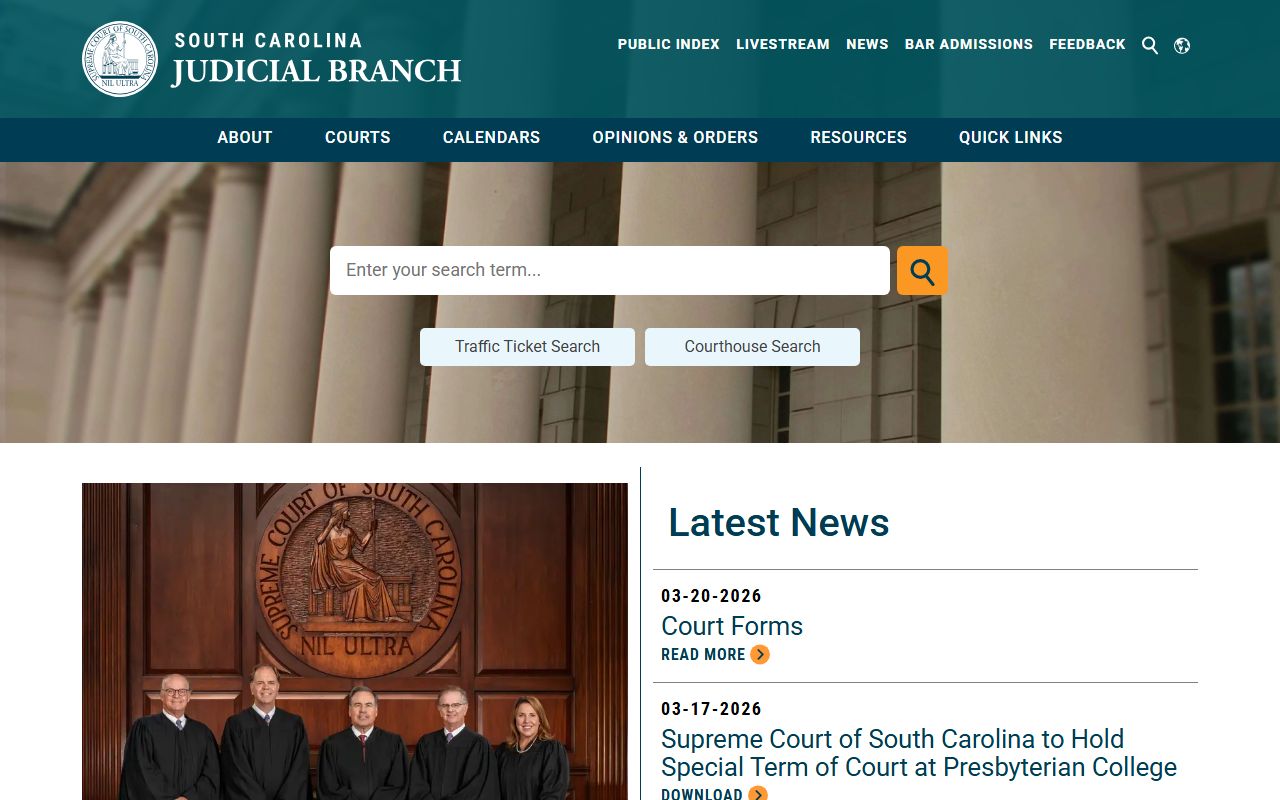
The SC Judicial Branch site is the primary gateway for online case research across all South Carolina probate courts, including Allendale County.
Estate Administration Through the Allendale County Probate Court
When a resident of Allendale County dies, the process of settling their estate typically begins at the probate court. The person opening the estate must present the original will and original death certificate. Copies, faxes, and scanned documents are not accepted. If the decedent left no will, the closest surviving relative should appear in person with the original death certificate.
The probate court appoints a personal representative, who may be called an executor if named in a will, or an administrator if the estate is intestate. This person takes on a legal responsibility to collect all assets, notify creditors, pay valid debts, and distribute what remains to the rightful heirs. The personal representative must file an inventory of assets and may be required to file periodic accountings depending on the complexity of the Allendale County estate.
All of these filings become part of the court record. They document the chain of custody for every asset in the estate and protect both heirs and creditors by creating a transparent public record. The South Carolina Probate Code at Title 62 governs each step. Courts may supervise the process closely in formal probate, or allow more flexibility in informal proceedings for smaller, less complex estates.
Guardianship and Conservatorship in Allendale County Probate Court
When an adult in Allendale County can no longer make decisions about their own health, safety, or finances, the probate court may appoint a guardian, a conservator, or both. These are separate legal appointments with distinct purposes.
A guardian makes personal decisions for the protected person, including decisions about medical treatment, housing, and daily care. The court appoints a guardian only after reviewing evidence that the person is incapacitated due to a mental or physical condition. Guardianship records at the Allendale County Probate Court include the original petition, supporting documentation, the court's findings, and the order of appointment. Annual reports filed by the guardian are also part of this record.
A conservator manages the financial affairs of a person who cannot do so themselves. Conservatorship filings include asset inventories and annual accountings that the court reviews to protect the conserved person's estate. Both types of proceedings are public records at the Allendale County Probate Court, accessible to authorized parties who need to verify the identity or authority of a guardian or conservator.
Marriage Licenses and Allendale County Probate Court Records
All marriage licenses in Allendale County are issued by the probate court. Both applicants must appear together and meet the age and identification requirements set by South Carolina law. The probate court retains a record of every license issued, making these records a valuable source for genealogical research and for estate matters where a marital relationship must be established.
If you need a certified copy of a marriage certificate rather than the original license record, VitalChek processes orders for South Carolina marriage certificates. These documents are commonly needed to prove a surviving spouse's legal relationship to a decedent in Allendale County estate proceedings. Note: Marriage license records at the probate court show when the license was issued, but the marriage certificate is issued separately after the ceremony takes place.
Allendale County Register of Deeds and Probate Connections
In Allendale County, the Register of Deeds function is performed by the elected Clerk of Court. There is no separate Register of Deeds office. The Clerk of Court records deeds, mortgages, liens, and other instruments affecting real property in Allendale County. This arrangement is common in smaller South Carolina counties.
When an estate that includes real property closes in Allendale County, the deed transferring that property to heirs or a buyer must be recorded with the Clerk of Court. This recording creates the official chain of title. Researchers who trace land ownership in Allendale County often need both the probate court records, which show who inherited property, and the deed records held by the Clerk of Court, which show when and how that title was transferred. The South Carolina Register of Deeds resource page provides context and guidance on property recording in counties across the state.
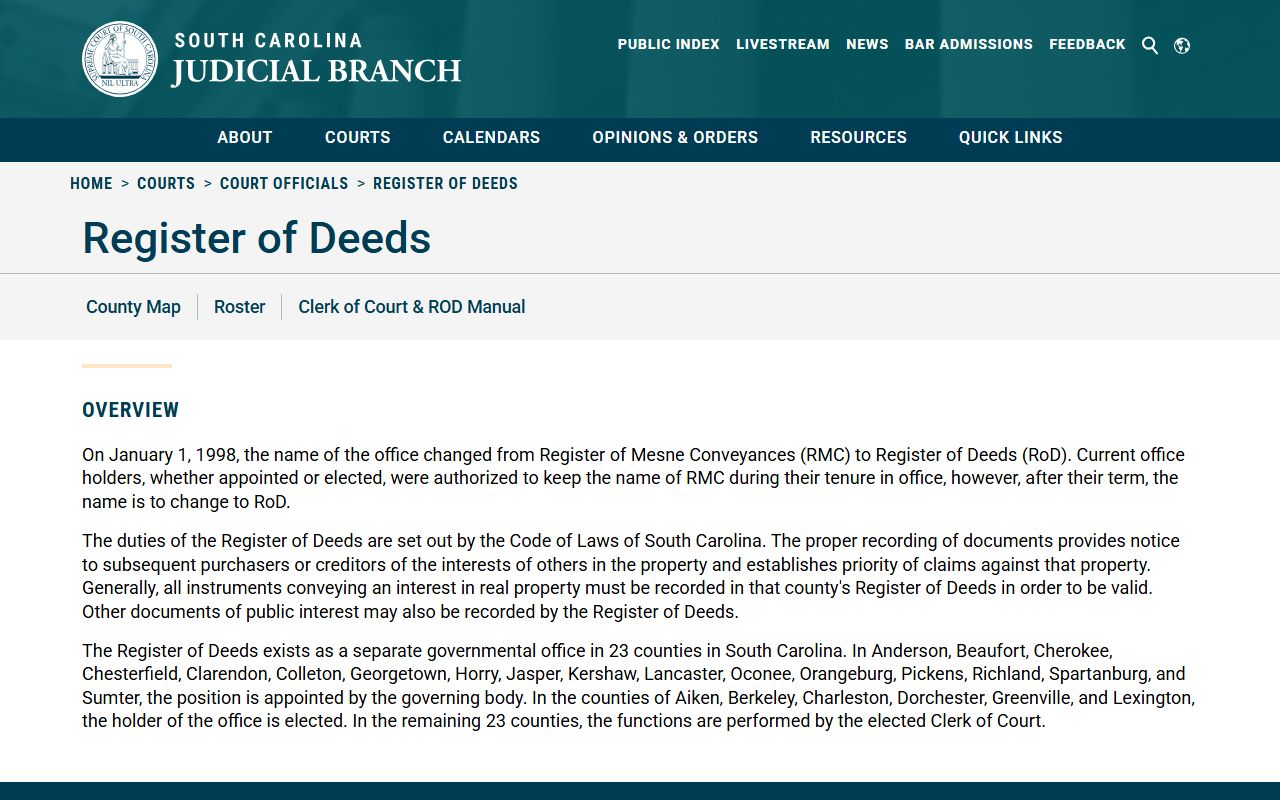
Cross-referencing Allendale County probate court records with deed records from the Clerk of Court gives the most complete picture of how estate property was transferred.
Historical Records and Archives for Allendale County Probate Research
Allendale County has a documented history that spans well over a century of court filings. The South Carolina State Library holds microfilmed collections, digitized historical records, and research guides that support genealogical research in Allendale County and the broader Lowcountry region. Researchers tracing family lines through Allendale County estates, wills, and guardianship filings will find the State Library an essential resource.
Historical probate records for Allendale County reflect the agricultural roots and close-knit community character of this rural Lowcountry county. Estate inventories from earlier eras often document farmland, livestock, and household goods in great detail, providing a rich picture of life and property in Allendale County over time. The State Library's staff can point researchers toward the right collections and explain how to access materials that may not be available online. The South Carolina state portal also links to archives and agencies with records relevant to Allendale County probate research.
Every probate proceeding in Allendale County, whether recent or historical, is governed by the rules set out in South Carolina's probate code. Reviewing the statute helps researchers understand which procedures applied at specific points in time and why court files are structured the way they are.
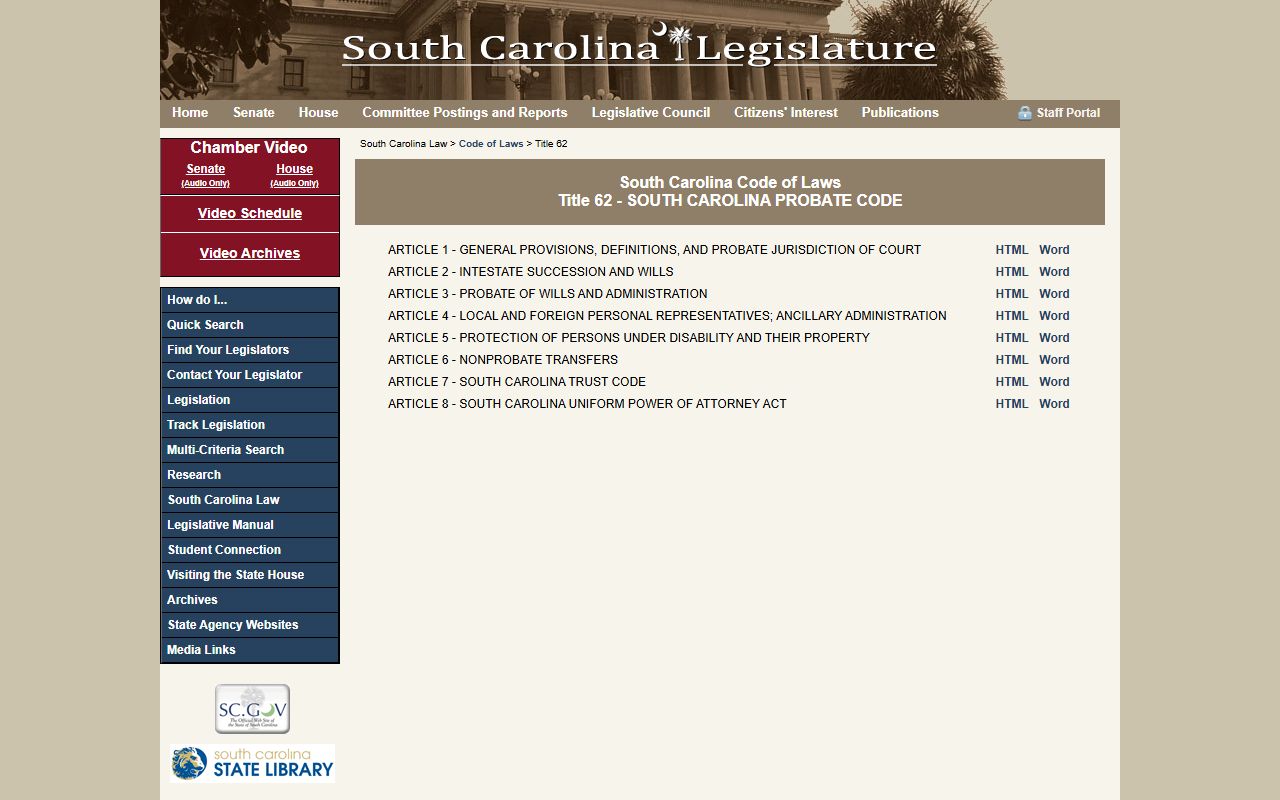
The South Carolina Probate Code at Title 62 is the definitive statutory framework for all Allendale County probate filings and establishes the rights and duties of every party in an estate or guardianship proceeding.
Nearby Counties
Allendale County borders several other South Carolina counties in the Lowcountry and Central Savannah River areas. Each county has its own probate court. Confirming the county of residence at the time of death is the first step in identifying which court holds the relevant estate records.