
Bamberg County Probate Court Records
Nestled in the heart of South Carolina's Lowcountry, Bamberg County is a community rooted in tradition, rich in history, and driven by shared values that run deep. Its probate court reflects those same qualities: a steady institution that has kept records of estates, wills, guardianships, conservatorships, and marriage licenses for generations of Bamberg County residents. Bamberg County probate court records tell the story of how families have passed on property, protected their most vulnerable members, and documented the legal events that define inheritance and personal care in this close-knit county. This guide explains what records exist, who keeps them, and how to access them.
Bamberg County Probate Court Quick Facts
About the Bamberg County Probate Court
The Bamberg County Probate Court is a court of limited jurisdiction operating under the South Carolina Probate Code, Title 62. The probate judge is elected by county voters to a four-year term and is directly accountable to the community. Bamberg County stands tall in strength, resilience, and community pride, and its probate court has served as a quiet but essential institution for families navigating the legal side of loss, incapacity, and new beginnings.
The court handles the full range of probate matters. Estate administration covers both testate cases, where a will exists, and intestate cases, where no valid will was left. Guardianship proceedings protect adults who cannot make personal decisions on their own. Conservatorship cases address the financial affairs of those who cannot manage their own money. Marriage licenses for all Bamberg County residents are issued here. The court also handles involuntary commitment proceedings and approves settlements involving minors and wrongful death actions.
The Bamberg County official website provides contact information for county departments, including the probate court, and is the first stop for residents who need to reach the court or confirm current procedures.
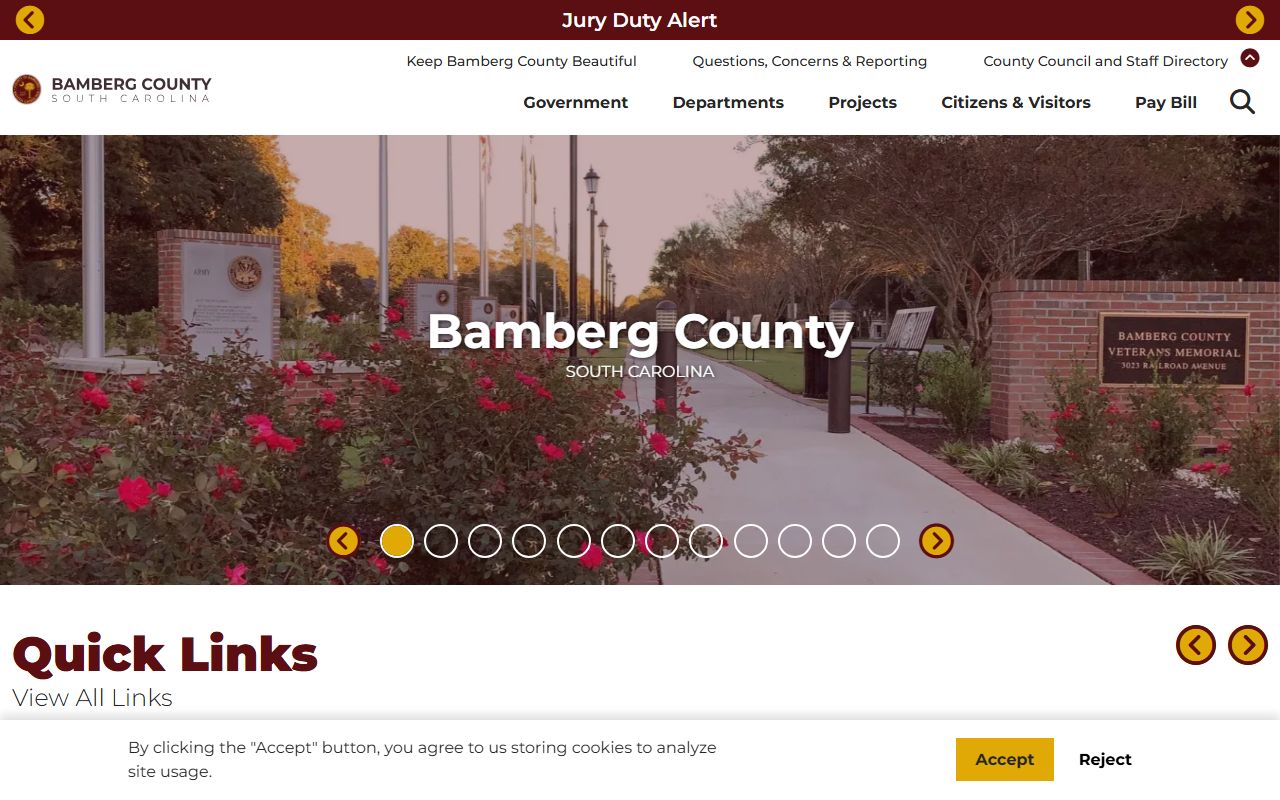
The Bamberg County website is regularly updated with department contacts and service information for residents seeking probate and other court services in the county seat.
Bamberg County Probate Records: What the Court Maintains
The Bamberg County Probate Court keeps a permanent record of every proceeding it oversees. Estate records form the largest part of that archive. A typical Bamberg County estate file contains the petition to open the estate, the original will if one was submitted, the death certificate, an inventory of assets prepared by the personal representative, creditor claims, accountings, and the final closing order. Together, these documents trace every step in the distribution of a decedent's property.
When a Bamberg County resident dies intestate, without a will, the court file shows how state law directed the distribution of the estate. The South Carolina Probate Code sets the order of priority for intestate succession, moving from spouse and children through to more distant relatives if no closer heirs survive. The estate record in these cases documents who was appointed administrator and how the assets were ultimately distributed.
Guardianship records document the appointment and ongoing reporting of guardians for incapacitated adults. Conservatorship filings include inventories and annual accountings. Marriage license records show applicant names and issuance dates. Wills admitted to probate are public records once a case is opened. Note: A will signed by the decedent but never submitted to the probate court will not appear in Bamberg County court records.
How to Find and Access Bamberg County Probate Court Records
Searching Bamberg County probate court records is possible both online and in person. The statewide Public Index provided by the South Carolina Judicial Branch is the fastest starting point. This free tool allows you to search by party name or case number across all 46 South Carolina counties. You can view basic case information, filing dates, and docket entries without charge.
To obtain copies of actual documents from a Bamberg County probate case, contact the court directly or visit the courthouse in person. Bring a valid government-issued photo ID. Court staff can search by name, date, or case number and provide plain or certified copies for the applicable fee. Certified copies carry a higher charge and are often required for legal and financial transactions that involve estate property.
For vital records connected to probate matters, such as death certificates needed to open an estate or marriage certificates that establish spousal relationships, VitalChek is the approved online ordering service for South Carolina vital records. Court forms for Bamberg County probate proceedings are available at SC Courts forms. Using state-approved forms from the start reduces filing errors and delays.
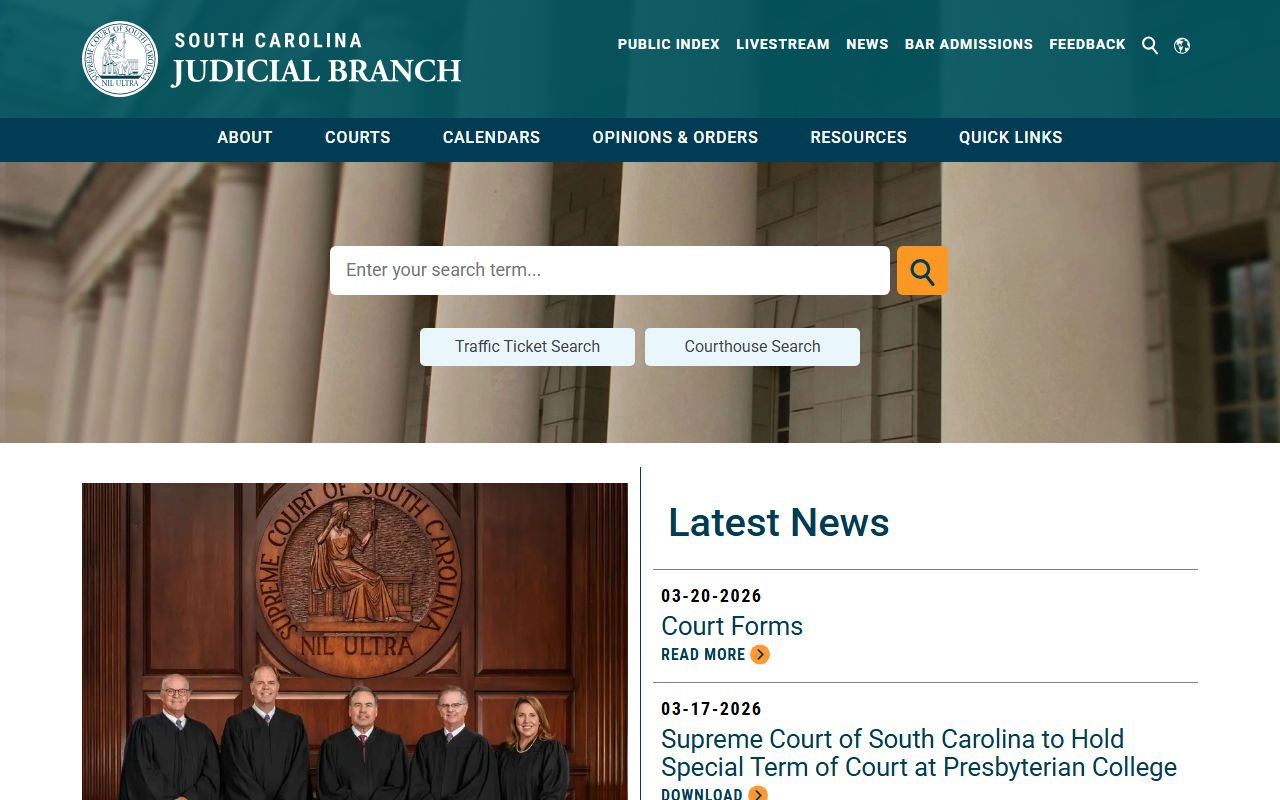
The SC Judicial Branch Public Index covers every probate court in South Carolina and is the most efficient way to confirm whether a case was filed in Bamberg County before making an in-person trip.
Estate Administration in Bamberg County
Settling a Bamberg County estate begins at the probate court. The person opening the estate must bring the original will and original death certificate. Copies and faxed documents are not accepted. When a will exists, it is reviewed for legal sufficiency and, once admitted to probate, becomes a public record. The named executor is typically appointed personal representative and receives Letters Testamentary from the court.
When no will exists, the estate is intestate. The closest surviving relative has the right to petition for appointment as administrator. Once appointed, the personal representative bears full legal responsibility for the estate. That responsibility includes notifying creditors, paying valid debts and estate expenses, and distributing assets to the heirs who are entitled under South Carolina law. The personal representative must prepare an inventory of all estate assets and file it with the Bamberg County Probate Court.
All filings related to a Bamberg County estate become part of the permanent court record. Any interested party, including heirs, creditors, and their attorneys, may inspect these records. The court may supervise the estate closely in formal proceedings or allow more independence in informal proceedings for smaller, less complicated estates. The Title 62 Probate Code governs both paths in Bamberg County.
Note: The personal representative of a Bamberg County estate must always act in the interest of the estate and its beneficiaries, not in their own personal interest.
Guardianship and Conservatorship in Bamberg County Probate Court
Bamberg County probate court records include a meaningful number of guardianship and conservatorship cases reflecting the court's role in protecting the county's most vulnerable adults. These two types of appointments often go hand in hand but address different needs.
A guardianship proceeding begins when someone petitions the Bamberg County Probate Court for authority to make personal decisions on behalf of an adult who is incapacitated. The incapacity must result from a mental or physical condition that prevents the person from making sound choices about their health, safety, or welfare. The court reviews the petition, any medical evidence, and in some cases hears testimony before issuing an order. The appointed guardian must file annual reports documenting the actions taken on the ward's behalf. These reports are part of the Bamberg County guardianship record.
A conservatorship follows a similar process, but the focus is financial. The conservator is appointed to manage the assets and finances of someone who lacks the capacity to do so. Conservatorship filings in Bamberg County include the initial petition, the court's findings, the order of appointment, asset inventories, and annual accountings. These records are accessible to authorized parties who need to confirm the authority of a conservator when conducting business involving the protected person's estate.
Marriage Licenses in Bamberg County
The Bamberg County Probate Court issues marriage licenses to all couples who apply within the county. Both applicants must appear together and must meet South Carolina's minimum age requirement. Acceptable identification includes a government-issued photo ID that shows the applicant's legal name.
Marriage license records held by the Bamberg County Probate Court are a useful source for estate researchers and genealogists. When a decedent was married, the marriage license record confirms the legal relationship between the spouses and supports the surviving spouse's claim to a share of the estate. These records date back many decades in Bamberg County and are maintained as part of the court's permanent archives. For certified copies of South Carolina marriage certificates from past marriages, orders can be placed through VitalChek.
Bamberg County Register of Deeds and Estate Records
Like several other smaller South Carolina counties, Bamberg County does not maintain a separate Register of Deeds office. The Register of Deeds function is performed by the elected Clerk of Court. The Clerk of Court records all real property instruments in Bamberg County, including deeds, mortgages, plats, and liens.
This matters for probate research because real estate transfers resulting from Bamberg County estate proceedings must be recorded with the Clerk of Court. Once an estate is settled and the personal representative deeds property to heirs or sells it, that deed must be recorded to create a clean chain of title. Researchers who need to trace land ownership through a Bamberg County estate will need to cross-reference probate court records with deed records at the Clerk of Court. The South Carolina Register of Deeds resource page provides context on recording standards across all South Carolina counties.
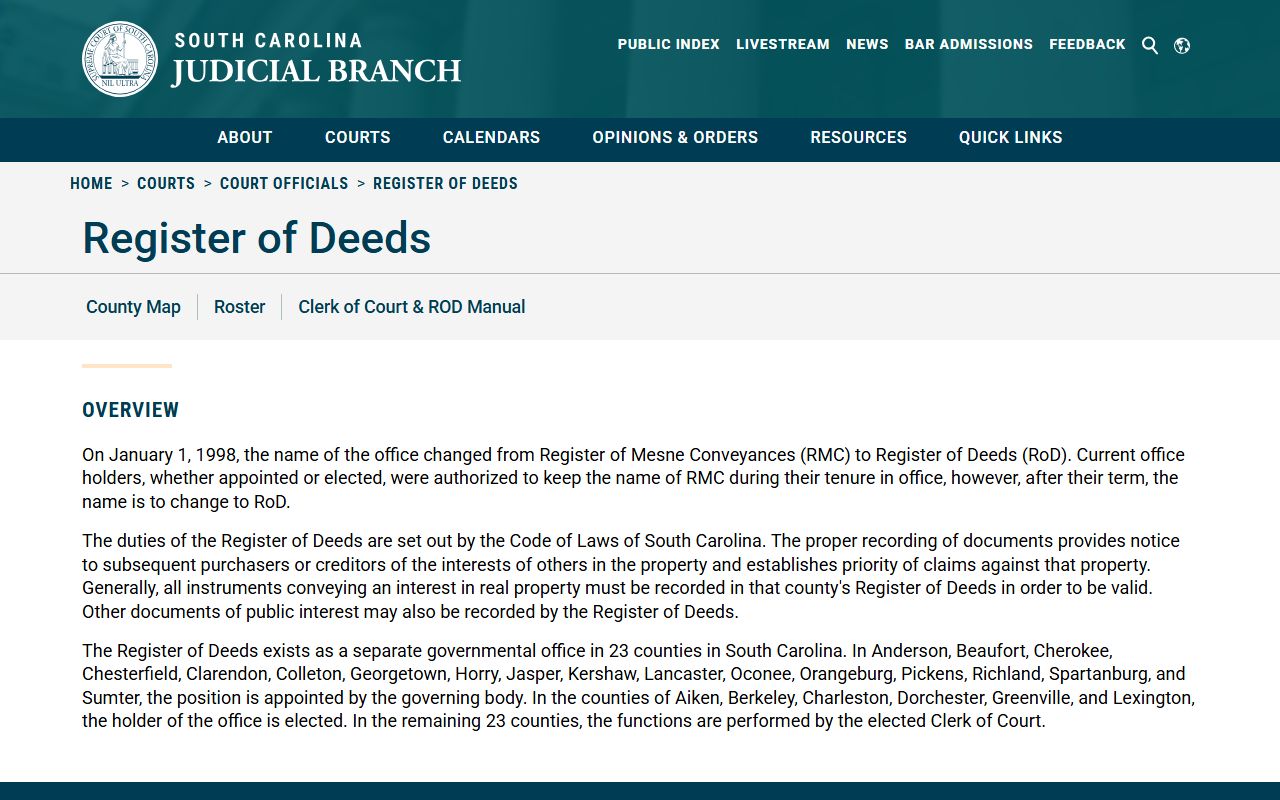
Combining Bamberg County probate court records with deed records from the Clerk of Court gives the most complete view of how real property moved through an estate.
Historical Probate Records and Archives in Bamberg County
Bamberg County's history as a Lowcountry community is reflected in its probate records, which reach back through generations of families who farmed, traded, and built lives in this part of South Carolina. The South Carolina State Library holds microfilmed collections, digitized historical documents, and research guides covering Bamberg County and the surrounding Lowcountry region. Genealogists tracing family lines through Bamberg County estates, wills, and guardianship records will find the State Library an essential resource.
Historical estate inventories from Bamberg County often document farmland, timber, livestock, and household goods in considerable detail. These records give researchers insight into the economic conditions and daily life of earlier generations. The State Library's research staff can identify which collections include Bamberg County materials and explain access procedures. Some historical materials are available remotely, while others require an in-person visit. The State Library can also connect researchers to county and regional archives that hold complementary records.
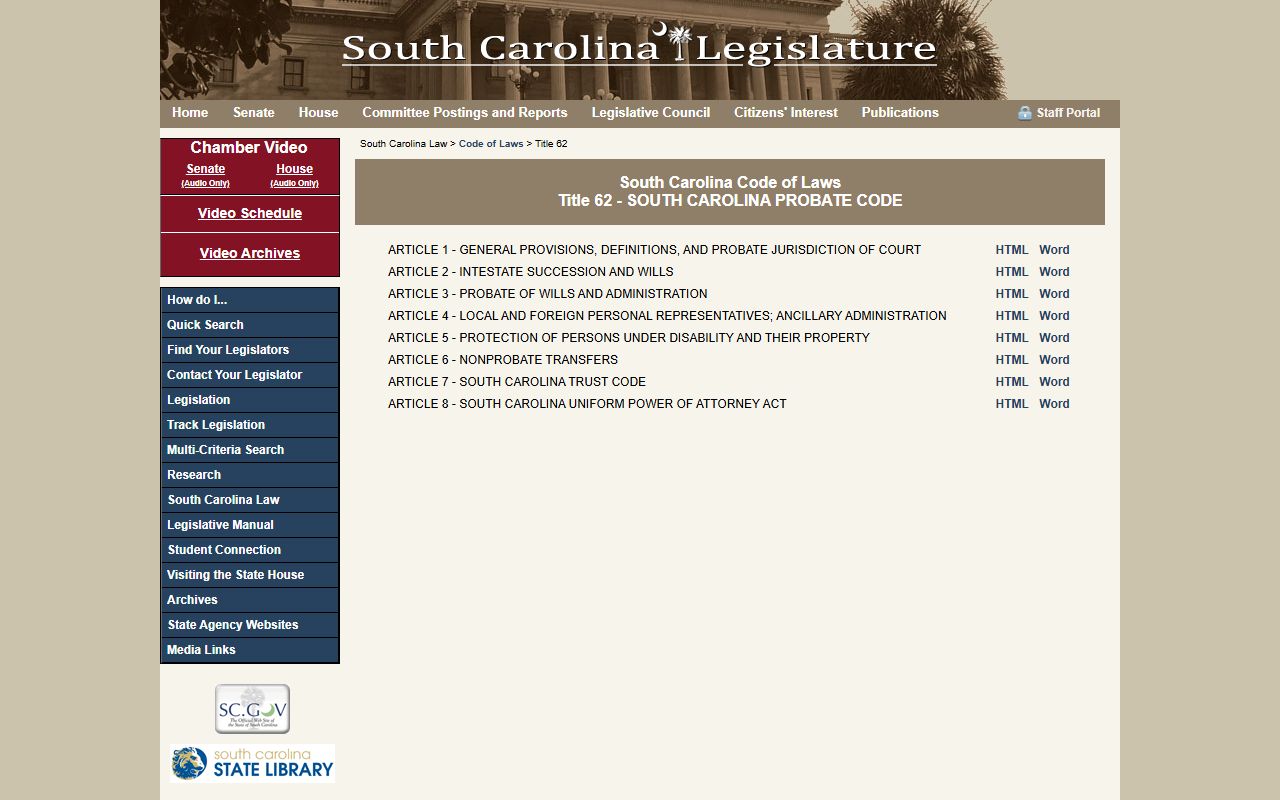
The South Carolina Probate Code at Title 62 is the definitive statutory framework for all Bamberg County probate proceedings, both current and in recent decades.
Note: Historical Bamberg County probate records dating to the late nineteenth and early twentieth centuries are particularly useful for genealogical research, as they often document extended family relationships and landholdings in detail.
Related Records and Resources for Bamberg County Probate Research
Bamberg County probate court records connect naturally to several other record sets. Death certificates, required to open any estate, are issued by DHEC and can be ordered through VitalChek. Property tax records from the Bamberg County Assessor help establish real estate values for estate inventories. Court of Common Pleas records may show judgments or liens against a decedent that must be addressed before the estate closes. The South Carolina Judicial Branch site provides a unified search across multiple court types for Bamberg County cases.
Researchers who need a broad starting point for South Carolina government records can use the South Carolina state portal at sc.gov, which links to agencies holding records relevant to Bamberg County probate research, from vital records and land records to historical archives and court filings.
Nearby Counties
Bamberg County is surrounded by other South Carolina Lowcountry and Midlands counties, each with its own probate court. Confirming the county of residence at the time of death is the essential first step in identifying which court holds the relevant estate records.