
Dillon County Probate Court Records and Estate Filings
Dillon County probate court records document the legal proceedings handled by the elected probate judge, including estate administration, guardianships, conservatorships, marriage licenses, and involuntary commitment cases. Dillon County sits in the Pee Dee region of northeastern South Carolina and has maintained its own court system since it was formed from Marion County in 1910. For residents, heirs, and legal professionals, Dillon County probate court records serve as the authoritative source for confirming estate outcomes, establishing inheritance rights, and tracing how property passed from one generation to the next.
Dillon County Probate Court Quick Facts
About Dillon County and Its Probate Court
The Dillon County official website provides contact information for the Dillon County Probate Court, along with department directories and news relevant to county residents. Visiting the county site is a useful first step before heading to the courthouse, since it helps confirm current hours and any procedural updates that affect how the probate court receives filings.
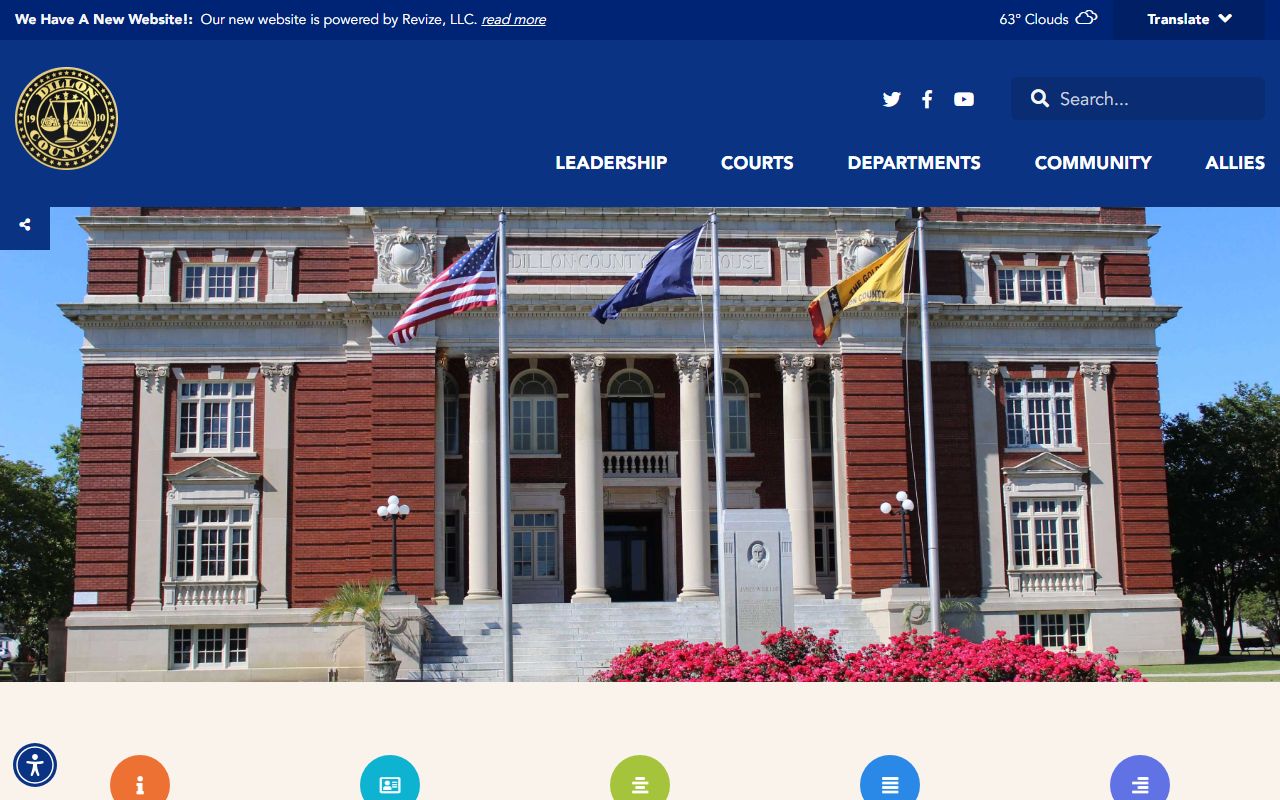
The county site links to department phone numbers and mailing addresses so residents can reach the right office before making a trip to Dillon.
The Dillon County Probate Court operates under the authority of the South Carolina Constitution and the South Carolina Probate Code, Title 62. The probate judge is elected countywide to a four-year term. This elected status ensures that Dillon County voters have a direct say in who manages the most personal and financially consequential legal proceedings in the community. The court's jurisdiction covers estates of deceased persons, guardianship and conservatorship of incapacitated adults, marriage licenses, wrongful death and minor settlements, and involuntary commitment proceedings.
Note: Always verify that you have the correct county before filing; jurisdiction in Dillon County probate matters is determined by the decedent's county of domicile at death.
Dillon County Probate Records: What They Include
Estate records are the most common type of filing at the Dillon County Probate Court. A typical estate file includes the petition to open the estate, the original will if one exists, an original death certificate, a complete inventory of the decedent's assets, accountings filed by the personal representative, any creditor claims and their resolution, and the court's final order closing the estate. This file becomes part of the permanent public record maintained by the Dillon County Probate Court.
Guardianship and conservatorship records form another major category of Dillon County probate court records. A guardianship addresses the personal welfare of an incapacitated adult, while a conservatorship addresses that person's finances. Both types of cases produce detailed files: the opening petition, supporting medical or evaluative evidence, the court order of appointment, and the annual reports that every appointed guardian or conservator must file. These annual reports track the ward's living conditions, healthcare decisions, and financial status over time. Financial institutions, healthcare providers, and family members often need to review these records to confirm a guardian's or conservator's legal authority in Dillon County.
Marriage license records kept by the Dillon County Probate Court are also publicly accessible. They document the names of both parties and the date the license was issued. These records become relevant in estate proceedings where marriage must be proved to establish an heir's legal standing.
How to Search Dillon County Probate Court Records
In-person access to Dillon County probate court records is available at the courthouse in the city of Dillon. Staff can assist with searches by name, date range, or case number. Bring a valid photo ID. Older filings may be archived separately, so additional time may be needed for historical inquiries.
Online access is available through the South Carolina Judicial Branch Public Index. This free tool allows searches of probate cases across all 46 South Carolina counties, including Dillon, by the name of the deceased or the case number. The Public Index shows case-level information but not the full text of filed documents. Copies of documents must be requested from the Dillon County Probate Court directly, and the standard fee schedule applies.
Forms for estate administration, guardianship, and conservatorship are available through the SC Courts forms page. These forms are free to download and use. For vital records connected to probate matters, such as certified death certificates or birth records needed to prove heirship, VitalChek provides an authorized ordering service for South Carolina vital records.
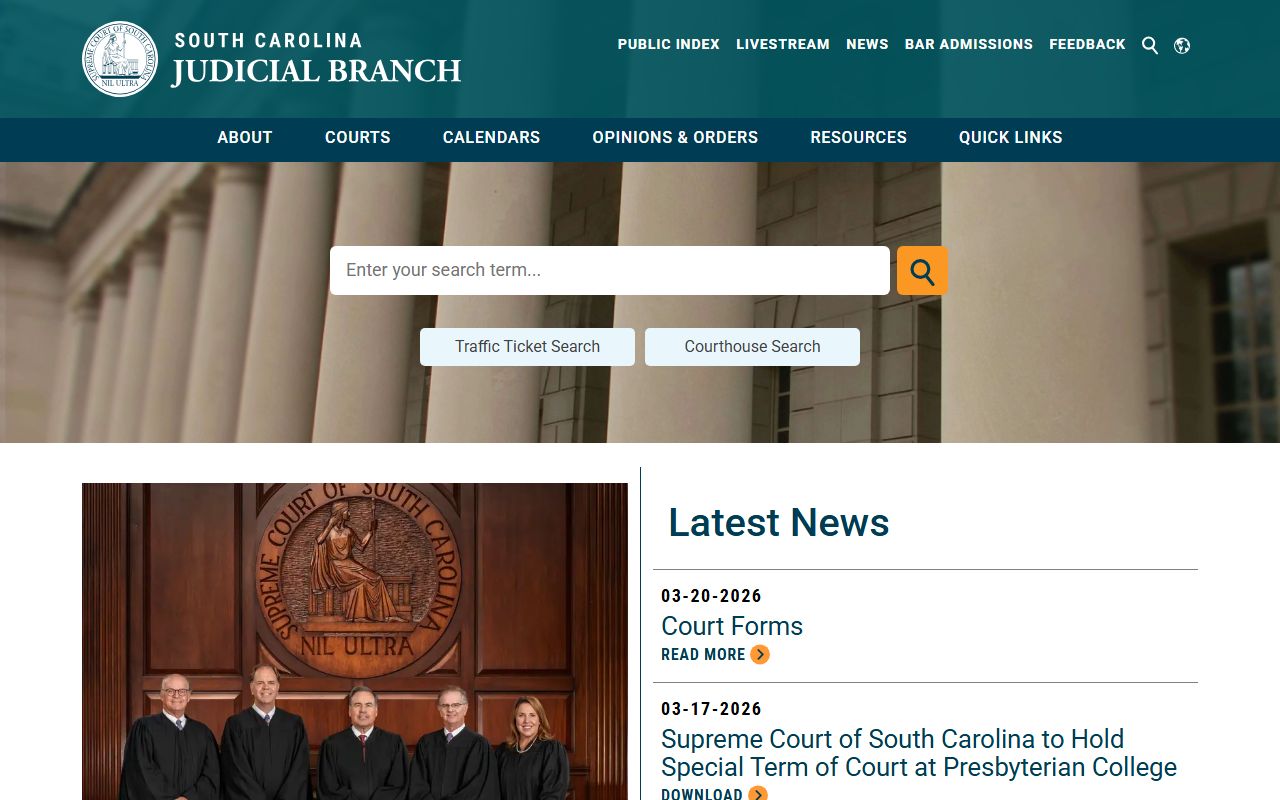
The SC Judicial Branch Public Index is updated regularly and is the fastest way to check whether a probate case has been opened in Dillon County.
Estate Administration Through the Dillon County Probate Court
Administering an estate in Dillon County starts at the probate court with the original will and the original death certificate. Neither photocopies nor faxed copies of these documents are accepted. When no will exists, the estate is treated as intestate and Title 62 of the South Carolina Code determines the line of inheritance.
After the court opens the estate, it appoints a personal representative to manage the administration process. If a will names an executor, that person is typically appointed. In intestate cases, the court uses the priority order in Title 62 to select an administrator. The personal representative must gather the decedent's assets, notify and pay creditors, file an inventory with the court, submit periodic accountings, and ultimately distribute the remaining estate to the rightful heirs. Every filing the personal representative makes with the Dillon County Probate Court becomes part of the estate's permanent record.
The South Carolina General Assembly periodically updates the Probate Code, so it is worth reviewing the current version of Title 62 to confirm exact requirements before taking any formal step in a Dillon County estate. Smaller estates may qualify for simplified procedures that bypass formal probate entirely, depending on the nature and value of the assets.
Note: The personal representative of a Dillon County estate has a legal duty to all heirs and creditors; mismanagement of the estate can result in personal liability for the representative.
Dillon County Probate Records for Guardianship Cases
Guardianship and conservatorship cases filed in Dillon County probate court protect adults who can no longer make sound decisions for themselves. These proceedings are serious legal actions with lasting consequences for the person being protected.
To open a guardianship in Dillon County, the petitioner must file a petition with the probate court and provide medical or other evidence showing that the proposed ward lacks the capacity to manage their own personal affairs. The court reviews this evidence and may appoint a guardian ad litem to represent the ward's interests. If the court grants the petition, it issues an order of appointment that sets the boundaries of the guardian's authority. The guardian must then file annual reports documenting the ward's health, living situation, and welfare. All these documents are retained in the Dillon County guardianship record and are accessible to authorized parties.
Conservatorship cases follow a similar pathway. The conservator files an inventory of the protected person's assets shortly after appointment and submits annual accountings that trace every financial transaction. These accountability requirements exist to protect the protected person's estate from misuse.
Dillon County Register of Deeds and Probate Overlap
In Dillon County, the Register of Deeds function is performed by the elected Clerk of Court rather than a separate elected Register of Deeds. The Clerk records deeds, mortgages, plats, and other instruments related to real property in Dillon County. This is a common arrangement in smaller South Carolina counties.
When a Dillon County estate includes real property, the transfer of that property to an heir or purchaser must be recorded with the Clerk of Court after the probate court closes the estate. Researchers tracing the chain of title for a piece of land in Dillon County will often need to check both the probate court record and the deed index maintained by the Clerk. The South Carolina Register of Deeds resource page explains how deed recording works across the state and can help researchers understand the process in Dillon County.
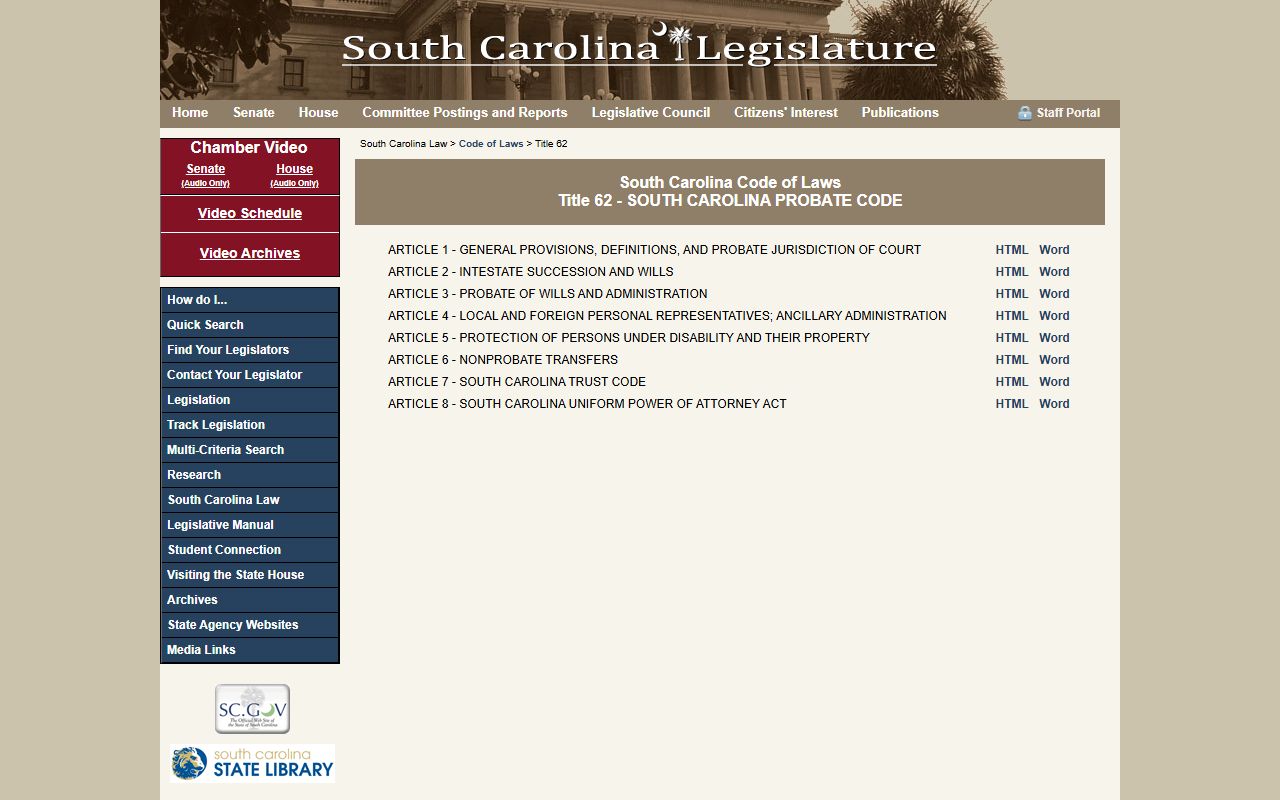
Reviewing Title 62 alongside the deed records held by the Dillon County Clerk of Court provides a complete picture of how estate property was transferred in Dillon County.
Historical Dillon County Probate Court Records
Dillon County was created in 1910 from parts of Marion County. Its court records span more than a century of estate administration, marriage license issuances, and guardianship proceedings in this part of the Pee Dee. Historical Dillon County probate records are valuable to genealogists tracing families in the region, particularly those with roots going back to the early twentieth century and before, when the area was still part of Marion County.
The South Carolina State Library maintains collections relevant to historical Dillon County probate documents. Microfilmed records, finding aids, and digital resources at the State Library can help researchers identify surviving documents and access them without traveling to the Dillon courthouse. For records that predate Dillon County's 1910 formation, researchers should look to Marion County probate records, which covered this area before the county split.

The State Library's collections are freely accessible to South Carolina residents and can be searched from the library's online catalog before a research visit.
Note: For records from before 1910, genealogists researching Dillon County ancestry should search Marion County probate court records since Dillon County had not yet been established.
Other Records That Relate to Dillon County Probate Filings
Dillon County probate court records connect to several other record types that researchers frequently need. Death certificates are required to open any estate and can be ordered through VitalChek for South Carolina decedents. Birth certificates help establish heir status in intestate cases, and marriage records prove spousal relationships. All three of these vital records can be ordered through VitalChek.
Real property tax records from the Dillon County Assessor show assessed values for land and buildings listed in an estate inventory. Judgment records from the Court of Common Pleas may reveal debts the decedent owed that must be addressed before the estate closes. The SC Judicial Branch site provides access to multiple court record types across Dillon County and statewide. The South Carolina government portal links to many of these agencies and can help researchers identify the right office for each record type they need.
Nearby Counties
Dillon County is located in the northeastern Pee Dee and shares its borders with several other South Carolina counties. Each has its own probate court. If you are unsure which county's court holds jurisdiction over an estate, verify where the deceased was living at the time of death.