
Marion County Probate Court Records and Filings
Marion County probate court records cover estate administration, guardianships, conservatorships, marriage licenses, and involuntary commitment proceedings handled by the elected probate judge. Marion County sits in the Pee Dee region of northeastern South Carolina and has operated its own court system for well over a century. These Marion County probate records are the primary legal source for verifying estate outcomes, confirming inheritance rights, and documenting how property changed hands between generations of Pee Dee families.
Marion County Quick Facts
Marion County Probate Court Overview
The Marion County official website offers contact information, department directories, and court-related news that helps residents prepare before visiting the courthouse. Checking the county site first is a practical step, since office hours and filing procedures can change without broad notice.
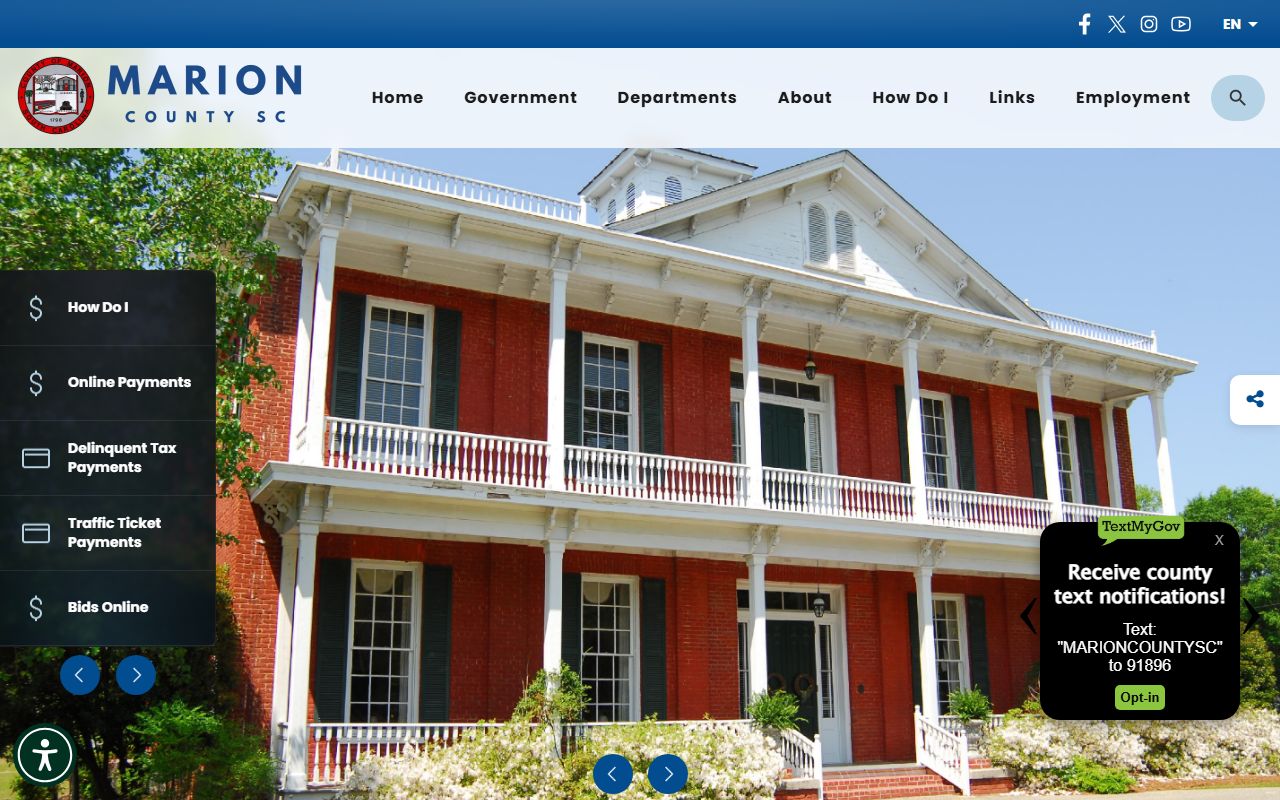
The county site lists direct contacts for the Marion County Probate Court so filers and researchers can confirm requirements before making the trip to Marion.
The Marion County Probate Court draws its authority from the South Carolina Constitution and the South Carolina Probate Code under Title 62. The probate judge is elected countywide to a four-year term. That elected status means Marion County voters directly choose who oversees estate administration, marriage license issuance, guardianship appointments, conservatorships, and involuntary commitment proceedings within the county's borders.
Marion County is a rural Pee Dee county. Its probate court handles a steady mix of estate and guardianship cases each year. Cases range from small family estates with modest personal property to larger cases involving farm acreage and multiple heirs with competing claims.
Note: Jurisdiction in Marion County probate matters is based on the county of domicile of the deceased at the time of death, not where property happens to be located.
Marion County Probate Records: What They Contain
Marion County probate court records are public documents maintained at the courthouse in the city of Marion. Estate files are the most common record type and typically include the petition to open the estate, the original will if one was left, a certified death certificate, a full asset inventory, accountings submitted by the personal representative, any creditor claims and their resolution, and the final court order closing the case. Every document filed in a Marion County estate case becomes a permanent part of the court's record.
Guardianship records in Marion County probate court document proceedings where an adult has been determined unable to manage their own personal affairs. The file contains the opening petition, medical or evaluative evidence, the court's order of appointment, and the annual reports the guardian must file each year. These annual reports describe the ward's living conditions and healthcare decisions and are kept on file in Marion County. Conservatorship files follow a parallel structure but focus on the protected person's finances. The conservator files an initial asset inventory and then annual accountings, each of which traces money received and spent on behalf of the protected person. Both types of records are accessible to authorized parties who need to confirm legal authority in Marion County.
Marriage license records maintained by the Marion County Probate Court record the names of both parties and the issuance date. These records surface frequently in estate proceedings where a surviving spouse's share of an estate depends on proving the marriage took place.
How to Search Marion County Probate Court Records
In-person access to Marion County probate court records is available at the courthouse in Marion. Bring a valid government-issued photo ID. Court staff can locate records by name, date range, or case number. Older filings may be stored separately from current files, so allow extra time for historical requests.
The South Carolina Judicial Branch operates a free online Public Index that covers probate cases in all 46 South Carolina counties, including Marion. Searching by the decedent's name or the case number reveals whether a probate case has been opened and provides basic case-level details. Full document copies must be requested directly from the Marion County Probate Court, and the standard fee schedule applies. The Public Index is updated regularly and is typically the fastest starting point for any Marion County probate records search.
Forms for estate administration, guardianship, and conservatorship are available at no cost through the SC Courts forms page. Certified death certificates and other vital records needed to support Marion County probate filings can be ordered through South Carolina's authorized vital records services.
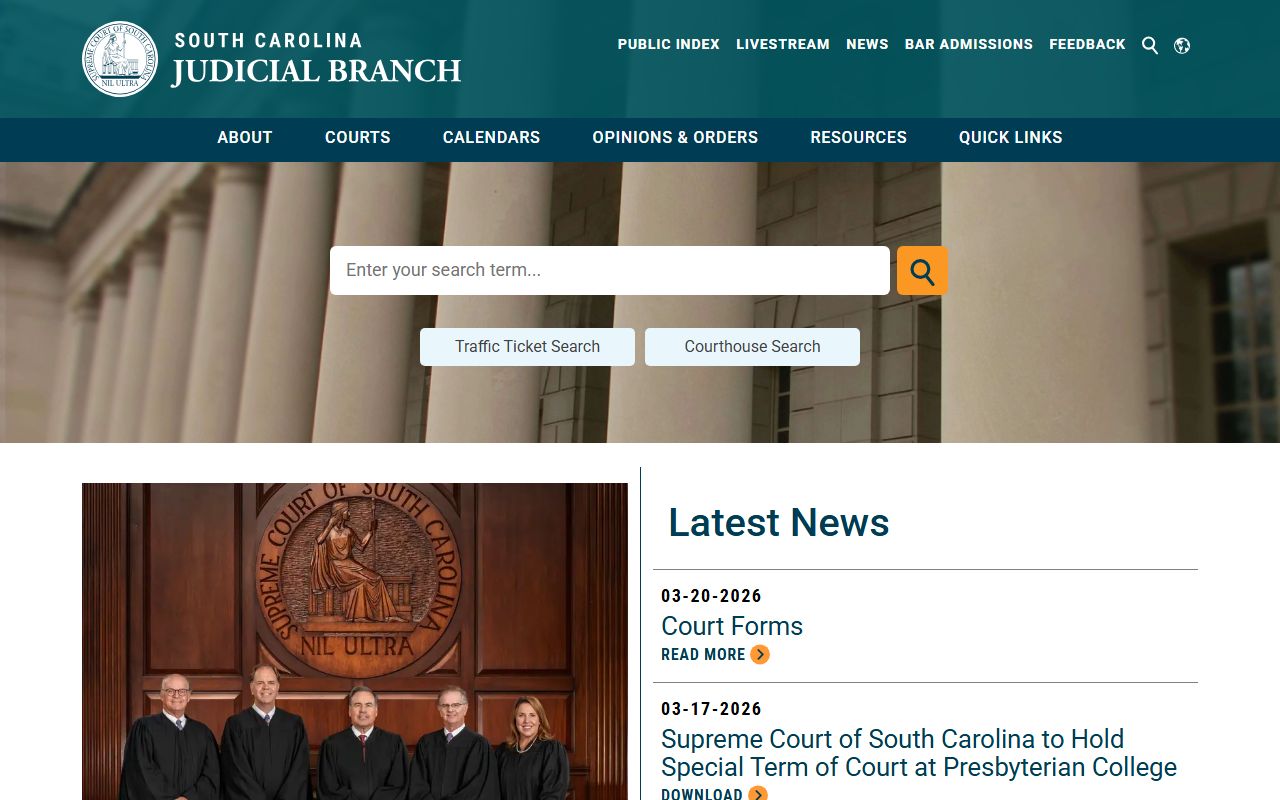
The Public Index search results will show the case type, filing date, and the parties listed in any Marion County probate case.
Estate Administration in Marion County Probate Court
Opening an estate in Marion County begins at the probate court with the original will and a certified death certificate. Photocopies are not accepted in place of originals. When no will exists, the estate is intestate and Title 62 of the South Carolina Code governs the order of inheritance.
Once the Marion County Probate Court opens the estate, it appoints a personal representative to carry out administration. If a valid will names an executor, that person usually receives the appointment. In intestate cases, the court uses the priority sequence in Title 62 to select an administrator. The personal representative must identify and gather the decedent's assets, provide notice to creditors, pay valid claims, file an inventory with the Marion County court, submit accountings as required, and distribute what remains to the heirs. Each filing the personal representative makes with the court is added to the estate record.
Smaller Marion County estates may qualify for simplified or summary administration depending on the total value and character of the assets. Reviewing the current version of Title 62 and consulting with the Marion County Probate Court clerk is the best way to determine which process applies in a given situation.
Note: The personal representative of a Marion County estate owes a fiduciary duty to all heirs and valid creditors and can face personal liability for mismanagement of the estate.
Guardianship and Conservatorship in Marion County
Guardianship and conservatorship cases in Marion County protect adults who can no longer manage their own affairs. These are formal legal proceedings with serious consequences for the person being protected, and Marion County probate records from these cases are among the most sensitive in the court's files.
To begin a guardianship in Marion County, the petitioner files a petition with the probate court along with supporting medical or functional evidence that the proposed ward lacks capacity to manage personal decisions. The court reviews the evidence and may appoint a guardian ad litem to represent the ward's interests independently. If the court grants the petition, it issues an order of appointment that defines the scope of the guardian's authority. From that point forward, the guardian must file annual reports covering the ward's living situation, health status, and welfare. All documents are retained in the Marion County guardianship file and are available to authorized parties.
Conservatorship cases proceed along a similar track. The conservator files an initial inventory of the protected person's assets and then submits annual accountings. These accountings list every receipt and expenditure managed on the protected person's behalf and are reviewed by the Marion County Probate Court to ensure no misuse occurs.
Marion County Marriage License Records
The Marion County Probate Court issues marriage licenses to couples marrying within South Carolina when Marion County is the county of license. The fee for a South Carolina marriage license is $46. Both applicants must appear in person and present valid identification. There is no waiting period in South Carolina after the license is issued.
Marriage license records held by the Marion County Probate Court are public records. They note the names of both applicants and the date the license was issued. These records are used regularly in estate proceedings to establish the legal relationship between a deceased person and a surviving spouse, and in genealogical research to trace family connections across generations in the Pee Dee region.
Researchers who need certified copies of Marion County marriage license records should contact the Marion County Probate Court directly. The court can confirm whether a license was issued and provide copies subject to the standard fee schedule.
Marion County Register of Deeds and Property Records
In Marion County, the Register of Deeds function is performed by the elected Clerk of Court rather than a separate Register of Deeds office. The Clerk records deeds, mortgages, plats, and other real property instruments for Marion County. This arrangement is common in smaller South Carolina counties and means that property researchers in Marion County work with the Clerk's records rather than a separate Register of Deeds.
When a Marion County estate includes real property, the transfer of that property to heirs or a buyer must be recorded with the Clerk of Court after the probate court closes the estate. Researchers tracing the chain of title for Marion County land often need to review both the probate court's estate file and the Clerk's deed index. The South Carolina Register of Deeds resource page explains how deed recording operates across the state and is a helpful reference for understanding the process in Marion County.
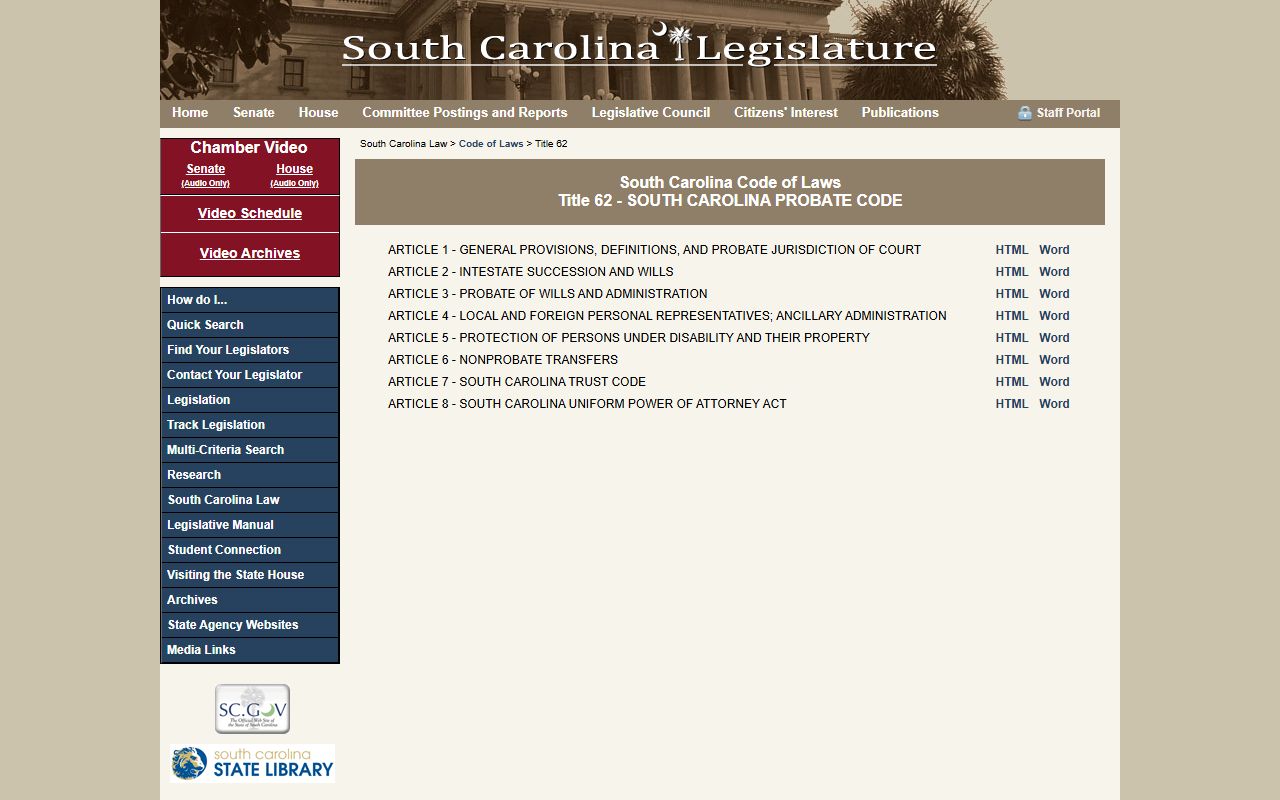
Reading Title 62 alongside the Clerk's deed index gives researchers a complete view of how estate property moved through the legal system in Marion County.
Historical Marion County Probate Records
Marion County's history in the Pee Dee region extends back well before South Carolina statehood, making its probate court records a valuable resource for genealogical research. Historical Marion County probate records document estate settlements, guardianship appointments, and marriage licenses that trace generations of families who farmed and lived in this part of northeastern South Carolina.
The South Carolina State Library holds collections relevant to historical Marion County probate documents. Microfilmed records, published finding aids, and digitized resources at the State Library can help researchers identify and access older records without traveling directly to Marion. The State Library's catalog is searchable online, making it a practical first stop for historical Marion County probate research.

The State Library's collections are open to South Carolina residents and provide a useful bridge to Marion County records that predate modern filing systems.
Note: Researchers looking for very early Marion County probate records should be aware that county boundaries in the Pee Dee changed several times in the eighteenth and nineteenth centuries, which may affect where earlier records are held.
Nearby Counties
Marion County borders several other South Carolina counties in the Pee Dee region. Each has its own elected probate judge and court. Confirm the county of domicile at death to determine which county's probate court has jurisdiction over an estate.