
Williamsburg County Probate Records and Court Filings
Williamsburg County probate court records document all proceedings before the county's elected probate judge, covering estate administration, wills, guardianship cases, conservatorships, marriage licenses, wrongful death settlement approvals, and involuntary commitment proceedings. Williamsburg County is a rural county in South Carolina's Pee Dee region, with Kingstree serving as the county seat and center of courthouse activity. The county's agricultural heritage and deep family roots mean that probate records here often trace estates through multiple generations of the same families. Heirs, genealogists, attorneys, and researchers depend on Williamsburg County probate court records to verify estate outcomes and understand how land and property passed through local families across more than two centuries.
Williamsburg County Quick Facts
Williamsburg County Probate Court Jurisdiction and Authority
The Williamsburg County Probate Court operates under the South Carolina Probate Code, Title 62, which defines the court's jurisdiction and establishes the procedures it must follow for each type of proceeding. The probate judge is elected countywide to a four-year term by Williamsburg County voters. The court is located in Kingstree, the county seat, and serves all communities across this rural county.
Jurisdiction covers the estates of all persons who were domiciled in Williamsburg County at the time of death, whether or not they left a will. The court also handles adult guardianship proceedings, adult conservatorship proceedings, marriage license issuance, minor settlement approvals for settlements exceeding ten thousand dollars, wrongful death settlement approvals, and involuntary mental health commitment hearings. Every proceeding creates case records retained permanently by the Williamsburg County Probate Court.
The South Carolina Judicial Branch maintains the Public Index, a free online tool for searching case-level information across all 46 South Carolina counties. Searching by party name or case number returns Williamsburg County probate cases. Copies of documents must be obtained directly from the Williamsburg County Probate Court. The Public Index provides case data, not document images.
Note: A person who owned property in Williamsburg County but was legally domiciled in another South Carolina county at death would have their estate opened in the county of domicile, with Williamsburg County handling any ancillary proceedings for local real estate if needed.
Types of Williamsburg County Probate Court Records
Estate files are the most commonly requested Williamsburg County probate court records. A complete estate file contains the petition to open proceedings, the original will if one was offered for probate, a certified death certificate, a detailed inventory of the decedent's assets, all creditor claims and their resolution, the personal representative's accountings, and the final closure order. Each of these documents is a public record that can be reviewed or copied by interested parties.
Guardianship and conservatorship records form a substantial portion of the court's files. A guardianship record documents the appointment of someone to make personal decisions for an adult who can no longer do so on their own. It includes the petition, supporting medical or evaluative evidence, any guardian ad litem report, the appointment order, and all subsequent annual reports. A conservatorship record addresses financial management and includes an initial asset inventory along with annual accountings. Both types of Williamsburg County probate records serve as an ongoing accountability mechanism reviewed by the court after each filing.
Marriage licenses issued by the Williamsburg County Probate Court show both parties' names, their dates of birth, and the date of issuance. These records come up regularly in estate proceedings where a marital relationship must be verified to establish heir status or the right to take under a will.
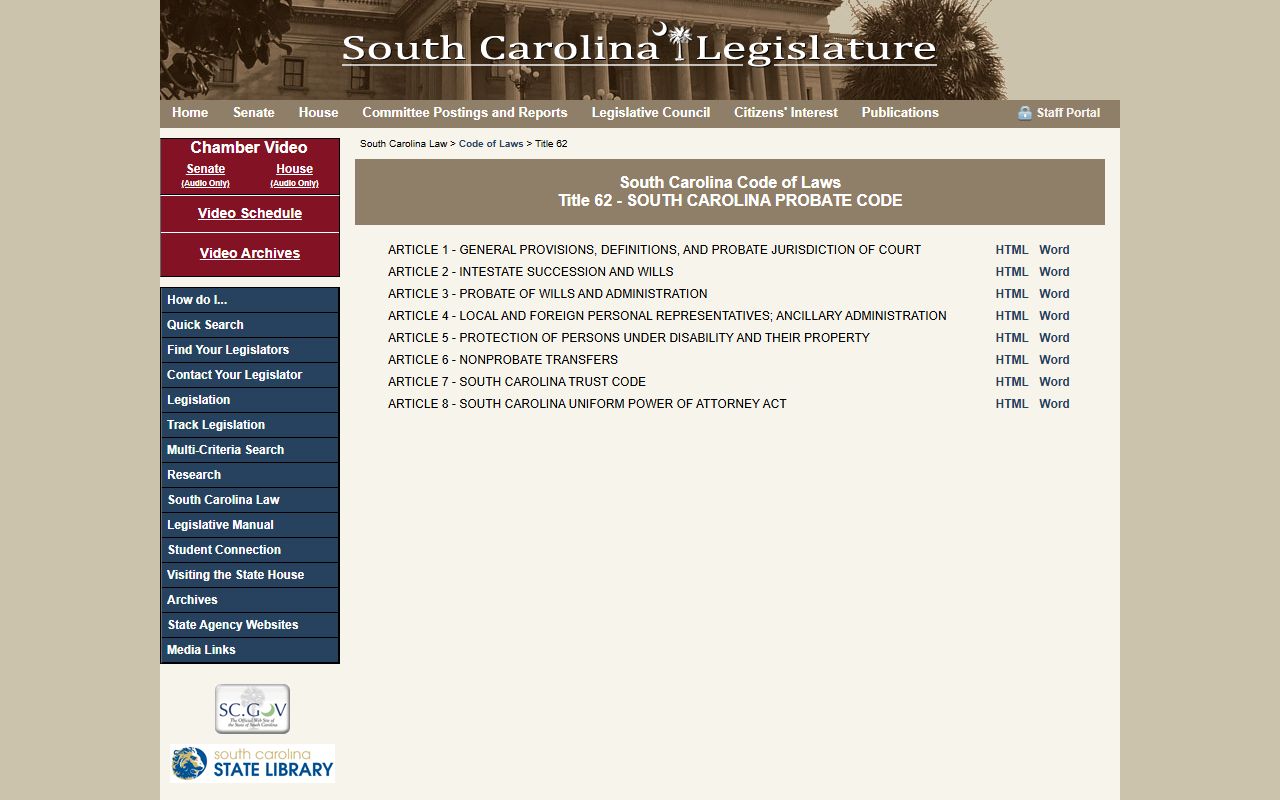
Title 62 of the South Carolina Code is the foundation for every category of case filed with the Williamsburg County Probate Court.
Accessing Williamsburg County Probate Records
Records are available in person at the Williamsburg County Probate Court in Kingstree. Courthouse staff can search by party name or case number and can retrieve both current and older archived files. Visitors should bring valid photo identification and be prepared to pay the standard fee for any copies requested. Certified copies carry a higher fee than plain copies and are required when official documentation is needed for legal or financial purposes.
Free online access to case-level information is available through the SC Judicial Branch Public Index. The index is searchable by name and case number without an account. Document images are not available online; obtaining a copy of any particular document requires a request to the Williamsburg County Probate Court. Court forms for estate administration, guardianship, and conservatorship are available free through the SC Courts forms library and should always be the current approved version to avoid rejection at filing.
Vital records required for Williamsburg County probate proceedings can be ordered online through VitalChek, the state-authorized service for South Carolina death certificates, birth certificates, and marriage records. Researchers studying older Williamsburg County estates and family histories can consult the South Carolina State Library, which maintains collections covering the Pee Dee region. The South Carolina Department of Archives and History holds additional records relevant to Williamsburg County history.
Administering an Estate in Williamsburg County Probate Court
Estate administration in Williamsburg County begins with presenting the original will and an original certified death certificate to the probate court in Kingstree. Photocopies are not accepted at the opening stage. When the decedent left no valid will, Title 62's intestate succession rules determine who is entitled to inherit and in what proportions.
After the estate is opened, the court appoints a personal representative to administer the proceedings. Whether named as executor in a will or appointed as administrator in an intestate matter, this person is legally responsible for collecting all estate assets, providing proper notice to creditors, paying valid claims from estate funds, filing an inventory and accounting documents with the Williamsburg County Probate Court, and distributing the remaining estate to the rightful beneficiaries or heirs. All filings made during this process become part of the permanent Williamsburg County probate estate record.
Many Williamsburg County estates include farmland and timber tracts that require professional appraisal before a proper inventory can be prepared and filed. Timber rights and agricultural land can be difficult to value accurately, and the personal representative has a duty to obtain reasonable valuations for all property. Estates that include undivided interests in family-owned land are particularly common in rural counties and may require partition proceedings or other legal steps before the estate can be fully closed.
Note: Estates with total value below the threshold established by the South Carolina Probate Code may qualify for a simplified small estate procedure that reduces the court involvement required in the administration process.
Guardianship and Conservatorship Proceedings in Williamsburg County
Williamsburg County probate court records include guardianship and conservatorship cases for county residents who can no longer manage their personal or financial affairs. These proceedings are common in rural counties with aging populations and extended family structures, where family members often take on the caregiver role and eventually seek formal legal authority to make decisions on behalf of an incapacitated relative.
A guardianship petition in Williamsburg County must document the proposed ward's incapacity, generally through medical records or clinical evaluations. The probate court schedules a hearing after the petition is filed and may appoint a guardian ad litem to represent the proposed ward's interests during the process. If the court grants the petition, its order specifies the guardian's authority in detail. The guardian must then file annual reports with the Williamsburg County Probate Court confirming the ward's condition and welfare. These reports become a permanent part of the guardianship file.
Conservatorship cases provide financial accountability through the same structure. After appointment, the conservator files a complete inventory of the protected person's assets and submits annual accountings that document every transaction. The Williamsburg County Probate Court reviews these accountings and can take action if the conservator fails to file or if the accountings reveal mismanagement. Family members who have concerns about an active conservatorship case in the county may bring those concerns to the probate court's attention.
Williamsburg County Clerk of Court and Property Records
In Williamsburg County, the Register of Deeds function is performed by the elected Clerk of Court. The Clerk records deeds, mortgages, plats, and other instruments affecting real property in the county. This arrangement is consistent with the practice in several smaller South Carolina counties where a separate Register of Deeds office is not maintained.
When a Williamsburg County estate includes real property, the deed transferring that property to heirs or a buyer must be recorded with the Clerk of Court after the probate court closes the estate. Researchers tracing the chain of title on Williamsburg County land frequently need to combine the probate estate file with the deed records at the Clerk's office to follow the full ownership history. The South Carolina Register of Deeds resource page provides statewide guidance on recording requirements that applies in Williamsburg County as well.
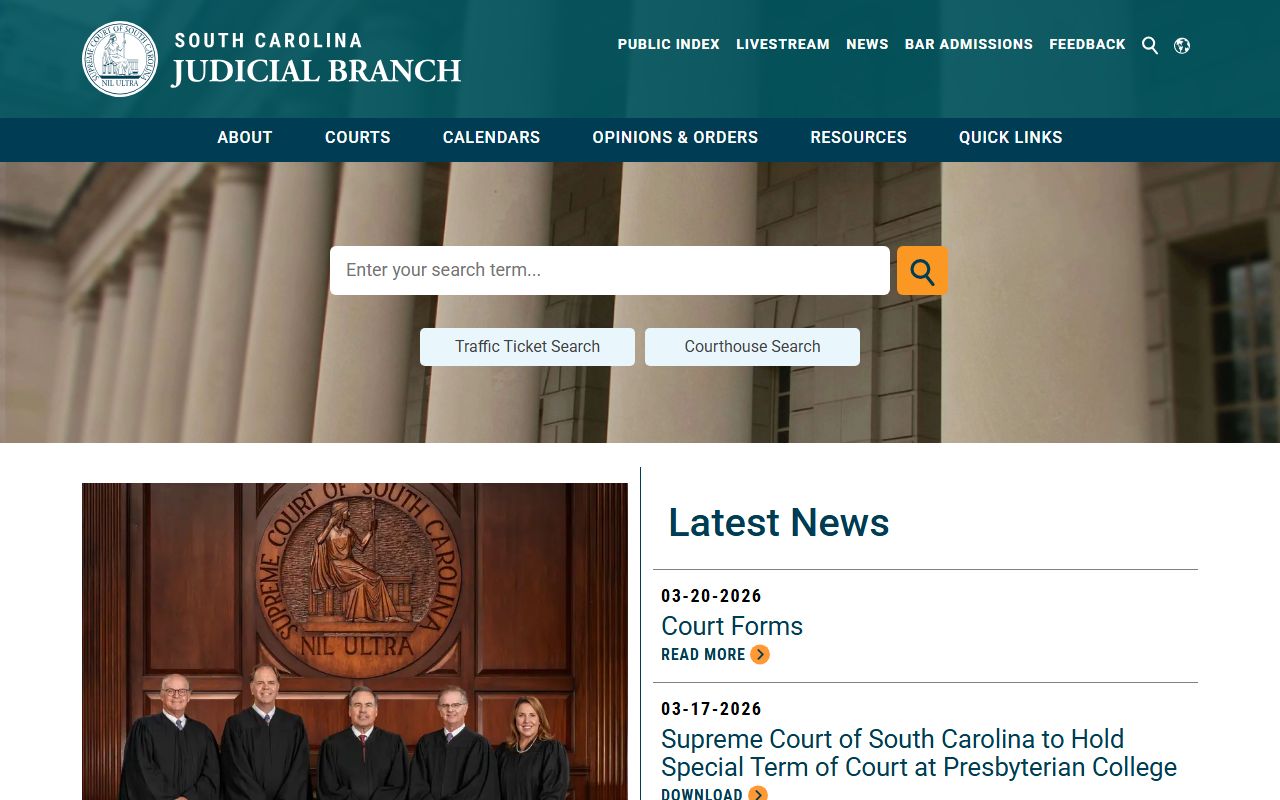
The SC Judicial Branch website is the central online resource for Williamsburg County probate case lookups and downloadable court forms.
Note: When Williamsburg County land is subject to a recorded mortgage at the time the estate is opened, the lien must be addressed before the property can be transferred free and clear to the heirs.
Williamsburg County Local Context and Probate Records
The Williamsburg County government serves a rural community in the Pee Dee region where agriculture, timber, and public sector activity are central to the local economy. The county has participated in EPA Brownfield Coalition Assessment Grant programs, reflecting active local planning efforts to address environmental conditions on formerly industrial or commercial properties. These efforts intersect with probate matters when estates include properties that may be subject to environmental assessment or remediation requirements.
When a Williamsburg County estate includes a commercial property, former industrial site, or agricultural land with environmental concerns, the personal representative may need to investigate potential liabilities before distributing that property to heirs. Environmental issues that were not discovered during estate administration can create problems for heirs after the estate is closed. Consulting a South Carolina attorney familiar with both probate and environmental law is advisable when these circumstances arise in a Williamsburg County estate.
Kingstree, the county seat, is a small town with a courthouse that dates back many generations. Its probate court has accumulated records covering more than two centuries of local estate activity. The long record series available here makes Williamsburg County a particularly rich source for genealogical research into Pee Dee families.
Historical Williamsburg County Probate Records
Williamsburg County was established in 1804, carved out of the Georgetown District. Its history in the Pee Dee region stretches back to colonial settlement, and the county's probate records document estate settlements from the earliest decades of the nineteenth century. Many historic Williamsburg County estates involved large landholdings, timber rights, and agricultural operations that generated detailed inventories reflecting the local economy of each era.
The South Carolina State Library and the South Carolina Department of Archives and History both hold materials relevant to Williamsburg County's historical record. Microfilmed and digitized records from the nineteenth and early twentieth centuries allow researchers to consult older estate files without traveling to Kingstree. Genealogists tracing Williamsburg County families often find that the probate estate inventories and wills from this period contain invaluable information about property, relationships, and local community networks that is not available from any other source.
Note: Researchers seeking Williamsburg County records from before 1804 should search the records of Georgetown District, which governed this area before the county was formed.
Nearby Counties
Williamsburg County is in the Pee Dee region and is surrounded by several South Carolina counties, each with its own probate court. The decedent's county of domicile at the time of death determines which court has jurisdiction over the estate.