
Clarendon County Probate Court Records
Clarendon County probate court records are created and maintained by the Clarendon County Probate Court in Manning, the county seat. These records cover estate administration for county residents who have passed away, whether or not they left a will. The court also handles guardianship records, conservatorship filings, trust matters, marriage licenses, and involuntary commitment proceedings. All of these probate filings are subject to South Carolina's open records laws and can be reviewed by members of the public at the Manning courthouse.
Clarendon County Probate Court Quick Facts
Clarendon County Probate Court Records and South Carolina Law
The legal framework for all probate matters in Clarendon County comes from Title 62 of the South Carolina Code of Laws, known as the South Carolina Probate Code. This statute sets out the procedures for opening and closing estates, appointing personal representatives, managing trusts, and protecting people who need guardians or conservators. Every probate filing in Clarendon County is shaped by the requirements of Title 62.
When a Clarendon County resident dies and leaves property behind, Title 62 determines how that property moves to the next owner. If a valid will exists, the court confirms it is genuine and appoints the personal representative named in it. Without a will, the estate is intestate and South Carolina's succession rules determine who inherits. In either case, the personal representative must gather assets, pay debts, file court documents at each stage, and ultimately distribute what remains. All of these steps create probate records at the Clarendon County courthouse in Manning.
Trusts also fall within the court's reach in Clarendon County. When a dispute arises over a trust, or when the trust terms require court supervision, the Clarendon County Probate Court becomes involved. Trust-related filings join the probate record system and can be reviewed by interested parties. Note: Not all trusts go through probate court. Living trusts that are properly funded and maintained may pass assets to beneficiaries outside the formal probate process in Clarendon County.
Finding Clarendon County Probate Court Records Online
The South Carolina Judicial Branch provides online access to court case information through its Public Index system. This tool allows you to search for Clarendon County probate court records by the name of the deceased, a party's name, or a case number. The Public Index shows basic case information including filing dates and the names of parties involved. It is a free resource that works well for a first check before visiting the courthouse in Manning.
Start your online search at sccourts.org. The site also provides procedural guides and answers to common questions about the probate process in South Carolina. For court forms used in Clarendon County probate proceedings, including petitions for estate administration, guardian appointments, and conservatorships, visit sccourts.org/forms. Downloading the correct forms before your visit to the Manning courthouse saves time and ensures you provide the information the court needs.
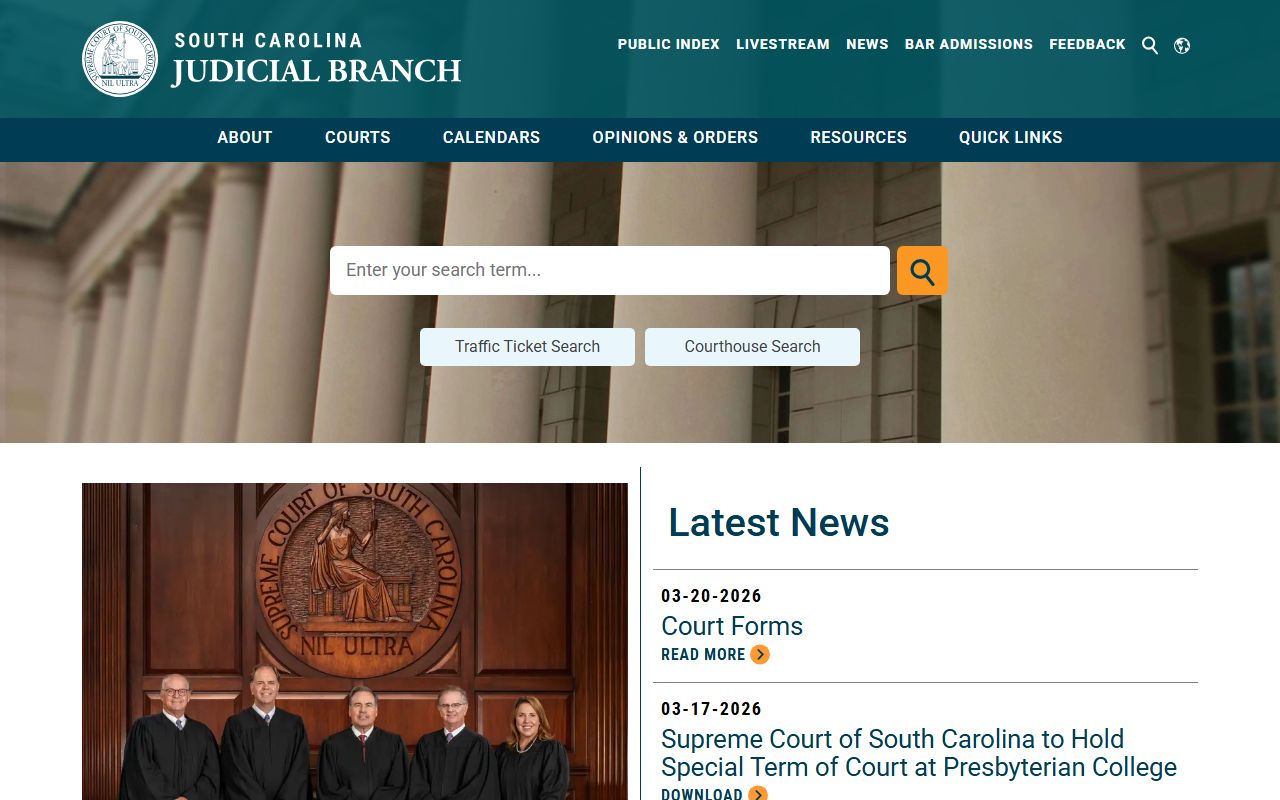
The SC Judicial Branch website shown above is the central online resource for all South Carolina court systems and provides a searchable index of Clarendon County probate filings going back several years.
| Court | Clarendon County Probate Court |
|---|---|
| County Seat | Manning, South Carolina |
| Register of Deeds | Appointed by Governing Body |
| Governing Law | SC Code Title 62 |
| SC Judicial Branch | sccourts.org |
| Court Forms | sccourts.org/forms |
Note: When visiting the Clarendon County Probate Court in Manning, bring the full legal name of the deceased and the approximate year of death to make the search process faster.
Estate Administration Records Filed in Clarendon County
Estate administration in Clarendon County begins when a petition is filed at the probate court in Manning. The court reviews the petition and any will that accompanies it. Once satisfied that the will is valid, the court formally opens the estate and issues Letters Testamentary or Letters of Administration to the personal representative. These letters are legal authority for the personal representative to act on behalf of the estate.
From that point, the personal representative has specific duties under Title 62. An inventory must be filed listing every asset in the estate, including real property, bank accounts, vehicles, and personal items with significant value. Creditors receive formal notice and have a limited window to file claims. Valid claims are paid from estate funds. Whatever remains goes to the heirs or beneficiaries named in the will. If no will exists, South Carolina's intestate succession rules direct the distribution. Each of these actions produces a court document that becomes part of the Clarendon County probate record.
Wills filed in Clarendon County become public records once admitted to probate. Heirs, beneficiaries, genealogical researchers, and title companies regularly review estate files at the Manning courthouse. Contested wills, disputes over personal representative conduct, and creditor disagreements can add many more filings to a case. These contested probate matters may take longer to resolve and generate larger files than straightforward estates in Clarendon County.
Clarendon County Guardianship Records and Conservatorship Filings
The Clarendon County Probate Court handles guardianship and conservatorship cases for residents who need court-appointed protection. A guardianship is needed when a person, whether a minor child or an incapacitated adult, requires someone to make daily life decisions on their behalf. A conservatorship is needed when a person's finances must be managed by a court-supervised individual.
Guardianship records in Clarendon County begin with a petition explaining the situation and the need for court intervention. The court schedules a hearing and may appoint a guardian ad litem to represent the person at the center of the case. Medical and evaluative reports often accompany the petition. If the court finds that a guardianship or conservatorship is warranted, it issues an order and the appointed person takes on legal responsibilities. Annual reports filed with the Clarendon County Probate Court track how the guardian or conservator is fulfilling those duties over time.
These court documents are part of the public record in Clarendon County. Sensitive health information may be protected from full public disclosure, but the basic details of who holds guardianship and the scope of their authority are generally accessible. Families who need to establish a guardianship or conservatorship in Clarendon County can find the required petition forms at sccourts.org/forms.
Historical Clarendon County Probate Records and the SC State Library
Clarendon County has a long history, and its probate records reflect that. Estate inventories, wills, and guardianship records from earlier centuries can provide a window into daily life and family structures that no other source offers. Researchers tracing genealogical lines through Clarendon County often find that probate records are among the richest primary sources available.
For records that predate electronic filing or that are no longer held at the Manning courthouse, the South Carolina State Library maintains collections of historical court documents from across the state. These collections include Clarendon County probate filings that researchers can access through the library's services. Microfilm copies, digital scans, and finding aids can help you locate specific estate records without making repeated trips to the courthouse in Manning.
The South Carolina State Library shown above houses historical probate documents from Clarendon County, making it a key stop for genealogical researchers who need records from earlier generations.
Pairing State Library holdings with the records available at the Clarendon County Probate Court in Manning gives researchers the broadest possible view of historical estates in the county. Note: Some historical Clarendon County probate documents are available through digitization projects and may be accessible online through the State Library or partnering archives.
Marriage Licenses and Vital Records in Clarendon County
The Clarendon County Probate Court in Manning issues marriage licenses to couples who plan to marry in South Carolina. Both individuals must visit the courthouse in person and present valid government-issued identification. South Carolina imposes no waiting period, so the ceremony can take place on the same day the license is issued.
Marriage licenses are filed and stored within the Clarendon County probate records system. Certified copies are often required when applying for name changes, updating financial accounts, or submitting immigration paperwork. You can request a certified copy directly from the Clarendon County Probate Court or place an order through VitalChek, which processes official vital record orders on behalf of South Carolina courts and state offices. For links to state agencies and government services across South Carolina, including those that interact with probate courts, see sc.gov.
Marriage licenses, estate records, and guardianship filings are all maintained by the same Clarendon County Probate Court. This concentration of records under one roof makes Manning a single destination for several types of legal documents affecting Clarendon County residents.
Clarendon County Register of Deeds and Land Records Tied to Estates
Clarendon County has an appointed Register of Deeds. This office is separate from the Probate Court and maintains land records, deeds, and property transfer documents for the county. When real property passes from an estate to heirs or buyers, the deed must be recorded with the Clarendon County Register of Deeds to complete the transfer in the public record.
Researchers who need a complete picture of a Clarendon County estate that included real property will want to check both the probate file at the courthouse in Manning and the land records held by the Register of Deeds. The two sets of records together tell the full story of how property moved through the estate. For a guide to Register of Deeds offices and deed recording across South Carolina, visit sccourts.org/rod. The South Carolina General Assembly website provides the full text of state statutes that govern both probate and property recording in Clarendon County.
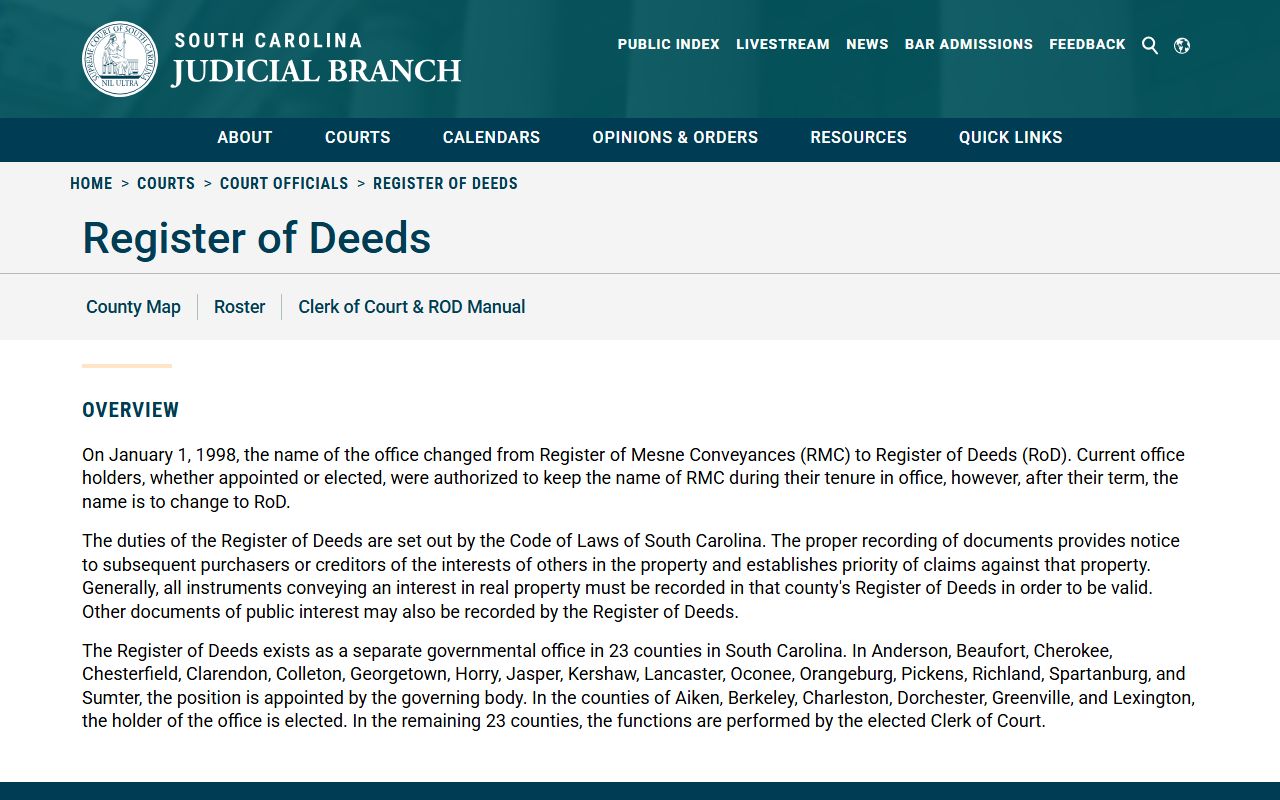
The SC Courts Register of Deeds page shown above explains how land records and deed recording work statewide and points researchers to the correct Clarendon County office for property-related records tied to an estate.
Nearby Counties with Probate Court Records
Clarendon County borders five South Carolina counties. Probate court records in these neighboring counties may also be relevant when researching families with ties to the Clarendon County area.