
Abbeville County Probate Court Records
Abbeville County probate court records document the full range of proceedings handled by the elected probate judge, from estate administration and wills to guardianship, conservatorship, and marriage licenses. Abbeville is one of South Carolina's oldest counties, founded in 1785 and known as the "Birthplace and Deathbed of the Confederacy." Its probate court has maintained records spanning more than two centuries. Researchers, heirs, and legal professionals rely on Abbeville County probate court records to confirm property transfers, establish family lineages, and manage the estates of loved ones.
Abbeville County Probate Court Quick Facts
About the Abbeville County Probate Court
The Abbeville County Probate Court is a court of limited but important jurisdiction. Its authority comes from the South Carolina Constitution and the South Carolina Probate Code, Title 62. The probate judge is elected countywide to a four-year term. This is not an appointed post, which means voters in Abbeville County directly choose the judge who will oversee probate matters for their community.
The court handles the estates of deceased persons, whether or not a will exists. It also oversees guardianship proceedings for adults who can no longer make their own health and welfare decisions. Conservatorship cases, which concern the management of finances for incapacitated individuals, fall under the court's authority as well. Beyond those proceedings, the Abbeville County Probate Court issues marriage licenses, handles involuntary commitment proceedings, and approves settlements for minors and wrongful death cases. Each of these proceedings generates records that become part of the court's permanent files.
The Abbeville County official website provides contact details and general guidance for residents who need to reach the probate court. Because Abbeville is a smaller county, it is wise to call ahead before visiting in person.

The county website lists department contacts, court locations, and updates that affect how filings are processed in Abbeville County.
Abbeville County Probate Court Records: Types and Contents
Probate filings in Abbeville County cover a broad range of legal matters. Estate records are the most common type. When a person dies and leaves property behind, the estate must typically go through probate. The court file will include the petition to open the estate, the original will if one exists, the death certificate, an inventory of assets, accountings filed by the personal representative, and the final order closing the estate.
Guardianship records document who has been appointed to make personal decisions for an incapacitated adult. Conservatorship filings show who manages that person's finances. Both types of records include the initial petition, medical or evaluative evidence, the court's order of appointment, and any annual reports required by law. These records are valuable to family members, financial institutions, and healthcare providers who need to confirm the legal authority of a guardian or conservator in Abbeville County.
Marriage license records date back many decades in Abbeville County. They show the names of both parties, their ages, and the date the license was issued. Wills that have been admitted to probate are also part of the public record once a probate case is opened. Note: Not all wills are filed with the probate court; a will only becomes a court record when the estate is formally opened in Abbeville County.
How to Access Abbeville Probate Records
You can access Abbeville County probate court records in person at the probate court office in the county seat of Abbeville. Bring a valid photo ID. Court staff can help you search by decedent name or case number. Older records may be stored separately, so allowing extra time is helpful.
The South Carolina Judicial Branch maintains the Public Index, a statewide online case search system. You can search for probate cases across all South Carolina counties, including Abbeville, by name or case number. The Public Index is free to search for basic case information. Copies of actual documents must be requested directly from the court. Standard copy fees apply, and certified copies cost more than plain copies.
Downloadable court forms for estate administration and guardianship proceedings are available through the SC Courts forms page. Using the correct form helps avoid delays when you file in Abbeville County. For vital records such as birth and death certificates connected to a probate matter, VitalChek is an authorized ordering service for South Carolina vital records.
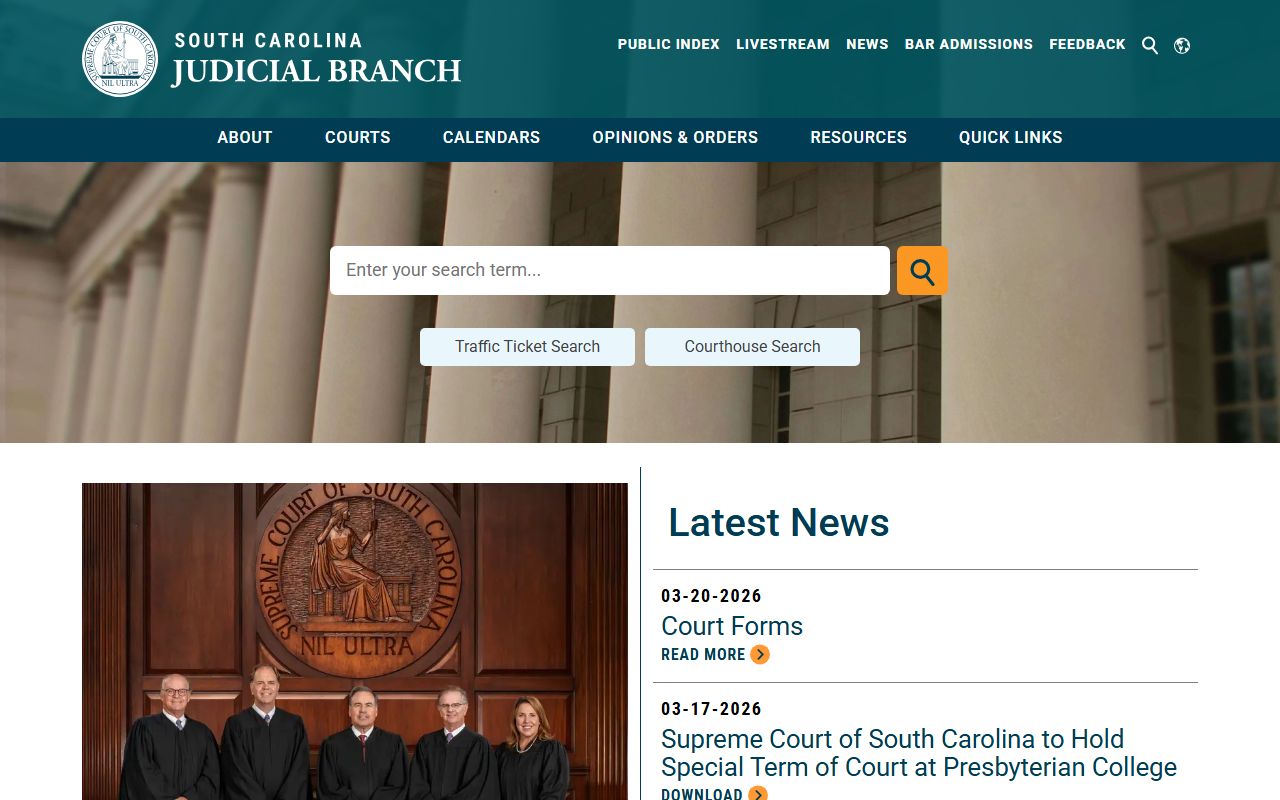
The SC Judicial Branch site also offers guidance on navigating the court system if you are representing yourself in an Abbeville County probate matter.
Estate Administration in Abbeville County
When a person dies in Abbeville County, their estate may need to go through formal probate before assets can be distributed. The first step is bringing the original will and an original death certificate to the Abbeville County Probate Court. Copies are not accepted in place of originals. If the deceased left no will, the situation is called intestate, and South Carolina law determines who inherits the estate. The closest relative should come to the court in person with the original death certificate.
The court will appoint a personal representative, sometimes called an executor or administrator, to manage the estate. This person collects the decedent's assets, pays valid debts and taxes, and distributes what remains to the heirs according to the will or state law. The personal representative must file an inventory of assets and periodic accountings with the Abbeville County Probate Court. These documents become part of the estate record and are generally available to interested parties.
The South Carolina Probate Code at Title 62 governs every step of this process statewide, including in Abbeville County. The South Carolina General Assembly updates the statute from time to time, so it is useful to confirm current requirements before you begin.
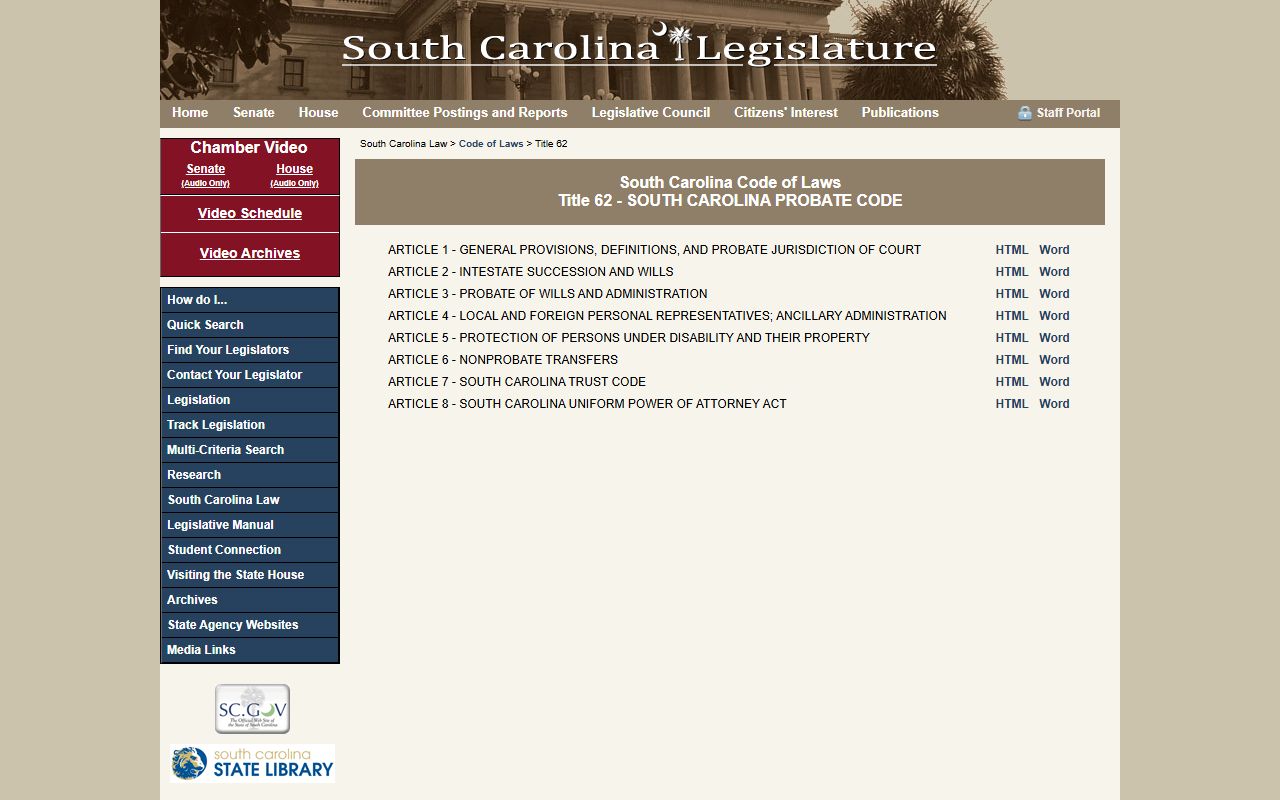
Title 62 covers testate and intestate succession, the duties of personal representatives, and creditor claims against estates opened in Abbeville County.
Note: Bring only original documents when appearing before the Abbeville County Probate Court; faxed or photocopied wills and death certificates are not accepted.
Guardianship and Conservatorship Records in Abbeville County
Abbeville County probate court records include proceedings for guardianship and conservatorship. These two types of cases protect adults who can no longer care for themselves or manage their own affairs. Guardianship is about personal decisions, such as medical care and living arrangements. Conservatorship concerns financial matters, such as managing bank accounts, paying bills, or handling real estate.
To open a guardianship case in Abbeville County, a petitioner must file with the probate court and present evidence that the proposed ward is incapacitated due to mental or physical impairment. The court will review medical records and may appoint a guardian ad litem to represent the ward's interests. Once appointed, the guardian must file annual reports with the court. These reports are part of the guardianship record in Abbeville County.
Conservatorship filings follow a similar path. The petitioner shows that the respondent cannot make sound financial decisions. The conservator files inventories and annual accountings. Both the guardianship and conservatorship records remain on file at the Abbeville County Probate Court and are available to authorized parties. Note: Family members who believe a loved one needs a guardian or conservator should contact the probate court or a licensed attorney before filing.
Marriage Licenses Issued by Abbeville County Probate Court
The Abbeville County Probate Court is the issuing authority for marriage licenses in the county. Both parties must appear together to apply. South Carolina law requires each applicant to be at least 18 years of age to obtain a license without additional court involvement.
Marriage license records maintained by the Abbeville County Probate Court show the names of both parties, their dates of birth, and the date the license was issued. These records serve as proof of the legal right to marry and are referenced in many estate and inheritance matters. If you need to order a certified copy of a marriage certificate rather than the original license record, VitalChek handles orders for South Carolina vital records, including marriage certificates.
Abbeville County Register of Deeds and Probate Records
In Abbeville County, the Register of Deeds function is performed by the elected Clerk of Court rather than a separate Register of Deeds office. This arrangement differs from counties where those two roles are split. The Clerk of Court records deeds, mortgages, liens, and other documents affecting real property in Abbeville County.
The connection between the Register of Deeds function and probate records is direct. When an estate that includes real property is settled in Abbeville County, the deed transferring that property to heirs or purchasers must be recorded with the Clerk of Court. The South Carolina Register of Deeds page through the Judicial Branch provides resources and background on how deed recording works across the state.
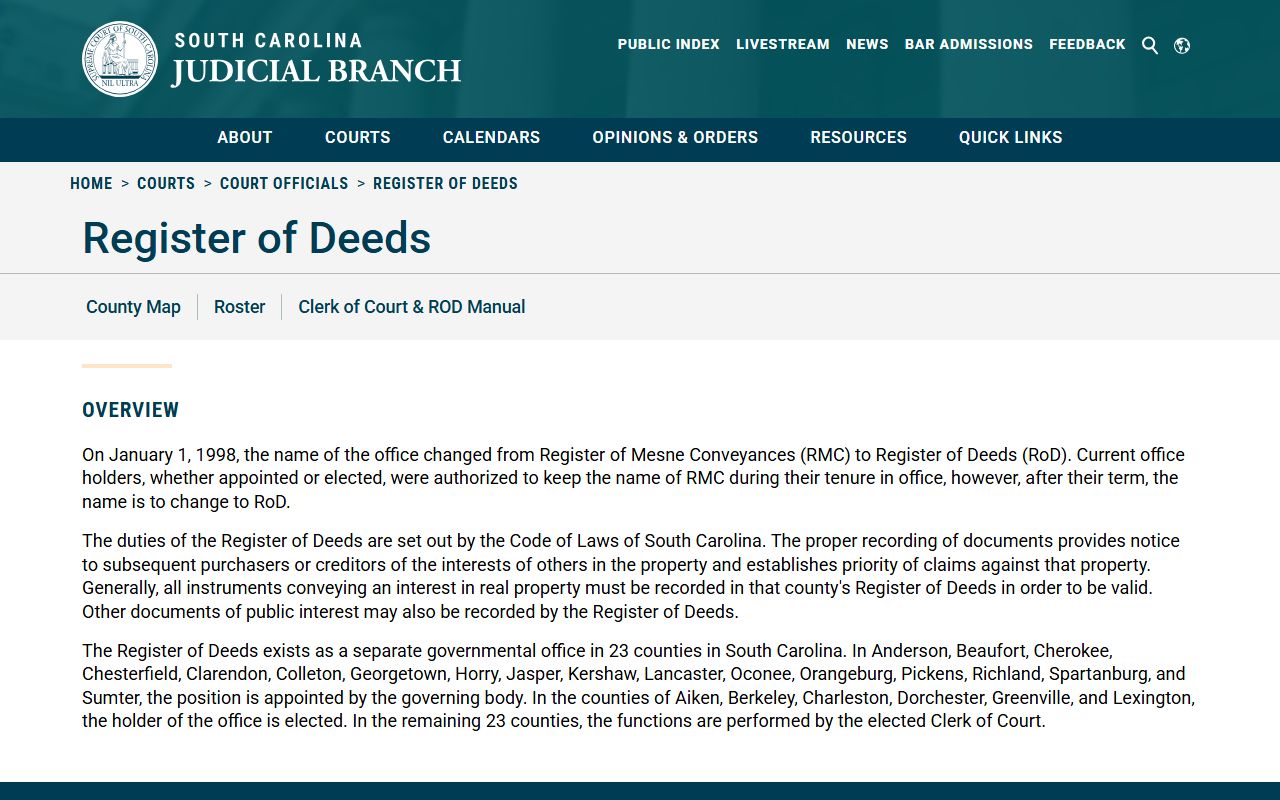
Researching property that passed through an Abbeville County estate often means cross-referencing probate court records with deed records held by the Clerk of Court.
Historical Probate Records for Abbeville County
Abbeville County was established in 1785, making it one of the earliest counties in South Carolina. Its probate records extend back to the late eighteenth century. These historical estate records, wills, and guardianship filings are valuable to genealogists tracing family lines in the Piedmont region of South Carolina. John C. Calhoun, one of the nation's most prominent statesmen of the antebellum era, was born in the Abbeville District, and many records from that era survive in various archives.
The South Carolina State Library holds digitized collections, microfilmed records, and reference materials that support historical research in Abbeville County. Many older probate records have been microfilmed for preservation. The State Library can help researchers identify which collections cover Abbeville County and how to access them. The South Carolina state government portal at sc.gov also links to multiple agencies that hold historical records relevant to Abbeville County probate research.
Abbeville's historic downtown, the Abbeville Opera House, the Burt-Stark Mansion, and the presence of Erskine College in Due West all reflect a county with deep roots. Researchers who connect historical estate records to these landmarks often find rich context for understanding property ownership patterns in the county going back more than two centuries.
Note: Genealogists should check both the SC State Library and the Abbeville County Probate Court when researching historical estate documents from this county.
Related Records Connecting to Abbeville County Probate Filings
Probate court records in Abbeville County often connect to other record sets held by different offices. Death certificates, which must accompany any petition to open an estate, are issued by the South Carolina Department of Health and Environmental Control and can be ordered through VitalChek. Marriage certificates, birth records, and divorce decrees also surface frequently in estate cases because they establish legal relationships between the decedent and potential heirs.
Tax records held by the Abbeville County Assessor help establish the value of real property included in an estate. Court of Common Pleas records may contain judgments against a decedent that must be resolved before an estate can close. The SC Judicial Branch site provides a unified access point for searching across multiple court types in Abbeville County. Combining probate court records with these related record sets gives the most complete picture of an estate and its resolution.
Nearby Counties
Abbeville County shares borders with several South Carolina counties. Each of those counties maintains its own probate court records. If you are unsure which county court has jurisdiction over an estate or other probate matter, confirming the decedent's county of residence at the time of death is the right starting point.