
Greenwood County Probate Court Records and Estate Guide
Greenwood County probate court records document the proceedings heard by the elected probate judge, covering estate administration, wills, trusts, guardianships, conservatorships, and marriage licenses under Title 62 of the South Carolina Code. Greenwood County sits in the western Piedmont of South Carolina, a region known for its lakes, farms, and small-city character centered on the city of Greenwood. Its probate court has maintained records for more than a century. Heirs, researchers, and legal professionals who need Greenwood County probate court records will find them at the courthouse in Greenwood and through the statewide online tools provided by the South Carolina Judicial Branch.
Greenwood County Probate Court Quick Facts
Greenwood County Probate Court: Authority and Scope
The Greenwood County Probate Court draws its authority from the South Carolina Constitution and the South Carolina Probate Code, Title 62. The probate judge is elected countywide to a four-year term, giving Greenwood County voters direct accountability for the office. The court's jurisdiction spans estate administration, trust oversight, guardianship proceedings for incapacitated adults, conservatorship cases for those who cannot manage their finances, marriage license issuances, minor and wrongful death settlements, and involuntary commitment proceedings.
The South Carolina Judicial Branch provides free online access to probate case information through the statewide Public Index. A search by decedent name or case number returns Greenwood County probate court records along with results from all other South Carolina counties. The Public Index shows case-level information without charge. Copies of filed documents must be requested directly from the Greenwood County Probate Court, and the standard fee schedule applies for plain and certified copies.
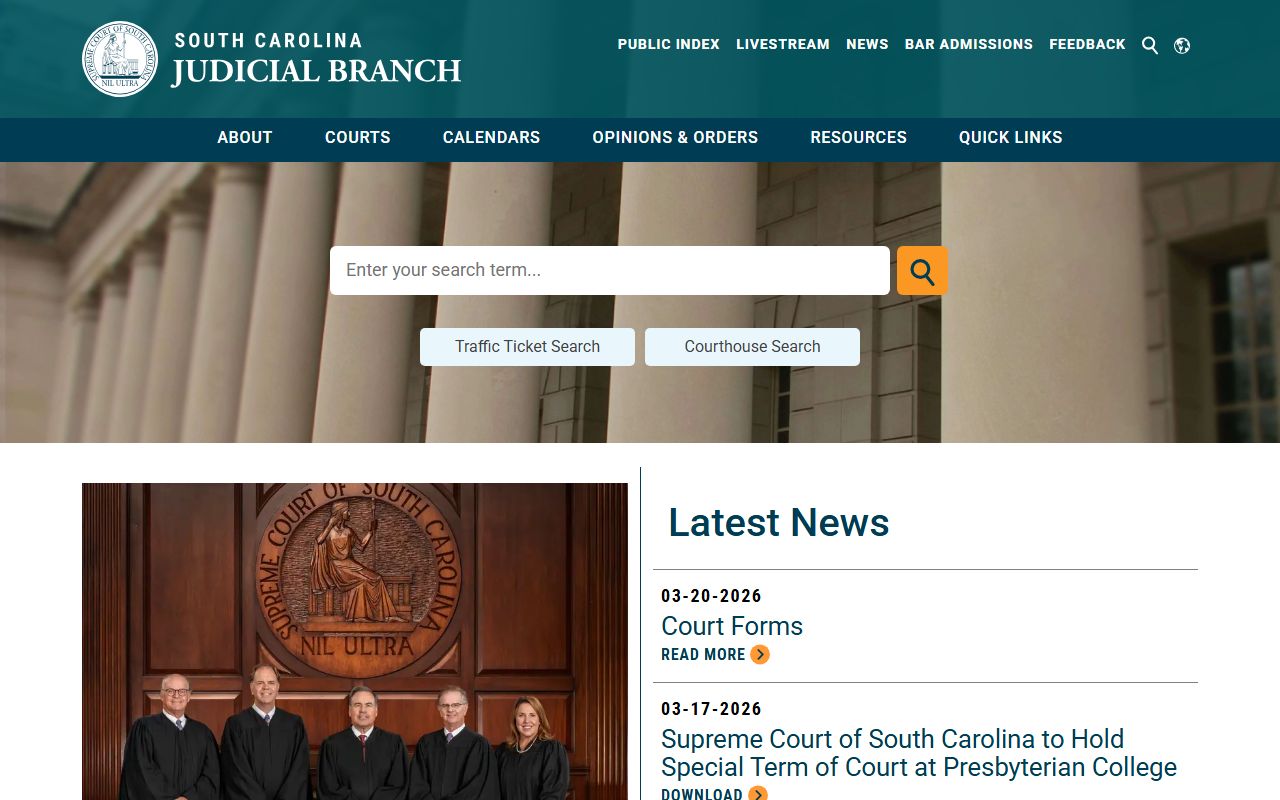
The SC Judicial Branch Public Index is the fastest free tool for checking whether an estate, guardianship, or other probate case has been opened in Greenwood County.
Note: Always confirm current court hours and filing requirements with the Greenwood County Probate Court before visiting the courthouse in person.
Types of Greenwood County Probate Records
Estate records are the most common filings at the Greenwood County Probate Court. When a Greenwood County resident dies with property in their name, the estate must typically pass through probate before assets can be transferred. A complete estate file contains the petition to open the case, the original will if one was executed, the death certificate, a full inventory of assets, accountings filed by the personal representative, creditor notifications and their resolution, and the final distribution order. Every item in this file is part of the permanent public record at the Greenwood County Probate Court.
Trust-related filings are also within the Greenwood County Probate Court's jurisdiction under Title 62. When a trust must come before the court, whether for supervision, modification, or dispute resolution, the resulting records are maintained alongside other probate filings. This gives Greenwood County probate records a broader scope than in some other states, where trust matters are handled exclusively by different courts.
Guardianship and conservatorship records make up another significant portion of Greenwood County probate court records. Guardianship cases address personal care decisions for adults who can no longer manage their own welfare. Conservatorship cases address financial management for those who cannot handle their own money. Both types of files include the opening petition, supporting medical or evaluative evidence, the court's order of appointment, and the annual reports the appointed party must submit to the court. Family members, financial institutions, and healthcare providers frequently request these records to confirm legal authority.
Marriage licenses issued by the Greenwood County Probate Court are also part of the court's permanent records. They document both parties' names, their dates of birth, and the date the license was issued. These records surface regularly in estate cases where a marriage must be proved to establish an heir's standing.
How to Access Greenwood County Probate Records
In-person access to Greenwood County probate court records is available at the courthouse in the city of Greenwood. Staff can assist with name-based and case-number searches. Older records may be stored separately; calling ahead is wise when researching historical filings from earlier decades.
The SC Judicial Branch Public Index provides free online case-level access for all South Carolina counties including Greenwood. Copies of documents require a direct request to the court. Court forms for estate administration, guardianship, conservatorship, and trust matters are available free of charge from the SC Courts forms page. Using the correct, current form prevents common filing errors and delays.
For vital records needed in connection with a probate matter, including death certificates and birth certificates to establish heirship, VitalChek is the authorized online ordering service for South Carolina vital records. The South Carolina government portal links to multiple state agencies that hold records relevant to Greenwood County probate and genealogical research.
Estate Administration in Greenwood County Probate Court
Opening a Greenwood County estate starts with bringing the original will and the original death certificate to the probate court. Only originals are accepted; photocopies and faxed documents are not sufficient. When no will was left, the estate is intestate and Title 62 of the South Carolina Code governs who inherits and in what order.
After the court opens the estate, it appoints a personal representative to administer the proceedings. This person gathers the decedent's assets, notifies creditors and pays valid claims, files an inventory and periodic accountings, and distributes the remaining estate to the heirs. Every filing submitted during this process becomes part of the Greenwood County estate record. The personal representative must act in the interest of all heirs and creditors throughout the administration. Failing to do so can result in personal liability for the representative.
The South Carolina General Assembly updates Title 62 from time to time. Confirming current requirements before beginning a Greenwood County estate administration is always a sound step. Small estates that fall below thresholds set in Title 62 may qualify for simplified procedures that avoid full formal probate.
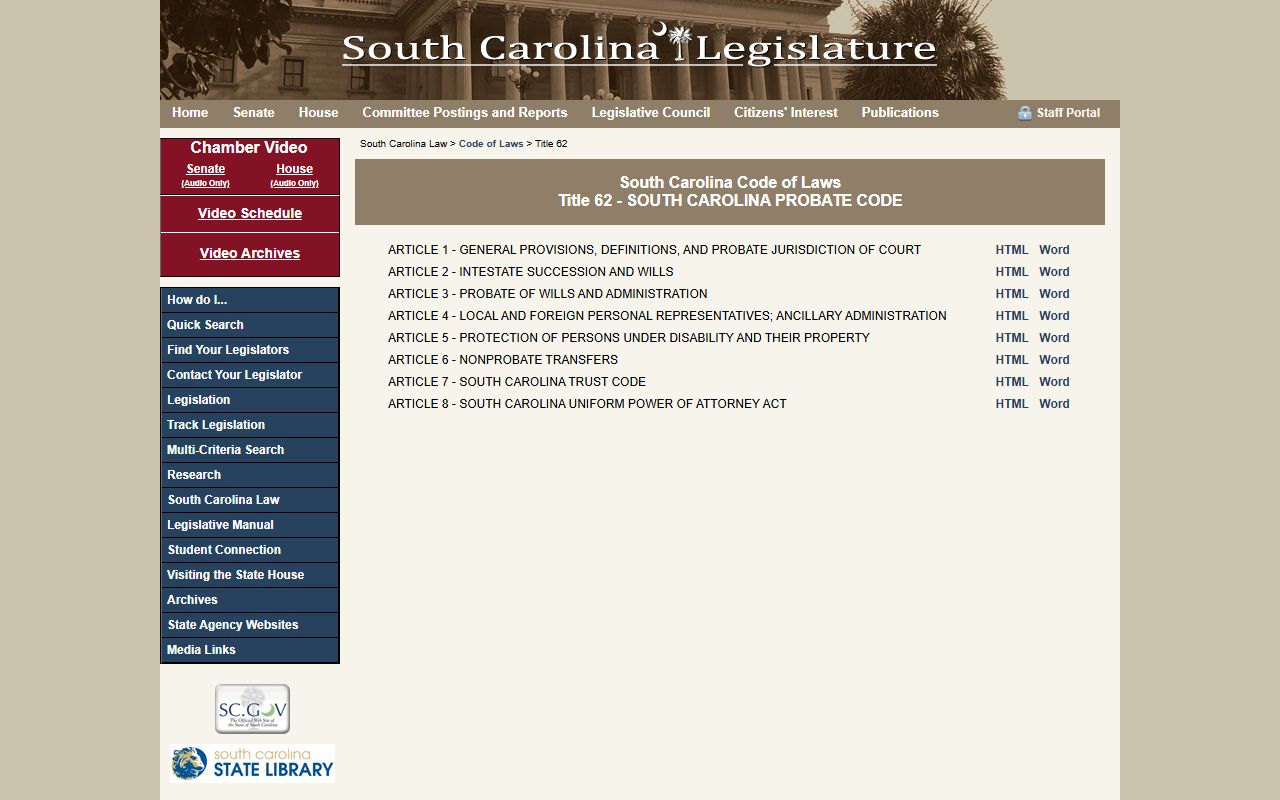
Title 62 covers every major step of estate administration in Greenwood County, from the initial petition through the final distribution order and closing of the estate.
Note: When a Greenwood County decedent owned real property in another South Carolina county as well, ancillary probate proceedings may need to be opened in that additional county alongside the Greenwood County estate.
Guardianship and Conservatorship in Greenwood County
Greenwood County probate court records include proceedings in which an adult has been appointed to manage the personal affairs or finances of someone who can no longer do so independently. These are among the most consequential matters the probate court decides, given their direct impact on the protected person's daily life and financial security.
A guardianship petition in Greenwood County must be backed by evidence that the proposed ward cannot make sound personal decisions due to a physical or mental condition. The court may appoint a guardian ad litem to represent the ward's interests during the hearing. If the petition is granted, the order of appointment specifies the scope of the guardian's authority. The guardian must then file annual reports that document the ward's health, welfare, and living situation. All of these filings are kept as part of the Greenwood County guardianship record.
Conservatorship cases follow a parallel path focused on financial matters. The conservator files an inventory shortly after appointment and submits annual accountings that track every financial transaction on behalf of the protected person. These accountability requirements are designed to prevent financial abuse. Anyone concerned about the conduct of a guardian or conservator in Greenwood County may raise those concerns with the probate court.
Greenwood County Register of Deeds and Probate Connections
In Greenwood County, the Register of Deeds function is performed by the elected Clerk of Court rather than a separately elected Register of Deeds. The Clerk records deeds, mortgages, plats, and other instruments affecting real property in the county. This is a common arrangement in South Carolina counties without a separate Register of Deeds office.
The link between deed records and probate records is direct when real estate is part of a Greenwood County estate. After the probate court closes the estate, any deed transferring property to heirs or buyers must be recorded with the Clerk of Court. Researchers tracing land ownership in Greenwood County will often need to cross-reference the probate estate record with the deed index maintained by the Clerk. The South Carolina Register of Deeds resource page through the Judicial Branch provides statewide context on how deed recording works and can help orient researchers who are working on Greenwood County property histories for the first time.
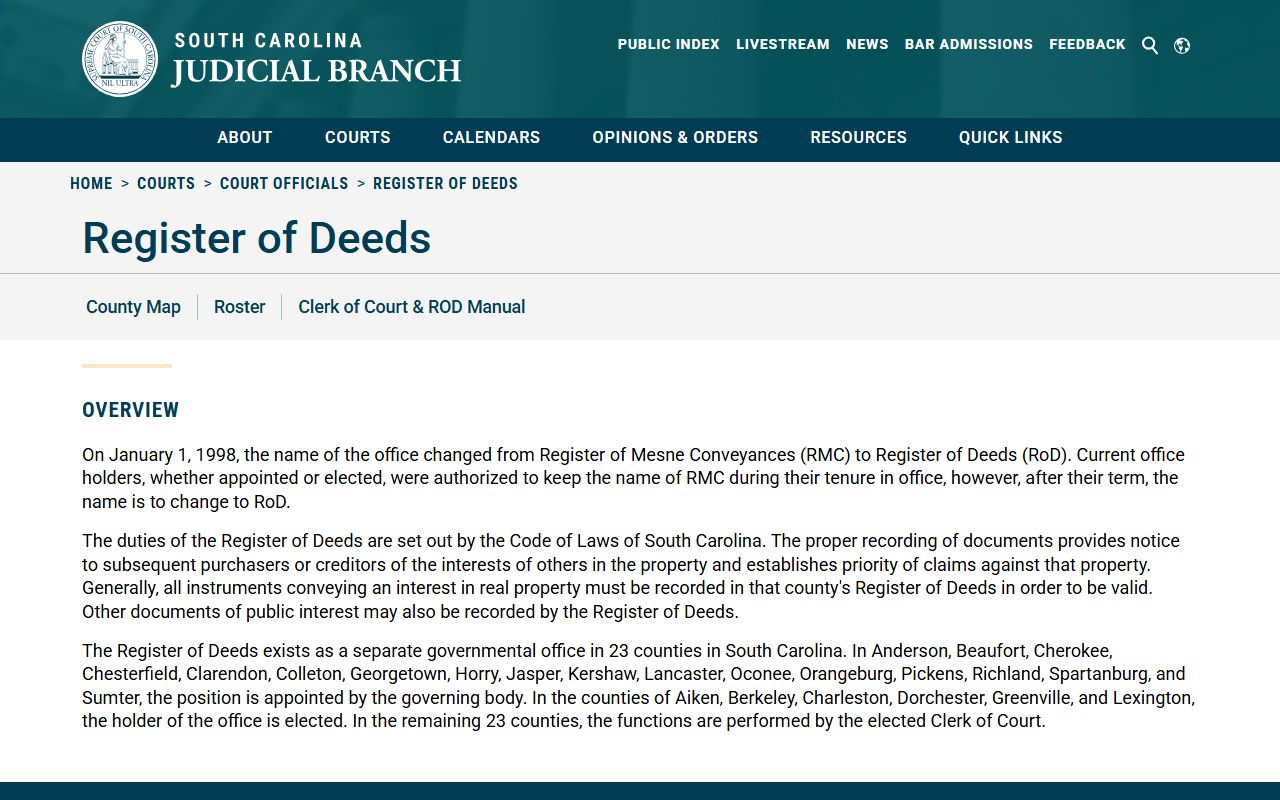
Combining Greenwood County probate court records with the Clerk's deed index gives researchers the most complete picture of how real property moved through estates in the county over time.
Historical Greenwood County Probate Records
Greenwood County was established in 1897 from parts of Abbeville and Edgefield counties. Its probate records span more than 125 years of estate administration, guardianship proceedings, and marriage licenses in the western Piedmont of South Carolina. Lander University, headquartered in the city of Greenwood, and the famous Ninety Six National Historic Site nearby reflect the depth of history in this part of the state. Historical Greenwood County probate records can help genealogists trace families across the county's entire existence, as well as back into the Abbeville and Edgefield records that predate the county's formation.
The South Carolina State Library holds collections related to historical Greenwood County probate documents. Microfilmed records, digital resources, and reference finding aids at the library make it possible to research older filings without visiting the Greenwood courthouse. For records that predate Greenwood County's 1897 formation, researchers should look to Abbeville and Edgefield county probate records, which covered this area before the county was created.
The city of Greenwood's historic neighborhoods, the Park Seed Company's long presence in the area, and the county's agricultural heritage all appear in the estate inventories and probate records of earlier generations. Greenwood County probate court records from the early twentieth century frequently mention farms, nursery operations, and textile-related assets that reflect the county's economic history during that period.
Note: Genealogists researching Greenwood County ancestry should check both the SC State Library collections and the holdings of local genealogical societies before concluding that a historical probate record does not exist.
Related Records That Connect to Greenwood County Probate Filings
Greenwood County probate court records intersect with several other record sets that researchers regularly need. Death certificates are required to open any estate and can be ordered through VitalChek. Birth and marriage records establish the family ties that determine heir status in intestate cases. Tax assessment records from the Greenwood County Assessor provide valuations for real estate and personal property listed in estate inventories.
Judgments recorded in the Court of Common Pleas may reflect debts the decedent owed that the estate must pay before closing. The SC Judicial Branch site provides a central access point for searching across court types in Greenwood County and statewide. Combining these connected records with the core probate file gives heirs, attorneys, and researchers the fullest possible understanding of how an estate was administered and what the outcome was for all parties in Greenwood County.
Nearby Counties
Greenwood County is in the western Piedmont of South Carolina and borders several neighboring counties. Each maintains its own probate court and its own estate records. Confirming the decedent's county of residence at the time of death is the right way to determine which probate court has jurisdiction.