
Saluda County Probate Court Records and Filings
Saluda County probate court records cover all proceedings before the elected probate judge in this small Midlands county, including estate administration, wills, guardianships, conservatorships, marriage licenses, and involuntary commitment actions. Saluda County lies in the heart of South Carolina's Midlands region, surrounded by larger counties but maintaining its own distinct rural character and courthouse traditions. Heirs, genealogists, attorneys, and title researchers regularly consult Saluda County probate records to confirm how estates were administered, who received property, and how families navigated the court system across generations in this tight-knit community.
Saluda County Quick Facts
Jurisdiction of the Saluda County Probate Court
The Saluda County Probate Court operates under the authority of the South Carolina Probate Code, Title 62. The probate judge is elected countywide to a four-year term and handles the full range of matters the statute assigns to probate courts. No gubernatorial appointment determines who holds this office; Saluda County voters make that decision directly at the polls.
The court's authority extends to the estates of persons who died owning property in Saluda County. Whether the decedent left a valid will or died without one, the estate must generally pass through the probate court before assets can legally transfer to heirs. Beyond estate work, the Saluda County Probate Court issues all marriage licenses in the county, approves settlements for minors receiving more than ten thousand dollars, handles wrongful death settlement approvals, and conducts involuntary mental health commitment hearings. Each proceeding creates a case file that becomes a permanent Saluda County probate court record.
The South Carolina Judicial Branch maintains the statewide Public Index, which is available free of charge online. Searching by the name of the deceased or by case number will return case-level information for Saluda County probate proceedings. Document copies must be requested from the Saluda County Probate Court directly.
The SC Judicial Branch site provides access to this tool for all 46 South Carolina counties, including Saluda.
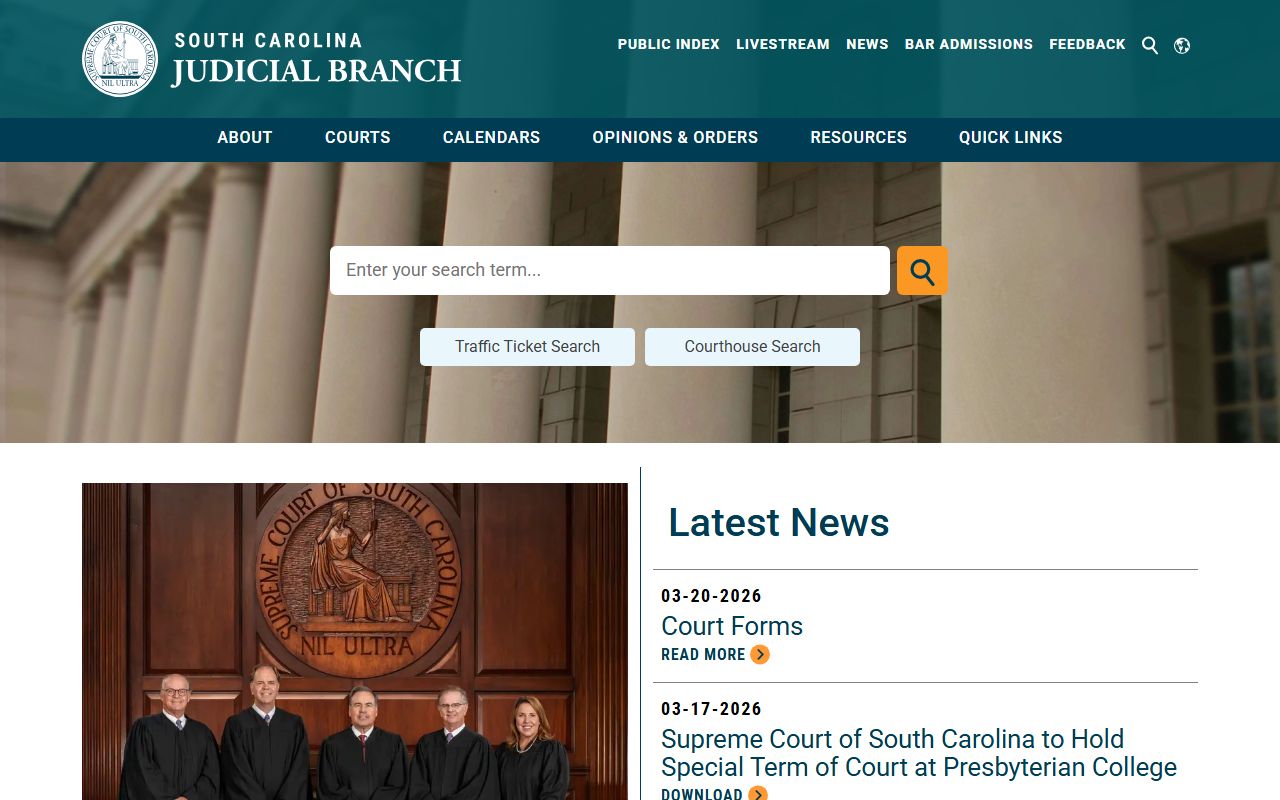
The Public Index on the SC Judicial Branch site is the fastest starting point for locating a Saluda County probate case without traveling to the courthouse.
What Saluda County Probate Records Include
Estate records form the core of what the Saluda County Probate Court holds. An estate file typically contains the petition to open proceedings, the original will if one was left behind, a certified copy of the death certificate, an inventory of the decedent's property, all creditor claims and their resolution, accountings from the personal representative, and the final order closing the estate. Each of these documents is a public record that can be viewed or copied by interested parties.
Guardianship and conservatorship case files are also maintained as Saluda County probate records. A guardianship file documents the court's decision to appoint someone to make personal decisions for an adult who can no longer do so independently. A conservatorship file covers the parallel process for financial decision-making. Both types of records include the original petition, supporting medical or evaluative evidence, the court's appointment order, and the annual reports the appointed person must submit. These reports confirm that the ward's needs are being met and that finances are being managed honestly.
Marriage license records issued through the Saluda County Probate Court show both parties' names, dates of birth, and the issuance date. These records frequently come up in estate proceedings where a marriage must be verified to establish an heir's legal standing.
Note: A probate case is not opened automatically when a person dies; a family member or other interested party must file the petition to start proceedings in Saluda County.
Accessing Saluda County Probate Court Records
In-person access is available at the Saluda County Probate Court located in the town of Saluda. Staff can search by name or case number and can pull both current and older case files for review. Bring a valid photo ID and be prepared to pay the standard fee for copies.
Online searching through the SC Judicial Branch Public Index is free and covers case-level information for all Saluda County probate proceedings. The index does not provide images of the documents themselves; obtaining those requires a formal request to the court. Certified copies carry a higher fee than plain copies and are required whenever official evidence is needed, such as for financial institutions or other court proceedings.
Blank forms for estate administration, guardianship, and conservatorship proceedings are available at no charge through the SC Courts forms library. Using the current, approved forms avoids the filing delays that come with outdated paperwork. For vital records needed as part of a Saluda County probate matter, such as death certificates or birth certificates, VitalChek is the state-authorized online ordering service. Researchers seeking historical Saluda County probate filings from earlier generations can also consult the South Carolina State Library, which holds reference materials covering Midlands counties.
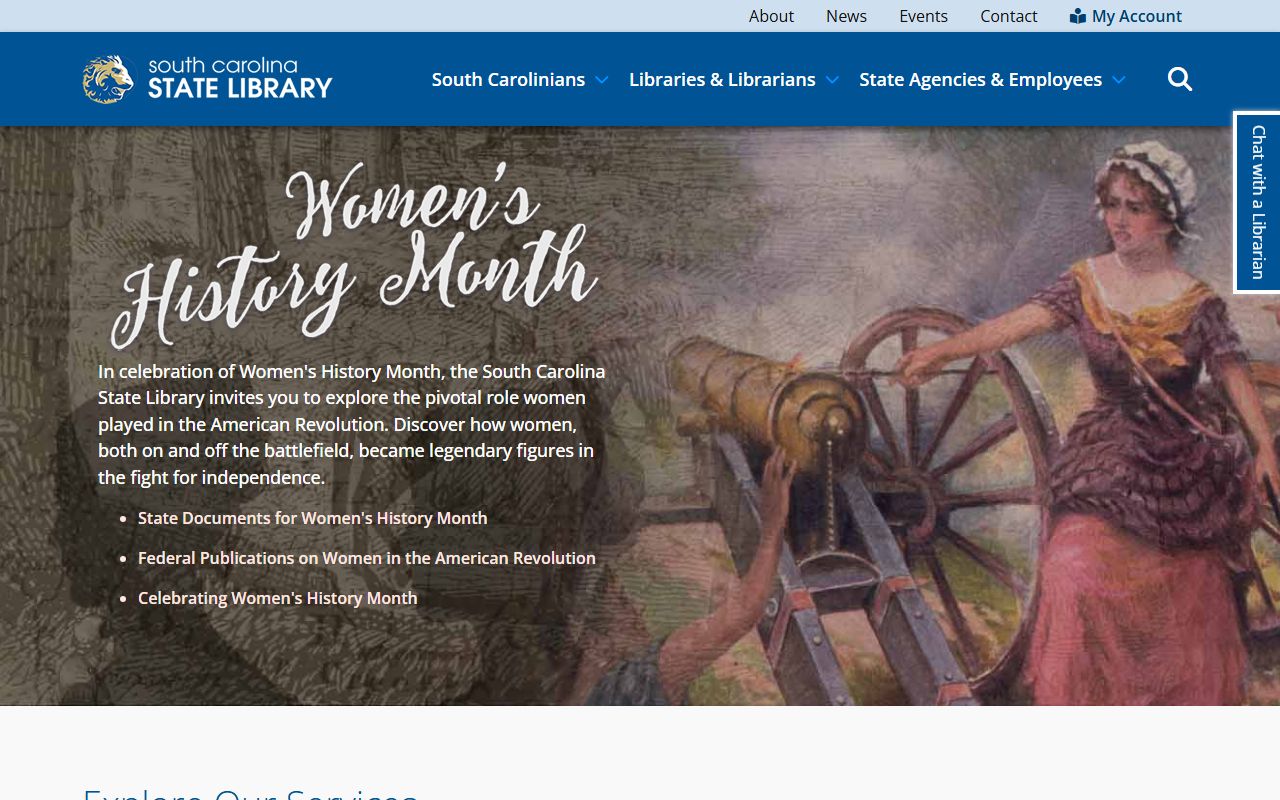
The State Library's genealogy and South Carolina history collections can fill gaps when courthouse records for Saluda County are incomplete or difficult to obtain.
Estate Administration in Saluda County
Opening an estate in Saluda County requires presenting the original will and an original certified death certificate to the probate court. The court will not accept photocopies of either document at the filing stage. When no will exists, Title 62 governs who inherits and in what proportions under South Carolina's intestate succession rules.
Once the court opens the estate, it appoints a personal representative, who may be the person named as executor in the will or an administrator chosen under the intestacy statute. The personal representative's duties include inventorying all assets, notifying known creditors and publishing a creditor notice, paying valid claims, filing required accountings with the Saluda County Probate Court, and ultimately distributing the remaining estate to the proper heirs or beneficiaries. Each step generates a court filing that becomes a permanent part of the estate record.
Estates with total value below certain thresholds set by the South Carolina Probate Code may qualify for a simplified small estate procedure that does not require full formal administration. Saluda County Probate Court staff can explain whether a particular estate qualifies. Regardless of the method used, the outcome and any documents generated are retained as official Saluda County probate court records.
Note: Real estate held jointly with right of survivorship passes outside of probate and does not require a Saluda County estate proceeding to transfer title.
Guardianship and Conservatorship Proceedings in Saluda County
The Saluda County Probate Court handles adult guardianship and conservatorship cases for residents who can no longer manage their own affairs. These proceedings are among the most consequential the court decides, because they authorize another person to take over the most basic aspects of an individual's daily life or finances.
A petition for guardianship in Saluda County must include evidence of the proposed ward's incapacity, typically supported by medical documentation or a clinical evaluation. The court may appoint a guardian ad litem to represent the proposed ward's interests independently during the hearing process. If the petition is granted, the court's order sets out the guardian's specific authority and any restrictions on that authority. The guardian must then file regular reports keeping the court informed about the ward's condition, living situation, and overall welfare. All of these filings are preserved as Saluda County probate guardianship records.
Conservatorship cases follow a parallel structure focused on financial oversight. After appointment, the conservator files an asset inventory and must submit regular accountings that document every transaction made on behalf of the protected person. These accountability requirements protect against exploitation and give families a way to monitor how resources are being managed. Any interested party who has concerns about a conservatorship in Saluda County may raise those concerns with the probate court directly.
Saluda County Clerk of Court and Register of Deeds Function
In Saluda County, the Register of Deeds function is performed by the elected Clerk of Court rather than a separately elected Register of Deeds. The Clerk records all instruments affecting real property in the county, including deeds, mortgages, plats, and liens. This arrangement is typical in smaller South Carolina counties where a separate Register of Deeds office is not warranted by the volume of transactions.
When a Saluda County estate includes real property, the deed transferring that property to heirs or buyers must be recorded with the Clerk of Court after the probate court has closed the estate. Researchers tracing land ownership in Saluda County often need to cross-reference the probate estate file with the deed index in the Clerk's office to follow the complete chain of title. The South Carolina Register of Deeds resource page provides statewide guidance on recording requirements that applies to Saluda County transactions.
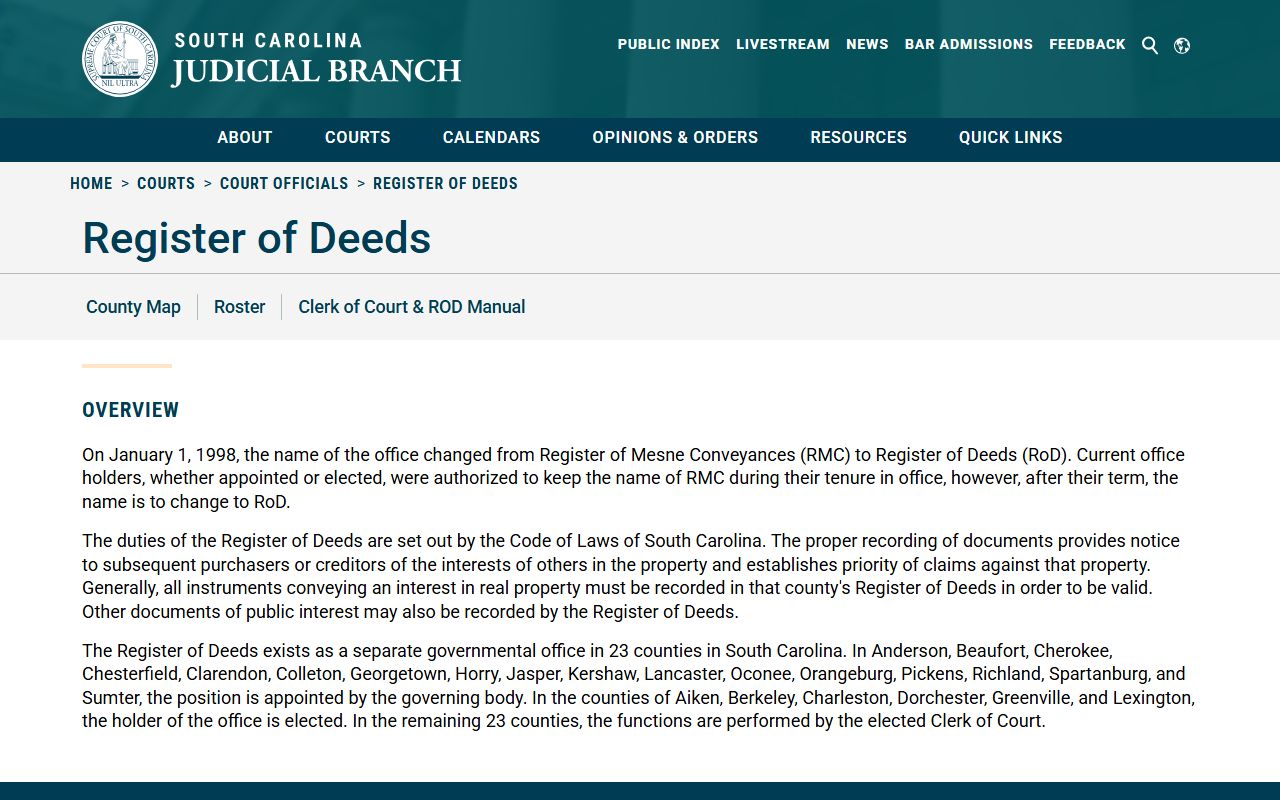
Pairing the Saluda County probate estate record with the Clerk's deed index gives researchers the clearest possible view of how real property moved through the estate process.
Note: When land straddles a county line, a deed may need to be recorded in both Saluda County and the adjacent county to provide complete notice of the transaction.
Historical Saluda County Probate Filings
Saluda County was established in 1895, making it one of the younger counties in South Carolina. It was carved out of Edgefield County as the population in the central Midlands grew and local courthouse access became a practical concern. Despite its relatively recent formation, Saluda County has accumulated well over a century of probate records that document the agricultural families, merchants, and landowners who built this community.
The South Carolina State Library and the South Carolina Department of Archives and History both hold materials relevant to Saluda County's historical record, including microfilm and digitized documents from the early twentieth century. Genealogists researching Saluda County families often find that tracing estates from the 1900s and 1910s requires combining courthouse records with library collections. The South Carolina Probate Code has changed over the decades, so researchers should keep in mind that the procedures reflected in older records may not match current practice.
Older estate inventories from Saluda County offer a window into agricultural life in the Midlands, listing farm equipment, livestock, household goods, and the small land holdings that characterized this part of South Carolina throughout much of the twentieth century. These inventories have value both for genealogical research and for understanding local economic and social history.
South Carolina Probate Code and Saluda County Filings
Every Saluda County probate proceeding is governed by the South Carolina Probate Code, Title 62. This statute defines who may serve as personal representative, what notice must be given to creditors and heirs, how assets must be inventoried and accounted for, and under what circumstances the court must supervise the process actively versus allowing the personal representative to proceed independently. Understanding the relevant Title 62 provisions before opening a Saluda County estate avoids procedural missteps that can delay resolution.
The South Carolina General Assembly revises Title 62 from time to time, so checking the current version of the statute before beginning any Saluda County probate proceeding is important. Changes to filing thresholds, notice requirements, or accounting deadlines can affect how a particular estate must be handled. The SC Judicial Branch website provides links to self-help resources and court forms that reflect current statutory requirements for Saluda County probate filings.
Nearby Counties
Saluda County is in the Midlands of South Carolina and shares borders with several neighboring counties, each of which maintains its own probate court. The county where the decedent was domiciled at the time of death determines which court has jurisdiction over the estate.