
Anderson County Probate Court Records and Filings
The Anderson County Probate Court serves citizens in a professional and courteous manner, handling estates of decedents, protection of minors and incapacitated adults, trusts, marriage licenses, wrongful death and survival action settlements, and involuntary commitment proceedings. Anderson County probate court records document every case opened in this court, from the initial filing through to the final order. Located at 100 South Main Street in Anderson, the court is open Monday through Friday from 8:30 AM to 5:00 PM. Whether you need to open a new estate, search an existing case, or obtain a copy of a will or guardianship order, this guide covers everything about Anderson County probate court records.
Anderson County Probate Court Quick Facts
Anderson County Probate Court: Location and Contact
The Anderson County Probate Court is located in the county seat at 100 South Main Street, Anderson, South Carolina 29624. Mailing address is P.O. Box 8002, Anderson, SC 29622. The court is open Monday through Friday from 8:30 AM to 5:00 PM. The Anderson County Probate Court page on the county website provides current contact details and updates.
| Court | Anderson County Probate Court 100 South Main Street Anderson, SC 29624 |
|---|---|
| Mailing | P.O. Box 8002, Anderson, SC 29622 |
| Hours | Monday through Friday, 8:30 AM to 5:00 PM |
| Website | andersoncountysc.org/departments-a-z/probate-court/ |
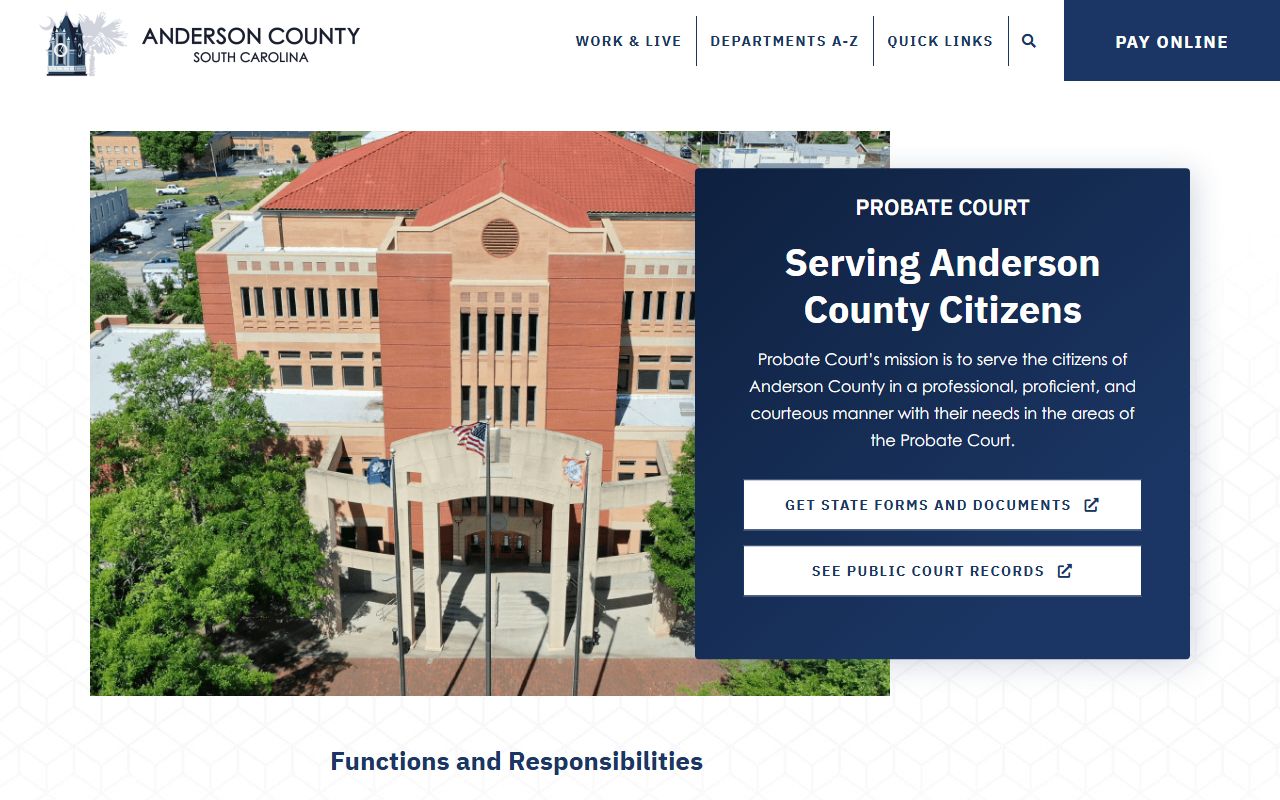
The Anderson County Probate Court page on the county website is the best starting point for current hours, forms, and instructions for filing in Anderson County.
Anderson County Probate Court Records: Jurisdiction and Scope
The Anderson County Probate Court handles a broad range of legal matters, all governed by the South Carolina Probate Code, Title 62. The court's jurisdiction covers:
- Estates of deceased persons, with or without a will
- Protection of minors and incapacitated adults through guardianship
- Conservatorship for those who cannot manage their finances
- Trust administration cases
- Marriage license applications and issuance
- Wrongful death and survival action settlement approvals
- Involuntary commitment for mental illness, alcoholism, drug addiction, and active pulmonary tuberculosis
Each proceeding generates court documents that become part of the official record. Anderson County probate court records are maintained at the courthouse and are available to the public, subject to any specific restrictions the court may apply in individual cases. The probate judge is elected countywide and serves a four-year term.
Anderson County is one of 17 South Carolina counties where the Register of Deeds is an appointed position, separate from the Clerk of Court. The Register of Deeds records property instruments that often connect to estate proceedings in Anderson County.
Estate Administration and Wills in Anderson County
Opening an estate in Anderson County requires the original will and original death certificate. The court does not accept copies, faxed documents, or scanned images in place of originals. Both documents must be presented in person. The will must be brought to the court within 30 days of the decedent's death. If no will was left, the closest surviving relative should appear at the court in person with the original death certificate.
Once the estate is opened, the court appoints a personal representative. If a will names an executor, that person typically receives the appointment. In intestate cases, the court uses the priority order set out in the South Carolina Probate Code to determine who may serve as administrator. The personal representative is then responsible for gathering all assets, notifying known creditors, paying valid claims and taxes, and distributing whatever remains to the rightful heirs.
Anderson County estate records document each step of this process. The inventory of assets, creditor notices, accountings, and the final order of distribution all become part of the permanent court file. Anyone with a legitimate interest in the estate may inspect these records. The South Carolina state portal connects to state agencies that assist with the ancillary aspects of estate administration, such as tax filings and deed recordings.
Note: Only original documents are accepted when filing to open an estate in Anderson County; no copies or faxes will be accepted in place of originals.
How to Search Anderson County Probate Records
Anderson County probate court records can be searched online or in person. The statewide Public Index maintained by the South Carolina Judicial Branch allows free case searches by party name or case number across all counties, including Anderson. Basic docket information, filing dates, and case status are available through this tool.
For full document access, visit the court in person at 100 South Main Street during business hours. Staff can search by decedent name, case number, or filing date. Bring valid photo identification. Copy fees apply for all documents, and certified copies carry a higher charge. For estate-related vital records, VitalChek is the approved service for ordering South Carolina death certificates, marriage certificates, and other vital records online.
Downloadable court forms are available at SC Courts forms. Using the correct state-approved form helps avoid delays when filing in Anderson County. The South Carolina General Assembly site publishes the full text of Title 62, which governs the procedures you must follow in any Anderson County probate proceeding.
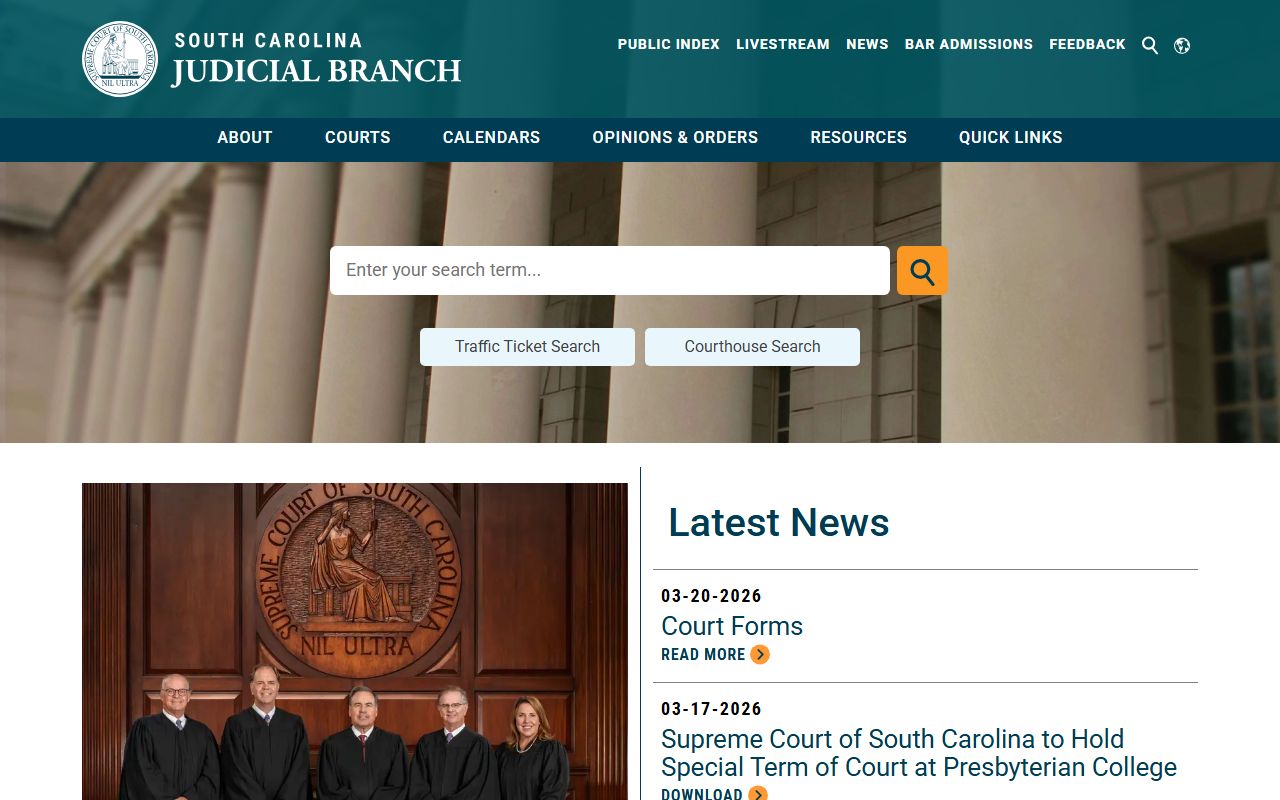
The SC Judicial Branch Public Index is the fastest way to confirm whether a probate case exists for a particular person in Anderson County before visiting the courthouse.
Guardianship and Conservatorship Records in Anderson County
The Anderson County Probate Court appoints guardians when an adult is "incapacitated" due to mental or physical impairment and cannot make health or welfare decisions. This is the standard set by South Carolina law. The court will not appoint a guardian simply because a person makes poor choices; there must be a genuine incapacity that prevents them from protecting their own interests.
A conservator is appointed when a person is unable to make financial decisions or manage their own finances. The two appointments may be held by the same person or by two different individuals, depending on the needs of the protected person and the court's findings. Both guardianship and conservatorship filings in Anderson County follow a formal process. The petitioner files with the court, the proposed ward receives notice and has the right to be heard, and the court makes findings based on the evidence before issuing its order.
Once appointed, a guardian or conservator must file annual reports with the Anderson County Probate Court. These reports document the actions taken on behalf of the protected person and are part of the ongoing court record. Financial institutions, healthcare providers, and family members who need to verify a guardian's or conservator's authority in Anderson County can obtain copies of the appointment order from the court. Note: A guardian or conservator in Anderson County must not use the protected person's assets for personal benefit without court approval.
Marriage Licenses Through the Anderson County Probate Court
The Anderson County Probate Court issues all marriage licenses in the county. Both parties must be at least 18 years of age. They must appear together at the probate court office. Each applicant must bring a Social Security card and a legal document showing their proper legal name.
The marriage license costs $46.00, payable in cash only. No checks or credit cards are accepted at the Anderson County Probate Court for marriage license applications. A 24-hour waiting period begins at the time the application is submitted. The license cannot be issued until 24 hours have passed. Plan accordingly if you have a ceremony scheduled on a specific date.
Marriage license records maintained by the Anderson County Probate Court are a key source for estate and inheritance research. When a decedent's surviving spouse claims a share of the estate, the marriage license record helps establish the legal marital relationship. For certified marriage certificates from past marriages, orders can be placed through VitalChek.
Anderson County Register of Deeds and Probate Records
Anderson County maintains a separate, appointed Register of Deeds office, one of 17 counties in South Carolina where this office is distinct from the Clerk of Court. The Register of Deeds records real property instruments, including deeds, mortgages, plats, and releases. This connection to probate records is direct and important.
When real estate passes through an Anderson County estate, the personal representative must record the deed transferring title to the heirs or new owners with the Register of Deeds. This recording creates the official chain of title. Researchers who need to trace property through an Anderson County estate will typically review both the probate court file and the deed records at the Register of Deeds. The South Carolina Register of Deeds resource page covers recording standards and how to locate property records in Anderson County and other counties statewide.
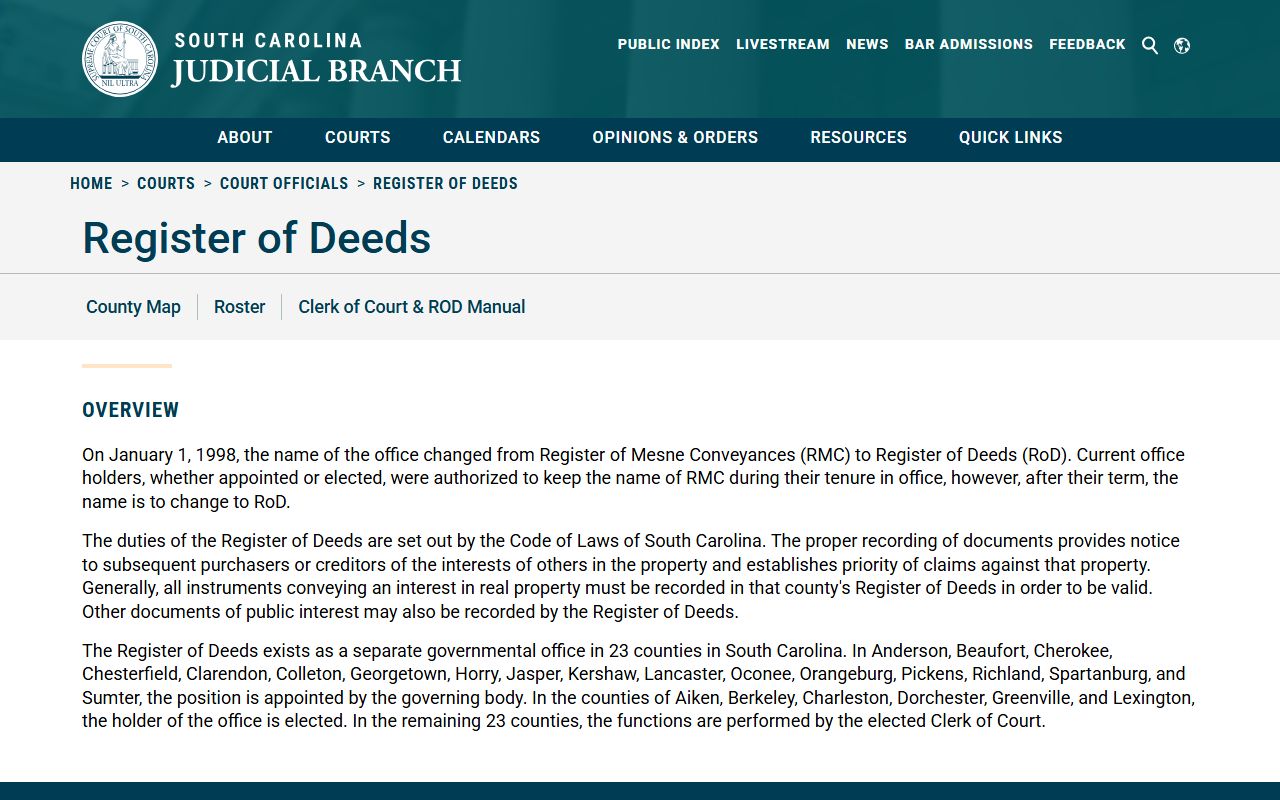
The Register of Deeds records in Anderson County complement the probate court record by documenting how real property was formally transferred after an estate was settled.
Involuntary Commitment Proceedings in Anderson County
The Anderson County Probate Court handles involuntary commitment proceedings for individuals who may need treatment for mental illness, alcoholism, drug addiction, or active pulmonary tuberculosis. These proceedings are separate from estate matters but are an important part of the court's jurisdiction.
Emergency commitment situations in Anderson County should be directed to the Mental Health Center at 200 McGee Road, Anderson, SC 29625, phone 864-260-2220. Mental health professionals at that center can initiate the emergency evaluation process. Once a formal petition is filed with the court, the probate judge reviews the evidence and determines whether commitment is appropriate under South Carolina law.
Records related to involuntary commitment proceedings are part of the Anderson County Probate Court's files, though access to these records is more restricted than access to estate or marriage license records due to the sensitive personal information they contain.
Historical and Archival Probate Records in Anderson County
Anderson County has a long history as one of South Carolina's Upstate counties. Probate records date back to the county's early years and document property ownership, family relationships, and community structure over generations. The South Carolina State Library holds microfilmed and digitized collections that include historical Anderson County estate papers, inventories, wills, and guardianship records.
Genealogists researching family lines through Anderson County will find the State Library an essential resource. Staff can identify which collections cover specific time periods and explain how to access materials that may not be indexed online. The South Carolina Probate Code was significantly revised in the late twentieth century, so researchers working with historical records should be aware that older filings followed different procedural rules than those in effect today.
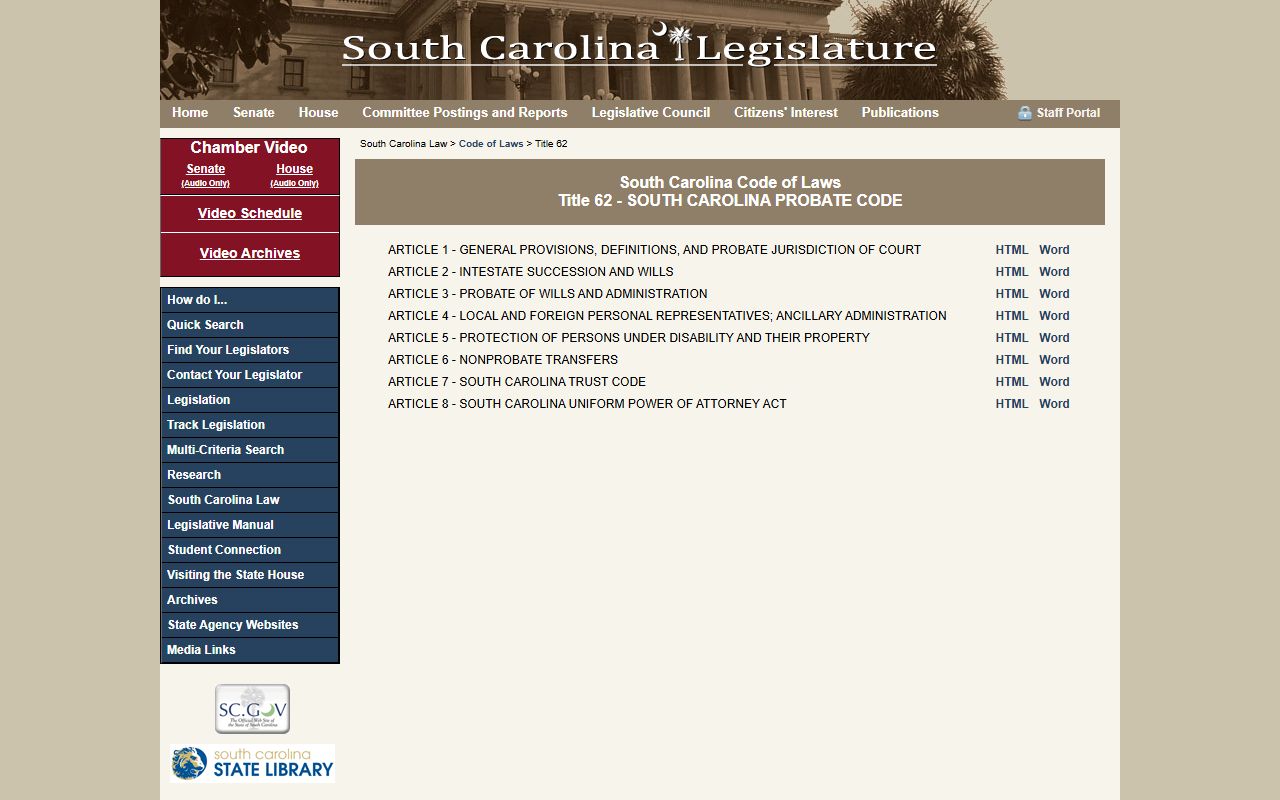
The South Carolina Probate Code at Title 62 is the definitive statutory source for understanding both current and recent historical probate procedures in Anderson County.
Cities in Anderson County
Anderson County includes the city of Anderson and surrounding communities. All probate filings, estate cases, and marriage license applications for Anderson County residents are handled at the Anderson County Probate Court at 100 South Main Street.
Anderson is the county seat and the location of the Anderson County Probate Court. Residents of all communities in Anderson County file probate matters here.
Nearby Counties
Anderson County shares borders with several South Carolina counties and also borders Georgia. Each county has its own probate court. If you need to determine which county's court has jurisdiction, confirm the county where the decedent or the person needing a guardian was a legal resident at the relevant time.