
Calhoun County Probate Court Records
Calhoun County probate court records include estate filings, wills, guardianship and conservatorship cases, marriage licenses, and involuntary commitment records. The Calhoun County Probate Court is located in St. Matthews, the county seat, and operates under South Carolina Title 62. The court handles all matters involving the estates of deceased Calhoun County residents, the appointment of guardians and conservators, and the issuance of marriage licenses. Historical probate records from Calhoun County are also preserved through the South Carolina State Library.
Calhoun County Probate Court Quick Facts
Calhoun County Probate Court and Its Jurisdiction
The Calhoun County Probate Court operates under the authority granted by South Carolina Title 62 and the South Carolina Constitution. The court's jurisdiction covers several distinct areas of law. It handles the estates of persons who died while residing in Calhoun County, whether they left a will or died intestate. It also handles guardianships and conservatorships for adults who can no longer manage their personal care or finances. Marriage licenses are issued by this court, and involuntary commitment proceedings are conducted here as well.
Calhoun is one of South Carolina's smaller counties, and the Probate Court reflects that scale. The Probate Judge is elected by Calhoun County voters to a four-year term. Because Calhoun County does not maintain a separate Register of Deeds office, the elected Clerk of Court performs real property recording functions. Researchers working on Calhoun County estates that involve real property will need to contact the Clerk of Court for deed and recording records rather than a separate Register of Deeds office.
The South Carolina Judicial Branch provides a directory of all county probate courts, including Calhoun County. The directory includes court addresses, contact numbers, and information about each court's operations. This is a useful resource when you need verified contact details for the Calhoun County Probate Court before making a visit or submitting a records request.
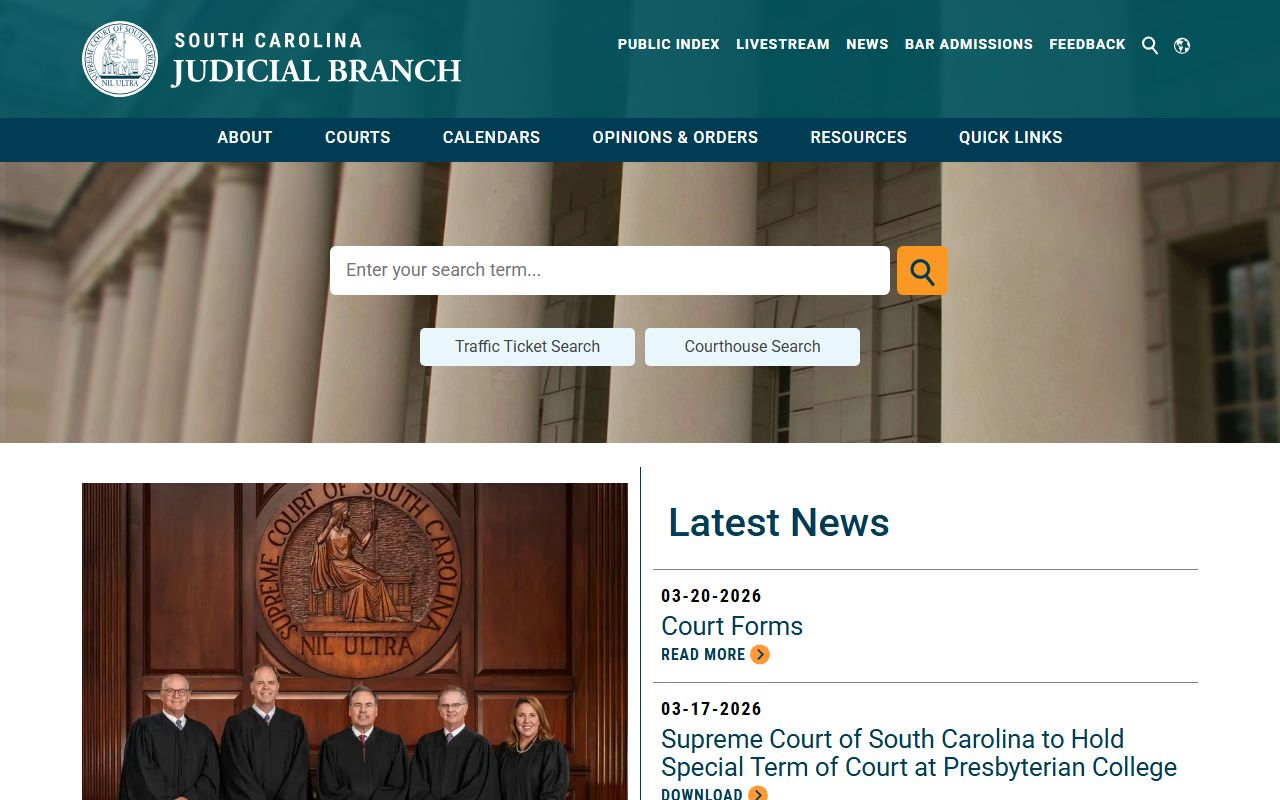
The SC Judicial Branch online directory is updated regularly and reflects current court contact information for the Calhoun County Probate Court in St. Matthews.
| Court | Calhoun County Probate Court |
|---|---|
| County Seat | St. Matthews, SC |
| Register of Deeds | Functions performed by elected Clerk of Court |
| Governing Code | South Carolina Title 62 (Probate Code) |
| Judge Term | 4-Year Elected Term |
Calhoun County Probate Records Under Title 62
South Carolina Title 62, the Probate Code, governs all probate filings in Calhoun County. Title 62 sets out the rules for estate administration, the requirements for valid wills, the process for intestate succession, and the duties of personal representatives. It also covers guardianships, conservatorships, and trust administration. Every document filed in a Calhoun County probate case reflects the requirements of this code.
The full text of South Carolina Title 62 is free to read on the South Carolina General Assembly website. For anyone working through a Calhoun County estate or researching probate filings, reading the relevant sections of Title 62 alongside the court documents makes the filings easier to interpret. The code explains what each filing is meant to accomplish and what legal effect it has on the estate's administration.
Wills filed in Calhoun County must meet the requirements set out in Title 62 to be admitted to probate. A valid will in South Carolina must be in writing, signed by the testator, and witnessed by two people. If a will does not meet these requirements, the estate is treated as intestate and passes under the statutory succession rules. Both scenarios produce probate court records in Calhoun County, but the nature of those records differs based on whether a valid will exists.
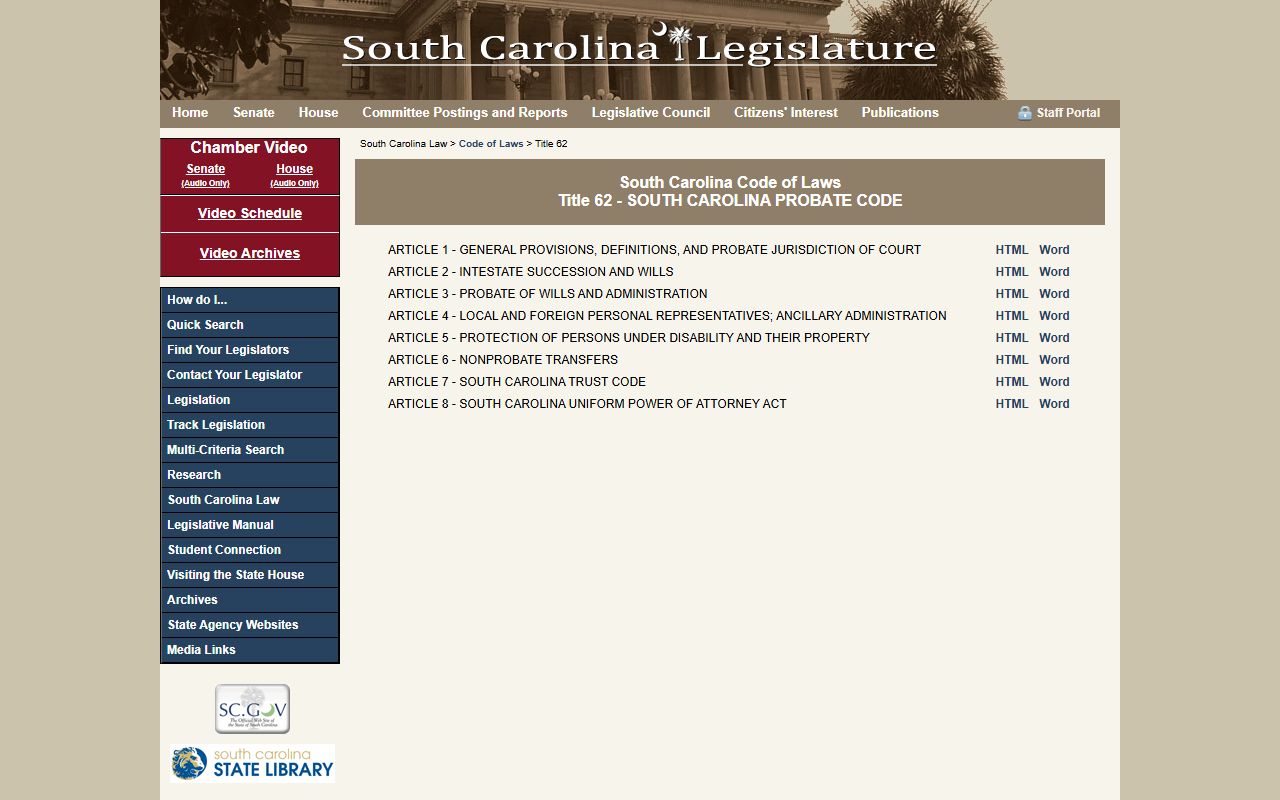
Title 62 is the same legal framework across all 46 South Carolina counties. This means that probate court records from Calhoun County and any other county will follow the same basic structure and document types.
Note: The South Carolina General Assembly may amend Title 62 during legislative sessions. Always check the current version when working with recent Calhoun County probate court records.
Estate Administration and Wills in Calhoun County
When a Calhoun County resident dies, the estate administration process begins at the Probate Court in St. Matthews. If the deceased left a will, the person named as personal representative submits it to the court along with a petition to open the estate. The court reviews the will and, if it is valid under Title 62, admits it to probate and issues letters testamentary. These letters give the personal representative legal authority to gather assets, pay debts, and distribute the remainder to beneficiaries named in the will.
Estates that involve no will are administered as intestate estates under the rules of Title 62. The Calhoun County Probate Court appoints a personal representative, typically the surviving spouse or closest heir. Letters of administration are issued instead of letters testamentary, but the personal representative's duties are largely the same. The estate inventory, creditor claims, accountings, and closing documents all become part of the Calhoun County probate record for that estate.
Researchers and heirs looking for information about a specific Calhoun County estate can request access to the estate file at the Probate Court. Estate files from Calhoun County generally include the petition to open, the will (if any), the inventory, accountings, and the order closing the estate. These documents together tell the full story of how the estate was handled.
Note: Small estates in Calhoun County may qualify for simplified administration procedures under Title 62, which involve fewer filings and a shorter timeline than full estate administration.
Register of Deeds Functions in Calhoun County Probate Matters
Because Calhoun County does not have a separate Register of Deeds office, the Clerk of Court handles property recording. This matters for probate research when an estate includes real property. When a personal representative transfers real property from a Calhoun County estate to heirs or to a buyer, the deed is recorded with the Clerk of Court rather than with a standalone Register of Deeds office. Researchers tracking property ownership through an estate will find those recording records at the Clerk of Court.
The South Carolina Register of Deeds page at the SC Judicial Branch site explains how property recording functions are organized across South Carolina counties. Some counties have elected Registers of Deeds, some have appointed ones, and counties like Calhoun assign those duties to the Clerk of Court. Understanding this structure helps you know where to look when researching Calhoun County property records tied to probate matters.
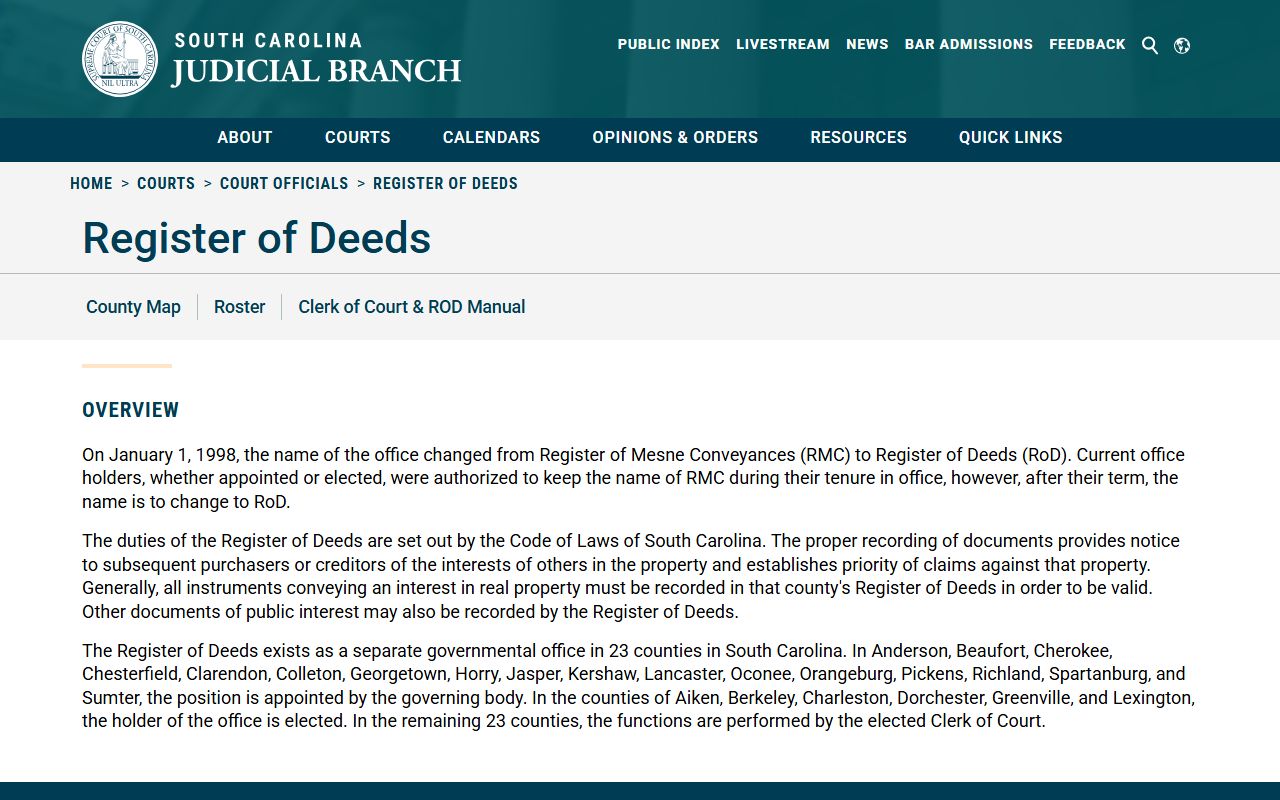
Deeds recorded in connection with Calhoun County estate administration may reference the probate case number, making it easier to cross-reference the estate file and the property recording at the same time.
Guardianship and Conservatorship Cases in Calhoun County
The Calhoun County Probate Court has authority over guardianships and conservatorships for adults who are determined to be incapacitated. A guardian is appointed when an adult can no longer make decisions about personal care, health, or living arrangements. A conservator is appointed when the adult can no longer manage financial matters. These roles are distinct, and in some cases the court may appoint the same person to serve in both roles or appoint different people for each.
Guardianship and conservatorship cases in Calhoun County begin with a petition filed at the Probate Court. The petitioner must show that the subject of the petition is incapacitated and that appointment is in their best interest. The court schedules a hearing and, if warranted, enters an order of appointment. The appointed guardian or conservator must file periodic reports with the court, creating an ongoing series of probate court records in Calhoun County for as long as the arrangement remains in place.
Forms for guardianship and conservatorship are available through the SC Judicial Branch forms page. These forms are uniform across South Carolina and can be reviewed before you visit the Calhoun County Probate Court to file. Access to guardianship and conservatorship records may be limited given the sensitive nature of these proceedings, so contact the court in advance about access procedures.
Marriage Licenses from the Calhoun County Probate Court
Marriage licenses for couples in Calhoun County are issued by the Probate Court in St. Matthews. Both applicants must appear in person to apply. South Carolina requires both parties to be at least 18 years old to marry without parental consent. The license is issued the same day and is valid for 30 days. After the ceremony, the officiant must return the signed license to the Calhoun County Probate Court. The returned license becomes a permanent part of the court's records and serves as the official documentation that the marriage took place.
Marriage licenses from Calhoun County are public records. Certified copies can be requested from the Probate Court. For older historical marriage records from Calhoun County, the South Carolina State Library holds historical documents from counties across the state and may have records not available at the courthouse. Vital records including marriage certificates can also be ordered through VitalChek for South Carolina documents.
Note: The marriage license application and the returned signed license are separate documents. The application is submitted when the couple applies. The signed license becomes the record of the marriage after the ceremony is performed and the document is returned to the Calhoun County Probate Court.
Historical Probate Records for Calhoun County Research
Researchers exploring Calhoun County family history often need access to older probate records. The Calhoun County Probate Court in St. Matthews holds records from the court's history. For records that predate the court's current holdings or that have been transferred to a state repository, the South Carolina State Library is a key resource. The State Library holds historical probate documents from Calhoun County and other South Carolina counties, including wills, estate inventories, and related records.
The South Carolina State Library offers guidance on its holdings and can direct researchers to specific collections relevant to Calhoun County. Genealogists working with 19th and early 20th century Calhoun County records often use the State Library in combination with the court itself to build a complete picture of an ancestor's estate and family. The library may hold microfilmed or digitized versions of records that are accessible without a trip to St. Matthews.
The State Library collection complements what the Probate Court holds, and together these two sources provide the most thorough coverage of Calhoun County probate court records across different time periods.
The SC.gov portal also links to other state agencies with Calhoun County holdings, including the South Carolina Department of Archives and History, which maintains extensive collections of historical county records.
Nearby Counties with Probate Court Records
Calhoun County borders several South Carolina counties. Probate matters should be filed in the county where the deceased resided at the time of death. If you are unsure of the correct county, check county property tax or voter registration records to confirm.