
Richland County Probate Court Records in Columbia, SC
Richland County probate court records document the legal proceedings managed by the elected probate judge in Columbia, the state capital of South Carolina. The court handles estate administration, guardianship appointments, conservatorships, marriage licenses, wrongful death settlements, and involuntary commitment cases. As the most populous county in South Carolina's Midlands region, Richland County processes one of the highest volumes of probate filings in the state. These Richland County probate records are the definitive legal source for confirming estate outcomes, establishing inheritance rights, and tracing how property changed hands across generations of Columbia-area families.
Richland County Quick Facts
Richland County Probate Court in the State Capital
Richland County is home to Columbia, the capital of South Carolina and the seat of state government. The Richland County Probate Court operates within this environment, processing a substantial caseload that reflects the county's large and growing population. The court's authority flows from the South Carolina Constitution and the South Carolina Probate Code, Title 62. The probate judge is elected countywide to a four-year term, giving Richland County voters direct influence over who manages estate proceedings, guardianship appointments, marriage license issuances, and other legally consequential matters.
Columbia, the county seat, spans both Richland and Lexington counties, but most Columbia addresses fall within Richland County for probate purposes. The City of Columbia provides information about municipal services that complement the county's probate and property records infrastructure. Richland County's probate court is one of the busiest in South Carolina and maintains a large volume of active and closed case records.
The court's jurisdiction covers estates of deceased persons, guardianship and conservatorship of incapacitated adults, marriage license issuances, wrongful death and minor settlement approvals, and involuntary commitment proceedings. Each category generates its own set of Richland County probate records that are retained at the courthouse in Columbia.
Note: Because Columbia straddles both Richland and Lexington counties, confirming the exact county of domicile at the time of death is essential before filing any estate paperwork in Richland County.
Richland County Probate Records: What They Document
Estate files are the largest single category of Richland County probate court records. A complete estate file includes the petition to open the estate, the original will if one exists, a certified death certificate, a comprehensive inventory of the decedent's assets, accountings filed by the personal representative at required intervals, creditor claims and their resolution, and the court's final closing order. Every document submitted in a Richland County estate case becomes part of the permanent public record held at the Columbia courthouse.
Guardianship and conservatorship records make up another substantial portion of Richland County's probate caseload. A guardianship case covers the personal welfare of an adult found unable to manage their own decisions. The file includes the opening petition, supporting medical or evaluative evidence, the court's appointment order, and the annual reports the guardian must file each year. Conservatorship cases address financial management for protected persons. The conservator files an initial inventory followed by annual accountings that list every financial transaction managed on the protected person's behalf. Both types of Richland County probate records are accessible to authorized parties who need to confirm the current legal authority of an appointed guardian or conservator.
Wrongful death and minor settlement approvals also come through the Richland County Probate Court with regularity given the county's population size. When a lawsuit involving a minor is settled, or when wrongful death proceeds must be distributed among surviving family members, the court reviews and approves the transaction. These records join the court's permanent Richland County probate files.
How to Search Richland County Probate Court Records
In-person access to Richland County probate court records is available at the courthouse in Columbia. Bring valid government-issued photo identification. Court staff can search records by name, date range, or case number. Given the high volume of filings in Richland County, clearly identifying the decedent's full legal name and approximate date of death will make the search more efficient.
The South Carolina Judicial Branch Public Index provides free online access to probate cases across all 46 South Carolina counties, including Richland. Searching by the decedent's name or case number reveals whether a probate case exists and provides basic case-level details. Full document copies must be requested directly from the Richland County Probate Court in Columbia, with fees applying per the standard schedule. Because Richland County has a high filing volume, the Public Index is the most practical first step for any Richland County probate records search.
Probate forms for estate administration, guardianship, and conservatorship in Richland County are available free from the SC Courts forms page. Certified death certificates and other vital records required for Richland County filings can be ordered through South Carolina's authorized vital records services.
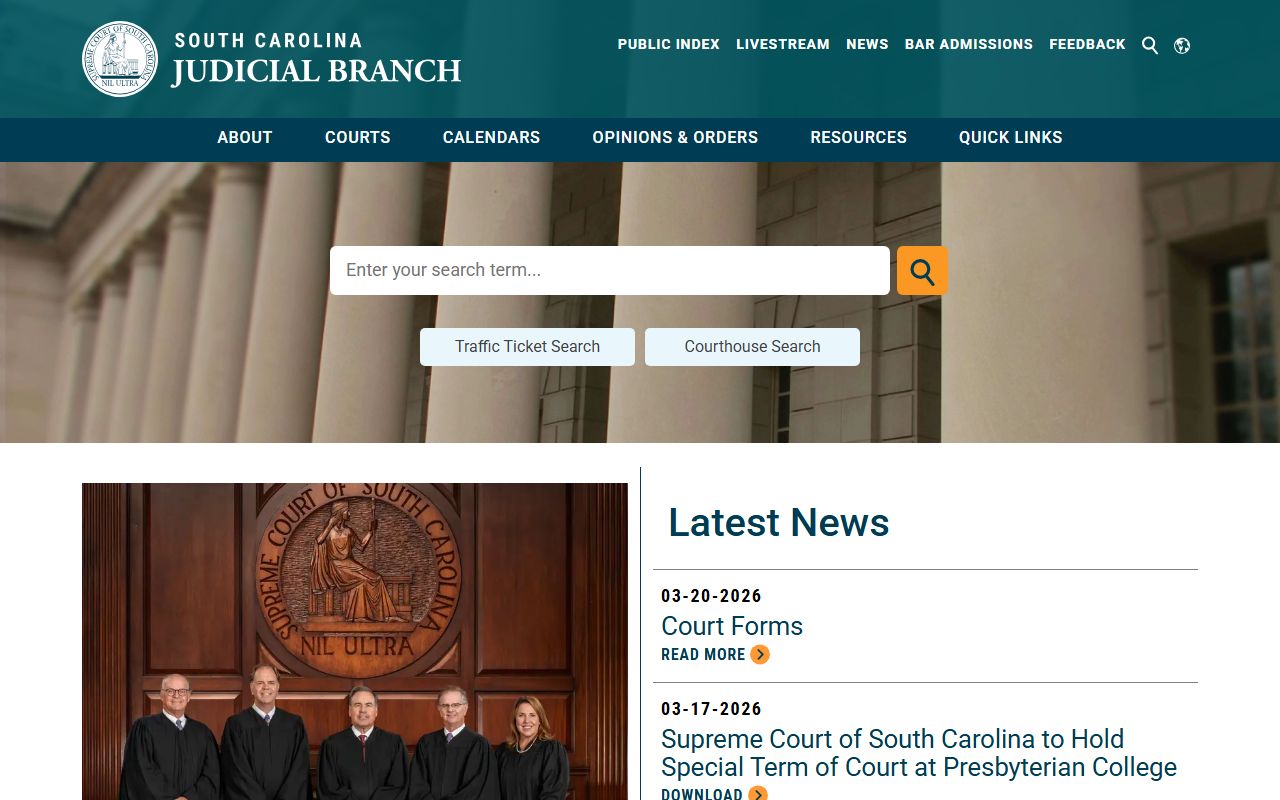
The Public Index search for Richland County returns case type, filing date, and party names for any probate matter filed in the court's records.
Estate Administration in Richland County
Opening an estate in Richland County requires presenting the original will and a certified death certificate to the probate court in Columbia. Photocopies are not accepted. When the deceased left no will, the estate proceeds as intestate and Title 62 of the South Carolina Probate Code governs the distribution among surviving heirs.
After the Richland County Probate Court opens the estate, it appoints a personal representative to manage administration. When a valid will names an executor, that person receives the appointment. In intestate cases, Title 62 sets the priority order for selecting an administrator. The personal representative locates and secures estate assets, notifies creditors, pays valid claims, files an inventory with the Richland County court, submits accountings as required, and distributes the remaining estate to qualified heirs. Every document filed during this process adds to the permanent Richland County estate record. Because Richland County has a large filing volume, processing timelines can be longer than in smaller counties, so building in extra time for each administrative step is advisable.
Some Richland County estates may qualify for simplified or summary administration based on the total value and nature of the assets. Confirming eligibility with the court clerk in Columbia before beginning formal administration is the most reliable way to determine which process applies.
Note: Richland County personal representatives owe fiduciary duties to all heirs and valid creditors and can be held personally liable for improper distributions or mismanagement of estate assets.
Marriage Licenses in Richland County
The Richland County Probate Court issues marriage licenses to couples applying in South Carolina. The fee is $46, the standard statewide rate. Both applicants must appear in person with valid government-issued identification. South Carolina has no waiting period after the license is issued, so a ceremony can take place the same day.
Marriage license records maintained by the Richland County Probate Court are public documents listing the names of both applicants and the issuance date. As with all South Carolina counties, these records play a key role in estate proceedings when a surviving spouse's inheritance share depends on proof of a valid marriage. Richland County processes a high volume of marriage licenses each year given the size of the Columbia metropolitan area, making its marriage license records a significant portion of the court's total record inventory.
Certified copies of Richland County marriage license records are available from the probate court in Columbia subject to the standard fee schedule. Contact the court in advance to confirm the details needed to locate a specific record.
Richland County Register of Deeds and Property Records
Richland County has an appointed Register of Deeds, appointed by the county's governing body rather than elected by voters. The Register records deeds, mortgages, plats, and other instruments affecting real property in Richland County. When a Richland County estate includes real property, the transfer of that property to heirs or buyers after the estate closes requires a new deed recorded with the Register of Deeds in Columbia.
Researchers tracing ownership history for Richland County real estate need both the probate court's estate file and the Register's deed index to complete the chain of title. The South Carolina Register of Deeds resource page describes how deed recording works across South Carolina and provides context for understanding the appointed Register model used in Richland County. Given the volume of real estate activity in the Columbia area, the Register's records are among the most actively used property records in the state.
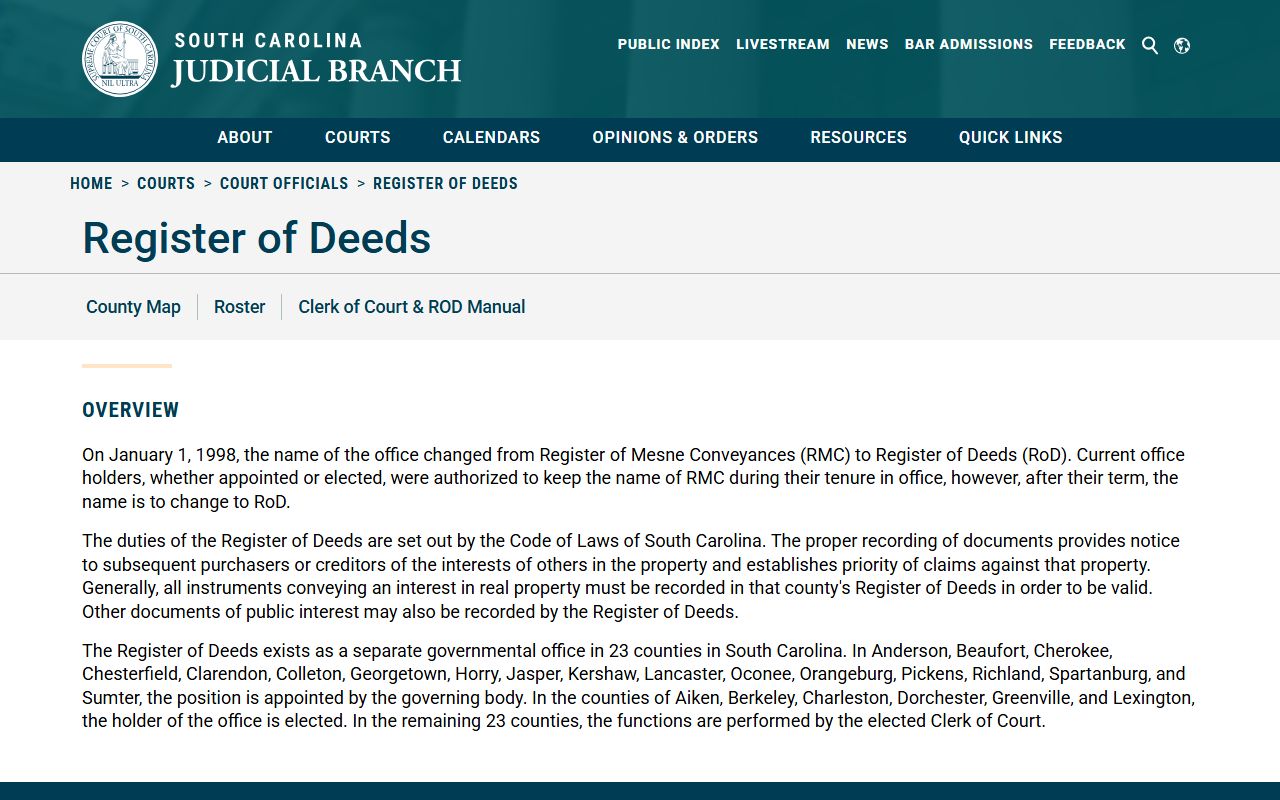
The Register of Deeds page at sccourts.org explains how the appointed Register in Richland County fits within South Carolina's overall property recording framework.
Historical Richland County Probate Records
Richland County's history as home to the state capital gives its probate records particular significance. Historical Richland County probate documents trace estate administration, marriage license issuances, and guardianship proceedings from the early days of Columbia through more than two centuries of growth. These records are valuable to genealogists researching families that lived in and around the capital city across multiple generations.
The South Carolina State Library, located in Columbia, holds collections relevant to historical Richland County probate research. Its proximity to the Richland County courthouse and state government agencies makes it an especially convenient resource for Richland County research. The State Library holds microfilmed records, finding aids, and digitized materials that support in-depth historical research into Richland County probate records without the need to access original courthouse files.
The City of Columbia's long history as the state capital means that Richland County probate records often intersect with significant South Carolina legal and political events documented in the broader historical record.
Note: Richland County was established in 1785, and for records predating its formation, researchers should look to district-level materials at the South Carolina Department of Archives and History.
Richland County Probate Records and Other Court Systems
Richland County probate court records frequently connect to records from other courts and agencies in the Columbia area. Death certificates required to open an estate are issued through the South Carolina Department of Health and Environmental Control and can be ordered through authorized vital records channels. Judgment records from the Richland County Court of Common Pleas may reveal debts the decedent owed that must be addressed before an estate closes. Real property tax assessments from the Richland County Assessor document property values used in estate inventories.
The SC Judicial Branch website provides access to multiple court record types across Richland County and all other South Carolina counties, and the South Carolina government portal links to the full range of state agencies whose records intersect with Richland County probate proceedings. Because Richland County includes the seat of state government, researchers may find that some records relevant to local probate cases are held at state-level agencies rather than solely at the courthouse.
Cities in Richland County
Columbia is the county seat of Richland County and the capital of South Carolina. It is the largest city in the state and the commercial, governmental, and educational center of the Midlands region.
Nearby Counties
Richland County is surrounded by six other South Carolina counties. Each has its own probate court. Confirming the county of domicile at the time of death is the first step toward identifying the correct probate court for any estate matter in the Midlands region.