
Cherokee County Probate Records
Cherokee County probate court records document the legal processes surrounding estates, wills, guardianships, and other matters handled by the Probate Court in Gaffney. The court serves as the central office for estate administration when a resident of Cherokee County passes away. Probate filings also cover guardianship records, conservatorship cases, marriage licenses, and involuntary commitment proceedings. These court documents are maintained at the courthouse and can be accessed by members of the public seeking information on estates and related matters in Cherokee County.
Cherokee County Probate Court Quick Facts
Cherokee County Probate Court Overview
The Cherokee County Probate Court sits in Gaffney and handles a wide range of legal matters for county residents. The court's primary role involves estate administration when someone dies with or without a will. A person who dies with a valid will is said to have died testate. When no will exists, the estate is handled as intestate, and the court follows South Carolina's rules on who inherits property. Both types of cases require probate filings that become part of the permanent court record.
Beyond estate work, the Cherokee County Probate Court manages guardianship records for minors and adults who need a legal guardian. Conservatorship cases arise when a person's finances must be managed by someone else. Marriage licenses are also issued through the Probate Court in Gaffney. The court further handles involuntary commitment proceedings when a person may pose a danger to themselves or others. Each of these matters generates court documents that are stored and available for review. The Cherokee County official website provides general information about the county's offices and services.
Note: The Cherokee County Probate Judge serves a four-year elected term and is separate from other court officials in the county.

The official Cherokee County website shown above is a good starting point for finding contact details and office locations before visiting the courthouse in Gaffney.
Cherokee County Probate Court Records and South Carolina Law
All probate matters in Cherokee County operate under the South Carolina Probate Code found in Title 62 of the South Carolina Code of Laws. This statute governs how estates are opened, how personal representatives are appointed, how creditors are notified, and how assets are distributed to heirs. Understanding the code helps anyone who needs to work with Cherokee County probate filings or navigate the estate process.
A personal representative is the person appointed by the court to manage an estate. In Cherokee County, this person must file an inventory of the estate's assets, notify creditors, pay valid debts, and then distribute what remains to heirs or beneficiaries named in the will. All of these steps create court documents that are part of the public record. Interested parties can review the file at the probate court in Gaffney.
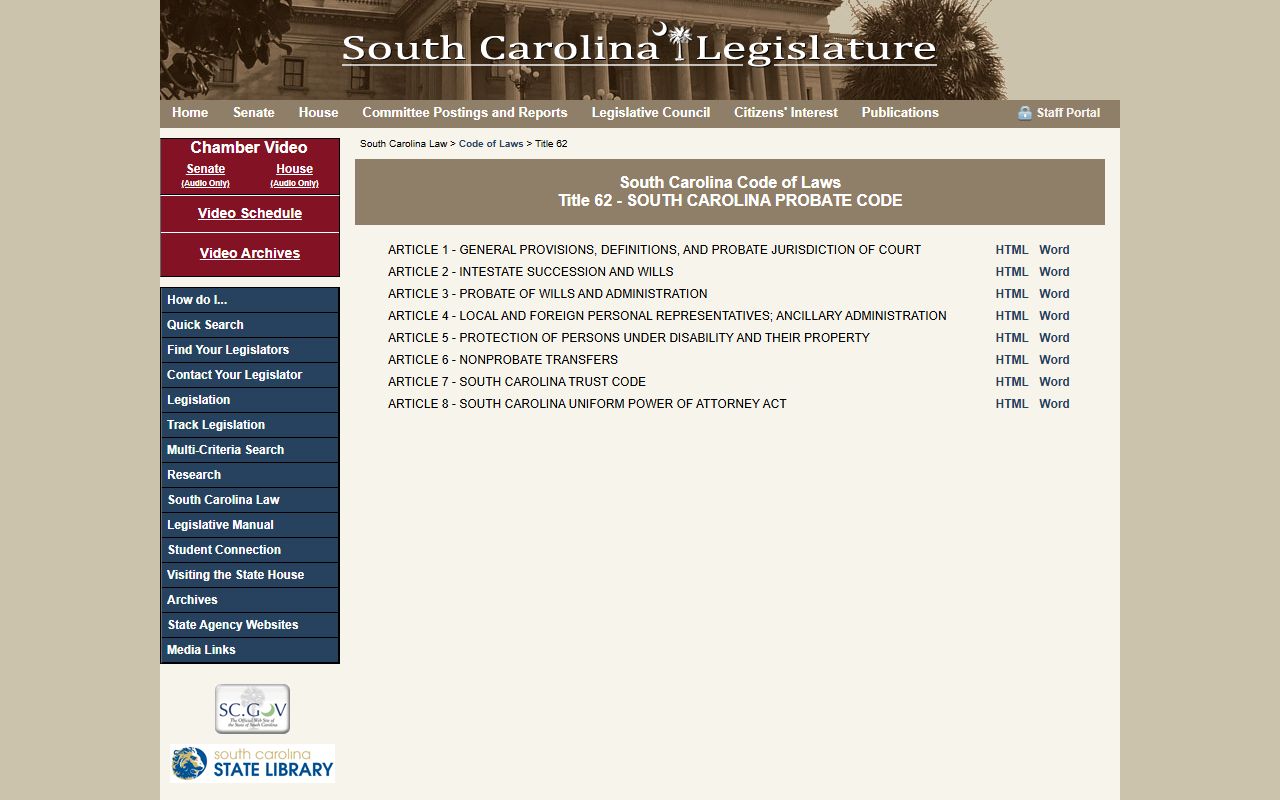
The South Carolina Probate Code shown above sets the rules that apply to every estate opened in Cherokee County, from the first filing to the final distribution of assets.
Disputes over wills, personal representative conduct, or the rights of heirs also come before the Cherokee County Probate Court. These contested matters can add many more filings to a case file. Note: Probate court documents in Cherokee County are generally open to the public unless sealed by court order.
How to Search Cherokee County Probate Court Records
Searching Cherokee County probate court records starts with knowing what you are looking for. If you have the name of the deceased person, you can request a search at the probate court in Gaffney. The court maintains an index of all estate cases by name and case number. Older records may be stored separately, so it helps to know the approximate year the estate was opened.
The South Carolina Judicial Branch provides online access to some court case information. Visit sccourts.org and use the Public Index to search case records by name or case number. Not all older Cherokee County probate filings may appear in the online system, but recent cases are generally accessible. For a full copy of the court file or certified documents, you will need to contact the Cherokee County Probate Court directly or visit in person.
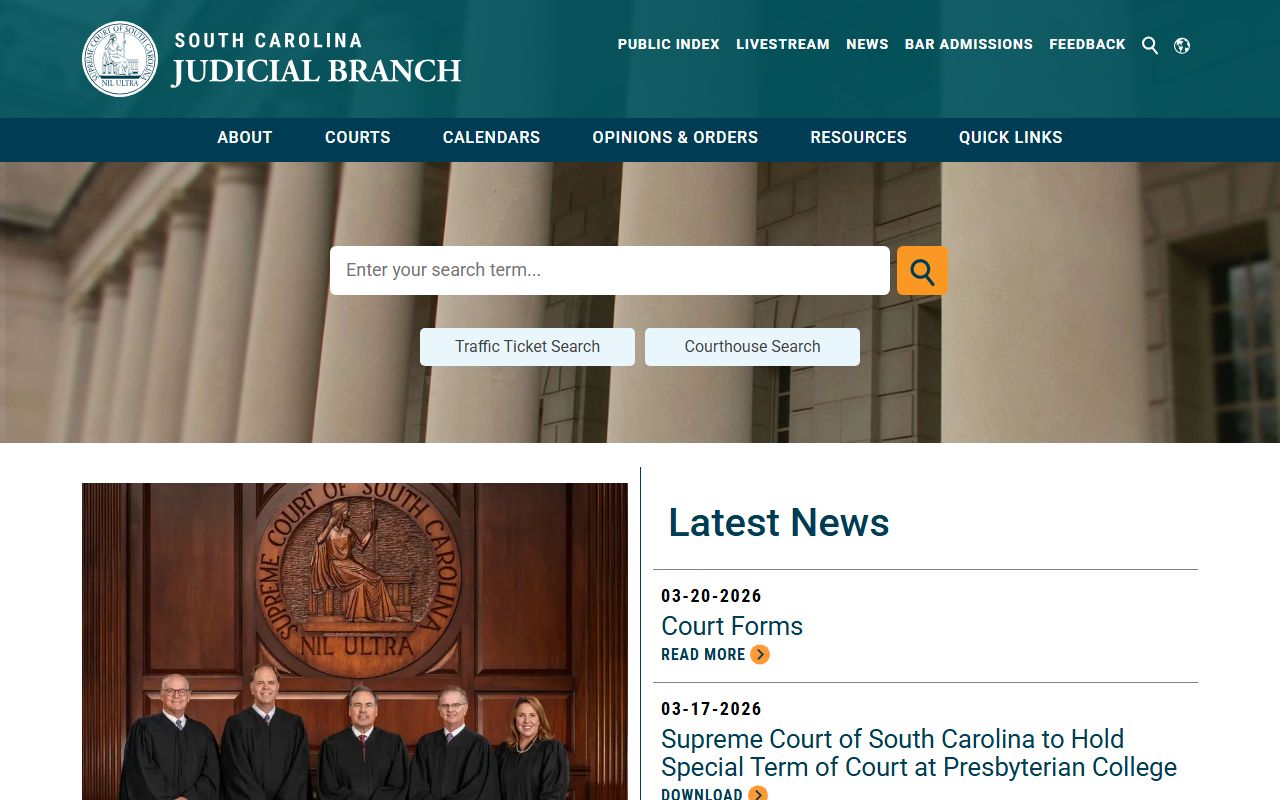
The SC Judicial Branch online portal shown above allows searches across all South Carolina counties, including Cherokee County probate filings filed in recent years.
When visiting the court in Gaffney, bring a valid photo ID. Staff can look up estate records and provide copies for a fee. Court forms for probate matters in Cherokee County are also available at sccourts.org/forms. These standard forms cover petitions for estate administration, guardian appointments, and more. Filling out the correct form before your visit saves time.
| Court | Cherokee County Probate Court |
|---|---|
| County Seat | Gaffney, South Carolina |
| County Website | cherokeecountysc.gov |
| SC Judicial Branch | sccourts.org |
| Governing Law | SC Code Title 62 |
| Court Forms | sccourts.org/forms |
Note: If you need records from a specific time period, call ahead and ask whether those years have been archived or are still held at the main courthouse.
Estate Records and Wills Filed in Cherokee County
When a resident of Cherokee County dies, their estate may need to go through probate. The process begins when someone files a petition with the Cherokee County Probate Court. The court reviews the will, if one exists, and confirms it is valid. A personal representative is then appointed. That person takes on the legal duty of settling the estate under the court's supervision.
Wills filed with the Cherokee County Probate Court become public records once the estate is opened. Anyone can request a copy of a will on file. The document will show the names of heirs and beneficiaries, the property included in the estate, and any special wishes of the person who wrote it. For older wills, the South Carolina State Library may hold historical probate documents from Cherokee County that are not available at the local courthouse. Researchers looking into family history often use state library holdings alongside courthouse records to piece together complete estate histories.

The South Carolina State Library shown above is a valuable resource for historical Cherokee County estate records and wills that predate modern electronic filing systems.
Property transfers tied to an estate must also be recorded with the Register of Deeds. In Cherokee County, the Register of Deeds is an appointed position. The Register of Deeds maintains land records that often accompany probate filings when real property changes hands after someone dies. Visit sccourts.org/rod for information about deeds and land records across South Carolina counties, including Cherokee.
Cherokee County Guardianship and Conservatorship Records
The Cherokee County Probate Court handles guardianship and conservatorship filings for people who cannot manage their own affairs. A guardianship case arises when a minor child needs a legal guardian, or when an adult is found to lack the mental capacity to make personal decisions. A conservatorship case deals with the management of a person's financial assets.
These guardianship records include petitions, medical evaluations, court orders, and annual reports filed by the guardian or conservator. All of these court documents are part of the Cherokee County probate court record. They can be viewed by parties to the case and, in most instances, by members of the general public.
The process for opening a guardianship in Cherokee County begins with a petition filed at the probate court in Gaffney. The court then schedules a hearing and may appoint a guardian ad litem to represent the interests of the person in question. If the court finds that a guardian or conservator is needed, it issues an order and the case file grows as annual reports are submitted. Standard forms for these filings are available at sccourts.org/forms.
Note: Guardianship and conservatorship records may contain sensitive medical or financial details, but the court file itself is generally accessible to the public unless sealed.
Marriage Licenses and Other Cherokee County Probate Filings
The Cherokee County Probate Court issues marriage licenses to couples who wish to wed in South Carolina. To obtain a license, both parties must appear in person at the probate court in Gaffney and present valid identification. South Carolina has no waiting period, so a license can be issued and a ceremony performed the same day.
Marriage licenses become part of the Cherokee County probate records system. Certified copies of marriage licenses are often needed for legal matters such as name changes, insurance claims, or immigration applications. You can request a certified copy from the Cherokee County Probate Court or order a certified vital record through VitalChek. VitalChek processes orders for official certificates on behalf of South Carolina vital records offices.
Cherokee County probate filings also include wrongful death settlement approvals and other matters that fall under the court's jurisdiction. When a minor is a beneficiary of a settlement, the probate court must approve the terms before funds are released. This creates additional court documents that become part of the probate record. For general information about South Carolina government services, visit sc.gov.
Nearby Counties with Probate Court Records
Cherokee County borders several other South Carolina counties. If you are researching family history or need to check records in an adjacent county, the probate courts in these nearby counties follow the same Title 62 rules and maintain similar court documents.