
Union County Probate Court Records and Estate Filings
Union County probate court records cover all proceedings before the elected probate judge in this small Upstate county, including estate administration, wills, guardianships, conservatorships, marriage licenses, wrongful death settlement approvals, and involuntary commitment hearings. Union County lies in the foothills of the Upstate region, bordered by larger counties but maintaining its own active probate court and courthouse traditions. The court serves residents across Union County's rural communities and the county seat town of Union. Heirs, genealogists, title researchers, and attorneys rely on Union County probate records to confirm estate outcomes and trace how property moved between generations in this close-knit community.
Union County Quick Facts
Union County Probate Court Authority Under Title 62
The Union County Probate Court operates under the South Carolina Probate Code, Title 62, which establishes the court's jurisdiction and the procedural rules that govern each category of proceeding. The probate judge is elected by Union County voters to a four-year term. No gubernatorial or legislative appointment determines who holds this office; the community decides directly.
The court has exclusive jurisdiction over estates of persons who were domiciled in Union County at the time of death. It also handles adult guardianship cases, adult conservatorship cases, marriage license issuance, approval of settlements for minors, wrongful death settlement approvals, and involuntary mental health commitment proceedings. Each type of matter generates case records that the Union County Probate Court retains as part of its permanent files.
The South Carolina Judicial Branch maintains the Public Index, a free online tool that covers case-level information for all 46 South Carolina counties. Searching by the decedent's name or by case number returns Union County probate records. Copies of filed documents must be obtained directly from the Union County Probate Court; the Public Index provides case information only, not document images.
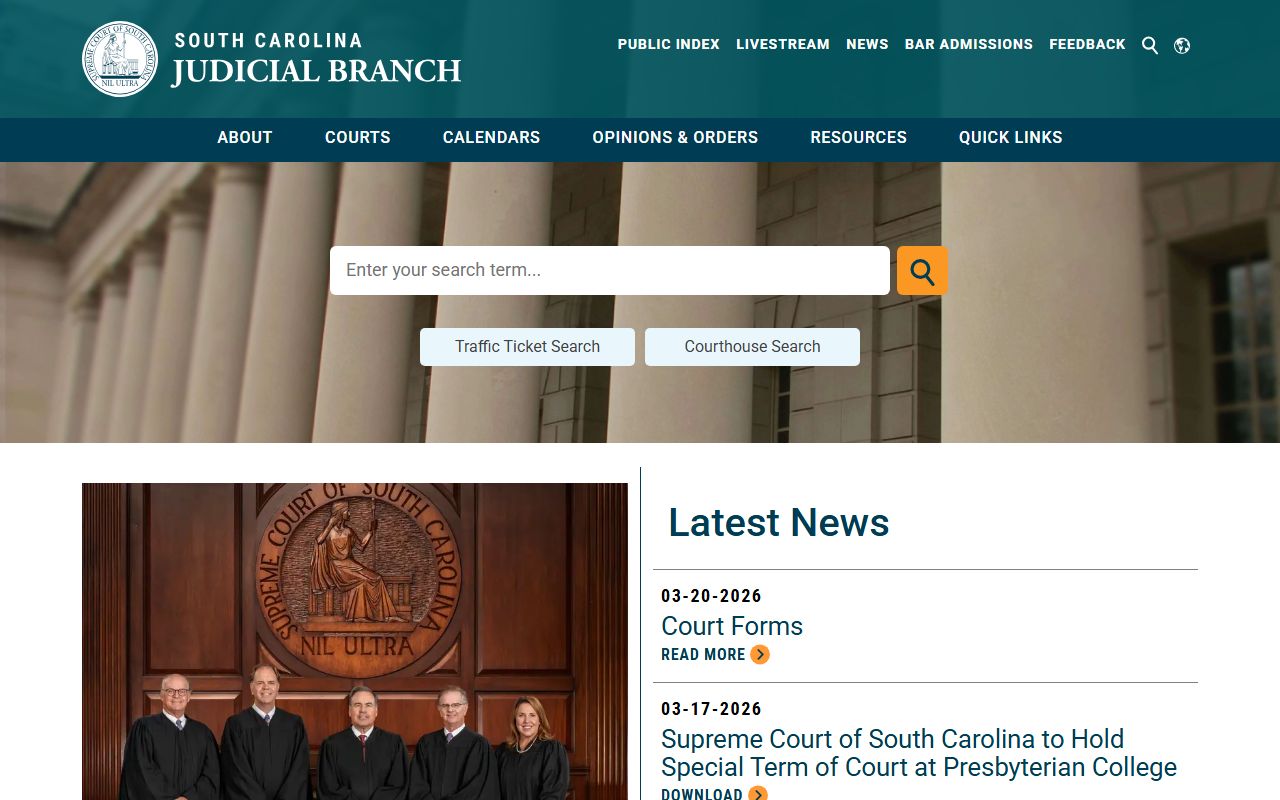
Using the SC Judicial Branch Public Index first is the most efficient way to locate a specific Union County probate case before making a trip to the courthouse.
What Union County Probate Records Document
Estate files are the most frequently referenced Union County probate court records. Each estate file contains the petition to open proceedings, the original will if one was submitted, a certified death certificate, an inventory of the decedent's assets, all creditor claims and their resolution, the personal representative's accountings, and the final closure order. These documents are public records available to any interested party who requests access.
Guardianship records in Union County document the court's appointment of someone to make personal decisions for an adult who can no longer do so independently. These files hold the opening petition, the evidence of incapacity presented to the court, any guardian ad litem report, the appointment order, and all annual status reports filed after appointment. Conservatorship records mirror this structure but focus on financial management. They include the petition, supporting evidence, the appointment order, an initial asset inventory, and the ongoing financial accountings the conservator must submit each year to the Union County Probate Court.
Wrongful death settlement records are another category of Union County probate filings. When a wrongful death claim is settled and the survivors include minors or persons under legal disability, the probate court must review and approve the settlement before funds can be distributed. This approval process creates a case file that becomes part of the permanent probate record for the county.
Note: Involuntary commitment proceedings handled by the Union County Probate Court involve mental health evaluations and hearings that are distinct from estate matters and are governed by a separate portion of Title 62.
How to Find Union County Probate Court Records
Records are available in person at the Union County Probate Court in the town of Union. Courthouse staff can search records by the name of a party or by case number and can retrieve both current active files and older archived records. Valid photo identification is expected. The court's standard fee schedule applies to all copies made.
The SC Judicial Branch Public Index provides free online access to case-level information for Union County probate proceedings. The index is searchable without creating an account and returns case numbers, party names, and basic status information. It does not provide images of the actual filed documents. Requesting document copies requires contacting the Union County Probate Court directly, whether by mail, phone, or in person.
Court forms for estate administration, guardianship, and conservatorship are available free through the SC Courts forms library. Always download the current version of any form before filing; outdated forms are rejected and cause unnecessary delays. For vital records needed in Union County probate proceedings, such as certified death certificates or birth certificates, use VitalChek, the state-authorized online ordering service. Genealogists researching older Union County estate records may find useful supplementary materials at the South Carolina State Library.

The State Library's South Carolina history and genealogy collections can extend research into Union County families and estates beyond what is available directly from the courthouse.
Estate Administration in Union County
Opening an estate in Union County requires submitting the original will and an original certified death certificate to the probate court. Neither document is accepted in photocopy form when initiating the proceeding. When no will was left, Title 62's intestate succession provisions determine who is entitled to inherit and in what share.
The court appoints a personal representative after reviewing the opening submission. This person, who may be named as executor in a will or appointed as an administrator in an intestate case, is legally responsible for collecting all of the decedent's property, notifying creditors as required by statute, paying valid claims from estate assets, filing an inventory and accountings with the Union County Probate Court, and distributing the remaining estate to the proper heirs. Every document filed in the course of this administration becomes a permanent part of the Union County probate estate record.
Union County's rural character means that many estates include farmland, timber rights, and personal property that require careful valuation before the inventory can be filed. The personal representative has a duty to obtain reasonable valuations and to disclose all assets, even those that may be difficult to appraise. Undervaluing or omitting assets from the inventory can expose the personal representative to personal liability.
Estates with a total value below the threshold set by the South Carolina Probate Code may qualify for simplified small estate procedures. Union County Probate Court staff can clarify which procedure applies based on the facts presented.
Guardianship and Conservatorship in Union County Probate Court
Union County's probate court handles guardianship and conservatorship cases for residents who can no longer make their own decisions. These cases require careful attention because they result in a court order that limits a person's legal autonomy and places control of personal decisions or finances in another person's hands.
A guardianship petition filed in Union County must describe the proposed ward's condition and present evidence supporting the claim of incapacity. This evidence typically includes medical documentation or evaluation reports from licensed clinicians. The court schedules a hearing and may appoint a guardian ad litem to represent the proposed ward's interests during the proceedings. If guardianship is granted, the court's order specifies the guardian's authority in detail. Thereafter, the guardian must file annual reports with the Union County Probate Court confirming the ward's status and welfare. These reports become a permanent part of the guardianship record.
Conservatorship cases provide the same framework for financial protection. The conservator files an inventory of all assets after appointment and must account for every transaction in annual filings. The Union County Probate Court reviews these accountings and can take action to correct mismanagement if the evidence warrants it. Family members or other interested parties may also raise concerns directly with the court if they believe a conservator is not fulfilling their duties properly.
Union County Clerk of Court and Register of Deeds Function
In Union County, the Register of Deeds function is performed by the elected Clerk of Court rather than a separately appointed or elected Register of Deeds. The Clerk records deeds, mortgages, plats, and other real property instruments for the county. This is common in smaller South Carolina counties where the volume of real estate transactions does not support a standalone Register of Deeds office.
When a Union County estate includes real property, the deed transferring that property to heirs or buyers must be recorded with the Clerk of Court after the probate court closes the estate. Researchers tracing land ownership in Union County often find it necessary to review both the probate estate file and the deed index at the Clerk's office to understand the full history of a particular piece of property. The South Carolina Register of Deeds page through the Judicial Branch provides statewide context on recording practices that applies to Union County as well.
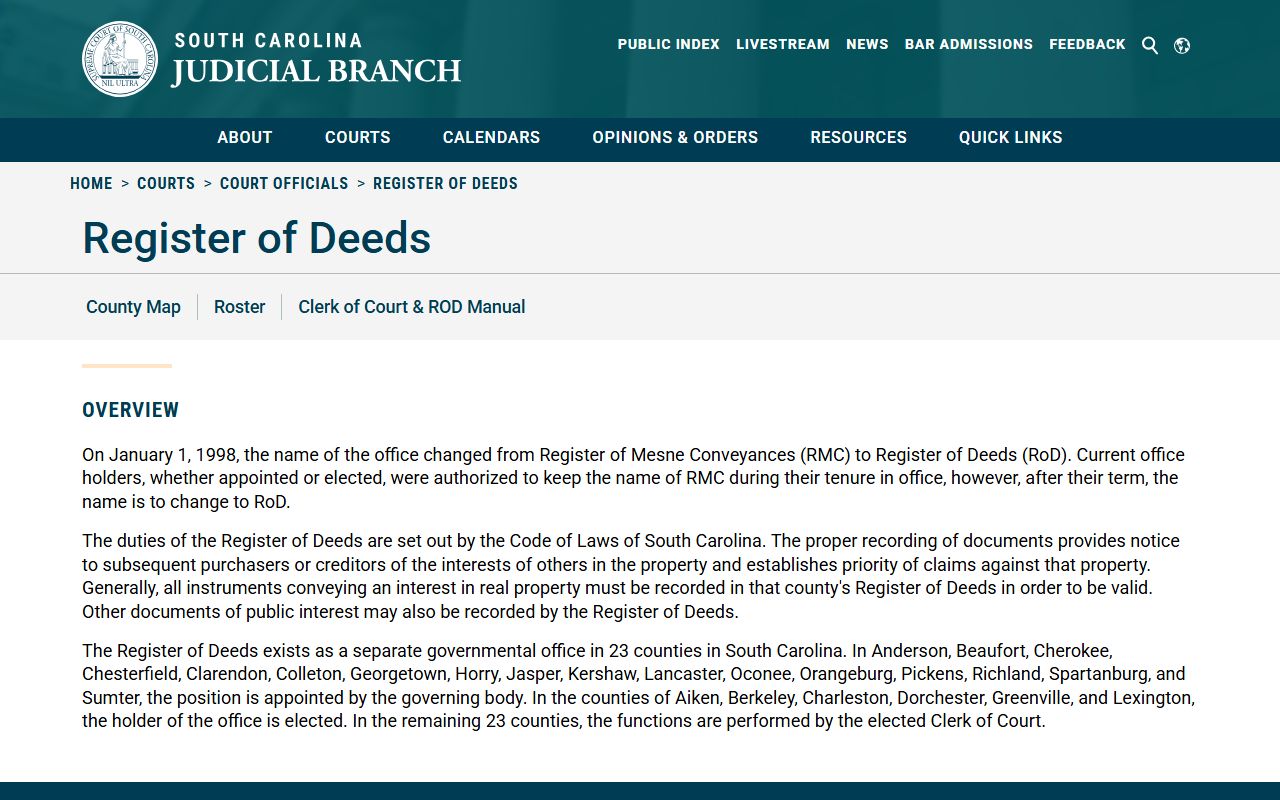
Cross-referencing the Union County probate file with the Clerk's deed index is often the only way to trace a complete chain of title through an estate transfer in the county.
Note: When Union County land is co-owned by a spouse and title is held in tenancy by the entirety, the property passes automatically to the surviving spouse outside of probate and does not appear in the estate record.
South Carolina Probate Code and Union County Practice
Every proceeding in the Union County Probate Court is governed by the South Carolina Probate Code, Title 62. This comprehensive statute sets the rules for how estates are opened and administered, what notice creditors and heirs must receive, what the personal representative must file and when, and how disputes are resolved. Understanding the relevant provisions of Title 62 before beginning any Union County probate matter prevents procedural errors that can delay the process or create legal exposure for the parties involved.
The South Carolina General Assembly updates Title 62 from time to time, so confirming the current requirements before starting a Union County proceeding is important. The SC Judicial Branch website provides access to self-help resources, current forms, and explanatory materials that can help individuals and families understand what to expect from Union County probate proceedings. Attorneys familiar with South Carolina probate practice can also assist when the estate is complex or when disputes arise among heirs.
Nearby Counties
Union County is in the Upstate region of South Carolina and shares borders with several neighboring counties, each of which maintains its own probate court. Confirming the decedent's county of domicile at death is the correct way to determine which court has jurisdiction over an estate.