
Spartanburg County Probate Records and Estate Cases
Spartanburg County probate court records document all matters before the county's elected probate judge, encompassing estate administration, wills, guardianship proceedings, conservatorships, marriage licenses, and involuntary commitment hearings. Spartanburg County anchors the Upstate region of South Carolina, with a growing population, an active downtown, and a diverse economic base that generates substantial estate activity each year. The probate court serves residents across the entire county, from the city of Spartanburg to the rural communities and growing suburbs that surround it. Heirs, title researchers, genealogists, and legal professionals rely on Spartanburg County probate court records for authoritative information about how estates were settled and how assets passed between generations.
Spartanburg County Quick Facts
Spartanburg County Probate Court Authority and Scope
The Spartanburg County Probate Court operates under the South Carolina Probate Code, Title 62, which defines the court's jurisdiction and the procedures it must follow. The probate judge is elected countywide to a four-year term, making the court directly accountable to Spartanburg County voters. The court is located at the county seat in the city of Spartanburg.
Jurisdiction covers the estates of all persons who were domiciled in Spartanburg County at the time of death, whether they left a will or not. The court also handles guardianship proceedings for adults who have lost the capacity to make personal decisions, conservatorship cases for those who cannot manage their own financial affairs, marriage license issuance, minor settlement approvals, wrongful death settlement approvals, and involuntary mental health commitment hearings. Each case type generates records that the Spartanburg County Probate Court retains permanently.
Free online case searching is available through the South Carolina Judicial Branch Public Index. Searching by a party's name or by case number returns case-level information for Spartanburg County probate filings. Document images and certified copies require a direct request to the Spartanburg County Probate Court.
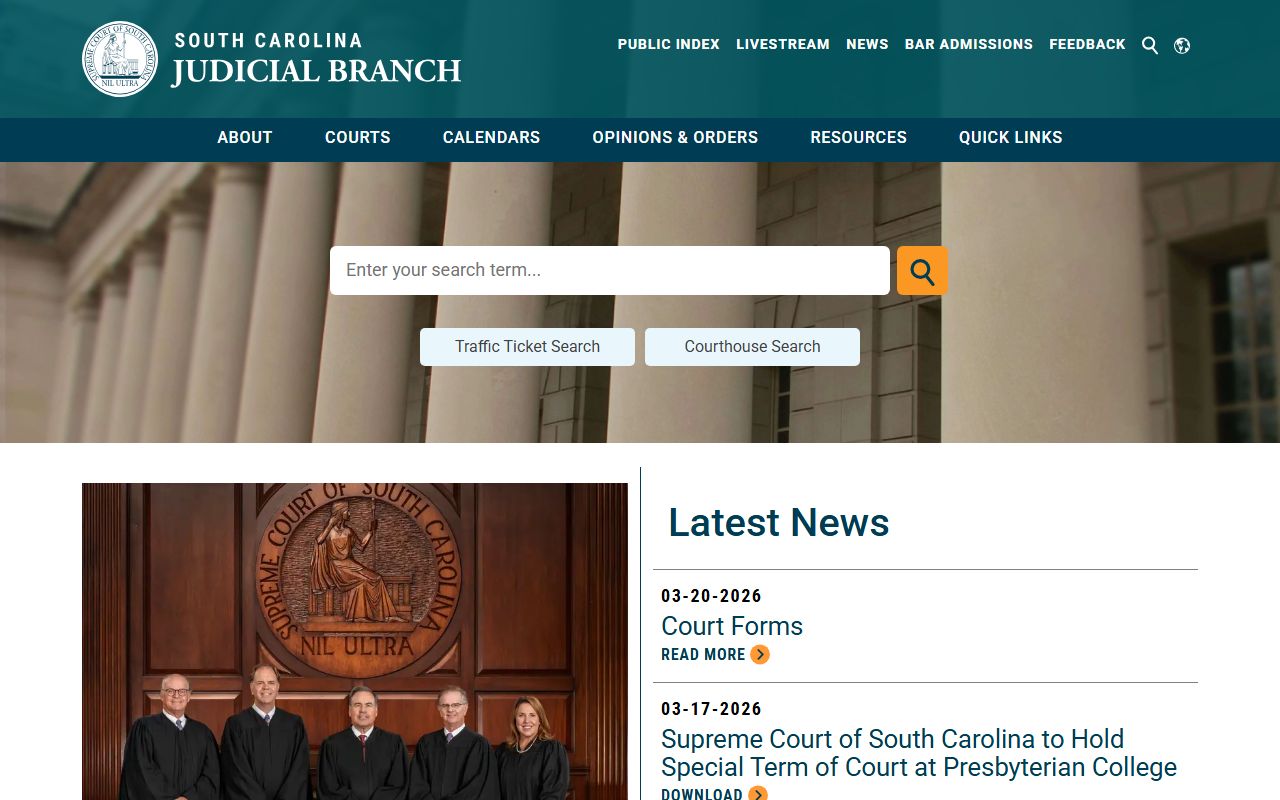
The SC Judicial Branch Public Index covers all 46 counties and is the first tool to use when searching for a Spartanburg County probate case without visiting the courthouse in person.
What Spartanburg County Probate Records Contain
Estate files are the largest category of Spartanburg County probate court records by volume. A complete estate file includes the petition to open the estate, the original will if one was left, a certified death certificate, a detailed inventory of the decedent's assets, accountings prepared by the personal representative, any creditor claims filed against the estate and their resolution, and the final order closing the proceedings. All of these documents are part of the public record accessible to interested parties.
Guardianship and conservatorship files form a significant portion of the court's caseload. A guardianship record documents the appointment of someone to make personal decisions for an incapacitated adult and includes the petition, supporting evidence of incapacity, the court's appointment order, and all subsequent annual reports. A conservatorship record covers the corresponding appointment to manage financial affairs and includes similar documentation plus the financial accountings the conservator must submit each year. Both types of records are retained by the Spartanburg County Probate Court indefinitely.
Marriage license records issued by the Spartanburg County Probate Court appear regularly in estate proceedings, where a marriage must be documented to establish a surviving spouse's or child's legal status as an heir or beneficiary. These records show both parties' names, their dates of birth, and the date the license was issued.
Note: If a decedent owned property in both Spartanburg County and another South Carolina county, a separate ancillary probate proceeding may be required in the second county as well.
How to Access Spartanburg County Probate Court Records
Records are available in person at the Spartanburg County Probate Court, which is located in the city of Spartanburg. Staff can conduct searches by party name or case number and can locate both current and older archived files. Visitors should bring valid photo identification and be prepared to pay the court's standard copy fees. Certified copies require an additional fee above the plain copy rate.
The SC Judicial Branch Public Index provides free online access to case-level information for all Spartanburg County probate proceedings. The index is searchable by name and by case number. Document images are not available through the index; obtaining a copy of any filed document requires a request to the Spartanburg County Probate Court. Forms for estate administration, guardianship, and conservatorship filings are available free of charge through the SC Courts forms library and should always be the current, approved version to avoid processing delays.
Vital records needed in connection with a Spartanburg County probate matter, such as certified death certificates, birth certificates, or marriage records, can be ordered through VitalChek, which is the state-authorized online ordering service for South Carolina vital records. Historical Spartanburg County probate research may require consulting the South Carolina State Library, which holds reference collections covering Upstate counties.

The State Library's South Carolina collections supplement what is available directly from the Spartanburg County Probate Court, particularly for older estate records from the nineteenth and early twentieth centuries.
Estate Administration Through the Spartanburg County Probate Court
Administering an estate in Spartanburg County begins with presenting the original will and an original certified death certificate to the probate court. Photocopies are not accepted at the opening stage. When the decedent died without a will, the South Carolina Probate Code determines who inherits and in what shares through the intestate succession rules in Title 62.
The court appoints a personal representative after reviewing the opening documents. This person, whether named as executor in the will or appointed as administrator in an intestate case, has a legal duty to gather all of the decedent's assets, give formal notice to creditors, pay valid claims from estate funds, file an inventory and accountings with the Spartanburg County Probate Court, and ultimately distribute what remains to the rightful heirs or beneficiaries. Each step in this process generates a document that is filed with the court and kept as part of the Spartanburg County probate record.
Spartanburg County's growing population means the probate court regularly handles estates with complex asset profiles, including investment accounts, business interests, and real property in multiple states. Estates that include assets in other states may require separate probate proceedings in those jurisdictions in addition to the Spartanburg County proceeding. The personal representative should determine whether multistate administration is needed early in the process.
Note: Estates with total value below the current small estate threshold under Title 62 may qualify for a simplified procedure that requires less court involvement than full formal administration.
Guardianship and Conservatorship in Spartanburg County
Spartanburg County probate court records include a substantial number of guardianship and conservatorship filings, reflecting the county's large and growing senior population. These proceedings are initiated when a family member, friend, or public official believes that an adult can no longer safely make personal decisions or manage finances independently.
A petition for guardianship in Spartanburg County must be filed with the probate court and supported by evidence of incapacity, most commonly medical records or evaluations from licensed clinicians. The court sets a hearing date and may appoint a guardian ad litem to represent the proposed ward independently during the proceedings. If the court determines that guardianship is warranted, its order defines the guardian's specific authority and any conditions on how that authority may be exercised. The appointed guardian must then file annual reports with the Spartanburg County Probate Court documenting the ward's living conditions, health, and general welfare.
Conservatorship cases protect financial interests using the same basic framework. After appointment, the conservator submits an inventory of all assets under management and files annual accountings that account for every receipt and expenditure. These accountability requirements give the court and interested family members a mechanism for detecting problems and addressing them before serious harm occurs. Any person with a legitimate interest in a Spartanburg County guardianship or conservatorship case may petition the probate court if concerns arise about how the appointed person is fulfilling their duties.
Spartanburg County Register of Deeds and Probate Connections
Spartanburg County's Register of Deeds is appointed by the county governing body rather than elected by voters. The Register records all instruments affecting real property in the county, including deeds, mortgages, plats, and liens. When a Spartanburg County estate includes real property, the deed transferring that property to heirs must be recorded with the Register of Deeds after the probate court closes the case.
Researchers tracing the ownership history of Spartanburg County real property often find it necessary to cross-reference estate files from the probate court with the deed index maintained by the Register of Deeds. Together, these two record sets reveal how land moved between owners across generations, including transfers that went through probate administration. The South Carolina Register of Deeds resource page provides background on recording requirements that apply throughout the state, including Spartanburg County.
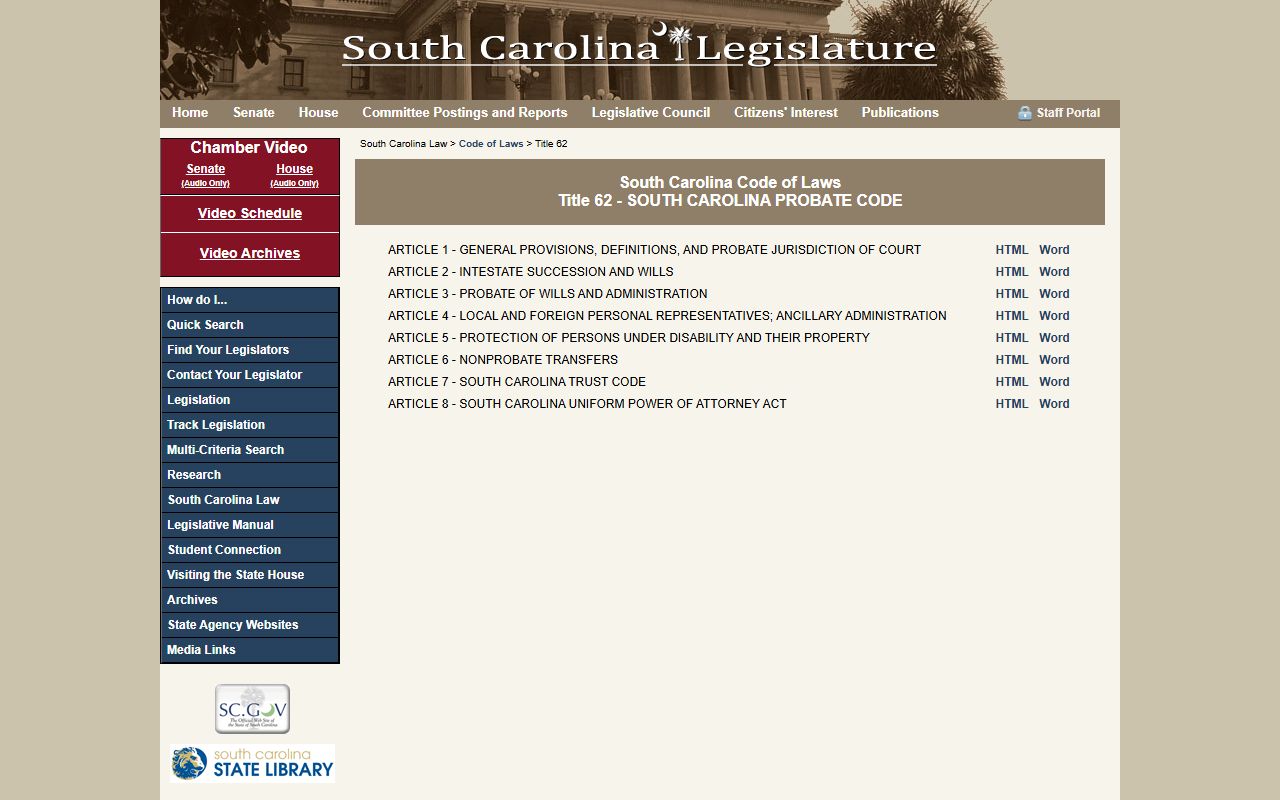
Title 62 sets the legal framework that governs every Spartanburg County estate proceeding, from the initial filing through final distribution and closure.
Note: Spartanburg County's appointed Register of Deeds is a separate office from the Clerk of Court, unlike some smaller South Carolina counties where one official performs both functions.
The City of Spartanburg and Local Probate Context
The City of Spartanburg serves as the county seat and is home to the Spartanburg County Probate Court. The city has undergone significant downtown revitalization in recent years, with new residential development, cultural venues, and commercial investment reshaping the urban core. This growth reflects the broader expansion of Spartanburg County's population and economy, which directly affects the volume and complexity of probate filings.
As more residents move into the Spartanburg area from other states, the probate court increasingly sees estates with assets held in multiple states, out-of-state beneficiaries, and unfamiliarity with South Carolina probate procedures. The Spartanburg County Probate Court's self-help resources and the guidance available through the SC Judicial Branch website are particularly valuable for these newcomers who have not previously dealt with probate proceedings in South Carolina.
Cities in Spartanburg County
Spartanburg County includes the city of Spartanburg, the county seat, as well as the city of Greer. Greer is notable because it spans both Spartanburg County and Greenville County, meaning that a Greer resident's estate may be subject to probate in either county depending on the resident's exact address at the time of death.
Nearby Counties
Spartanburg County is in the Upstate region and borders several neighboring South Carolina counties. Each maintains its own elected probate judge and probate court. The decedent's county of domicile at the time of death determines which court has jurisdiction.